Invoice Factoring Requirements, What Factoring Companies Check


Before a factor buys your first invoice, an analyst usually writes up a report on your company. You’ll never see that document, but its contents are predictable. Below is a mock inspection report for a fictional company, Tri-County Freight LLC, showing what gets checked and how each finding might be marked. Read it as a guide to your own file.
Applicant: Tri-County Freight LLC
Business: Regional trucking
Annual revenue: $1.4 million
Purpose: Convert 45-day broker invoices into weekly cash
Analyst’s summary: Eligible with conditions. See flagged items.
Section 1: Corporate Status
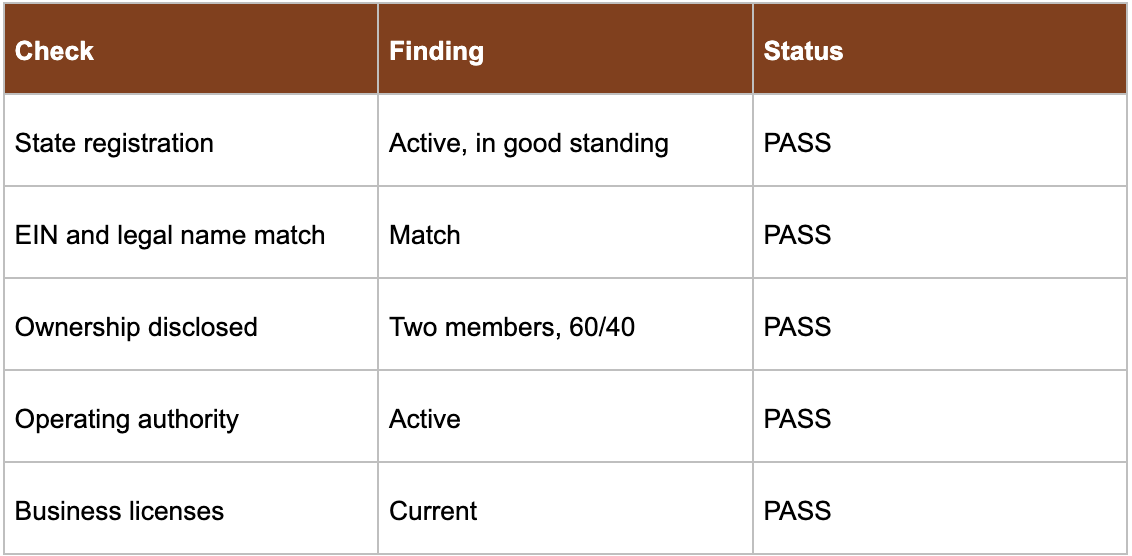
What this means for you: Factors want to confirm that the company selling them invoices actually exists and has authority to do so. Before applying, collect your articles of organization, EIN letter, operating agreement, and any industry-specific licenses. It helps to review a product page such as Fundivi receivables funding terms to see which details providers tend to request.
Section 2: Owner Background
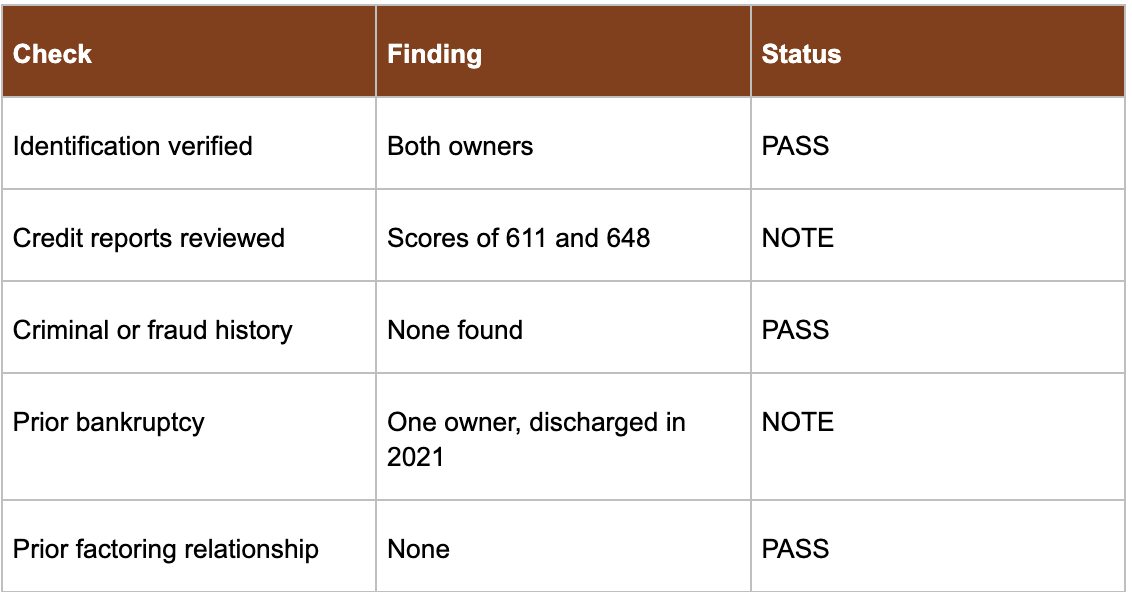
Analyst’s comment: Scores are modest but aren’t a barrier given customer strength. Discharged bankruptcy isn’t related to fraud. No concern.
What this means for you: A low score usually isn’t decisive. What factors seek are signs of dishonesty, because their largest fear is purchasing invoices that aren’t real.
Section 3: UCC and Lien Search
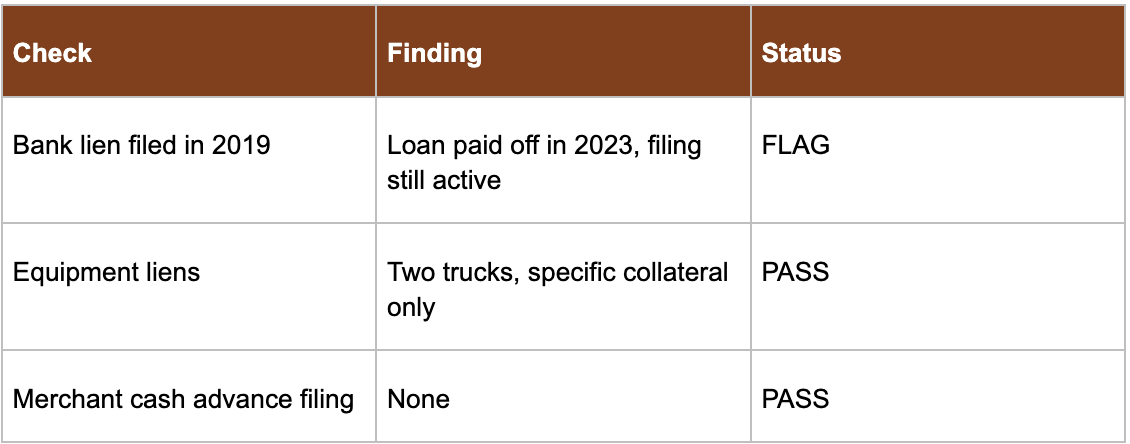
Condition of approval: Applicant must obtain UCC-3 termination for the 2019 bank filing.
What this means for you: A forgotten filing can delay funding by days or weeks. Search your own records now. Specific equipment liens usually won’t conflict, but a blanket lien that covers receivables will. If you’ve got a merchant cash advance, you may need a payoff or subordination agreement.
Section 4: Tax Compliance
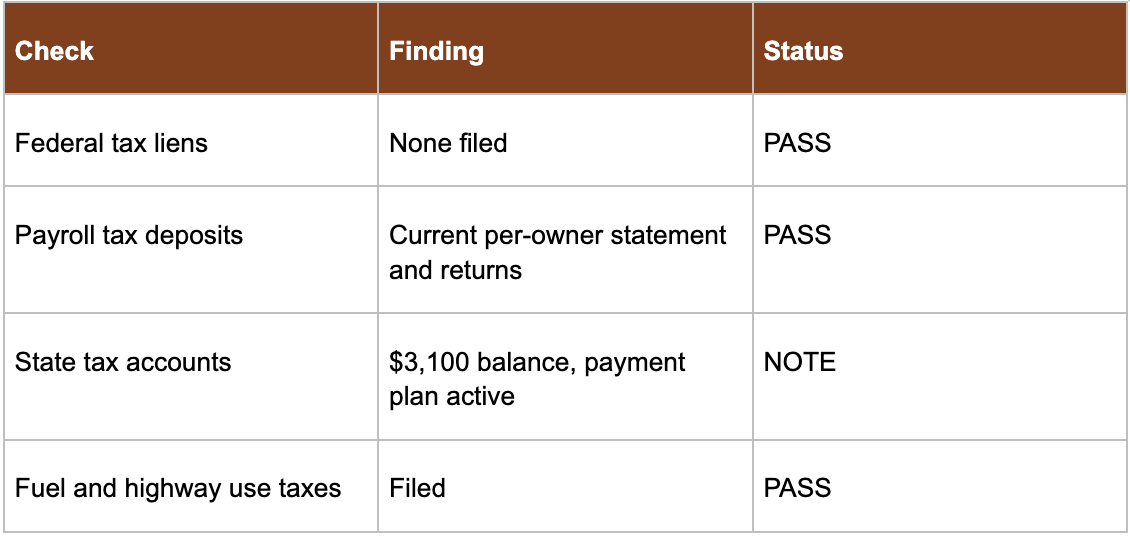
What this means for you: Payroll tax trouble is among the most serious findings possible, as IRS claims may take priority over a factor’s interest in your receivables. Be ready with Form 941 filings, proof of deposits, and copies of any installment agreement.
Section 5: Customer Analysis
This is the most important section.
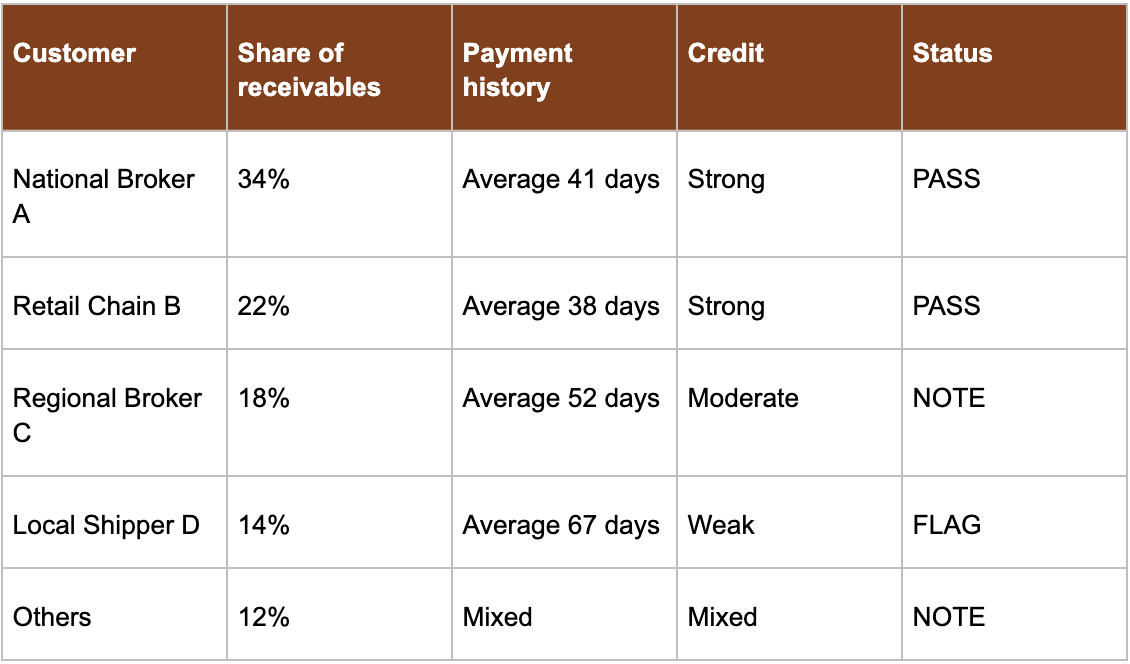
Analyst’s comment: Concentration in National Broker A exceeds the preferred 30% level, but credit quality supports an exception. Limit purchases from Local Shipper D.
What this means for you: Strong customers can make your application. Weak ones can reduce your available funding. Compile a clean list with legal names, addresses, contact people, and payment histories. Those who sell to many smaller customers can compare this with fast unsecured business loan options, since factoring works best with creditworthy payers.
Section 6: Invoice Verification Sample
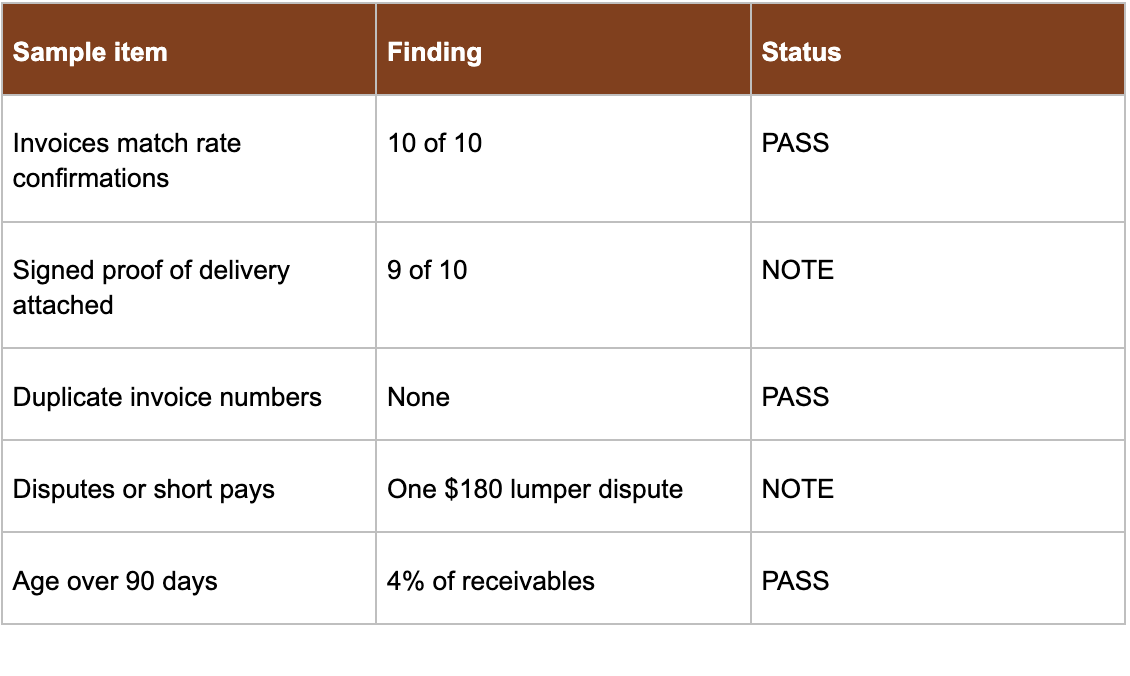
What this means for you: Every invoice should be backed by proof. In trucking, that’s a signed bill of lading. In staffing, approved timesheets. In wholesale, a signed delivery receipt. For services, a signed acceptance or completion document.
Invoices usually disqualified include those that are:
- Issued before work is finished
- Older than the factor’s limit
- Subject to dispute or contract offset
- Owed by related companies
- Billed to consumers
Section 7: Operational Review
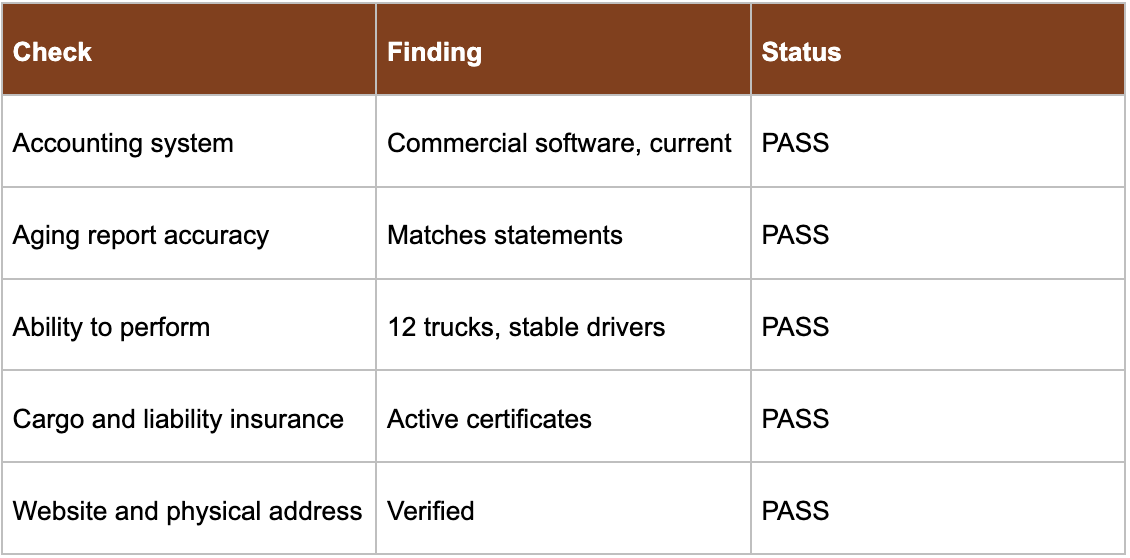
What this means for you: Inaccurate books are a warning sign. An aging report that doesn’t reconcile with bank deposits leads to questions and can slow things down. Educational websites, including the BusinessLoansCompanies.com factoring directory, can help you find candidates who suit your size and industry.
Section 8: Financial Review
Bank statements show deposits consistent with stated revenue. Occasional low balances in slow weeks. No overdrafts in the past 90 days. Advance-rate recommendation is 90% for approved customers.
What this means for you: Financial statements get less emphasis than in lending, but they still reveal whether the company is stable enough to keep performing.
Analyst’s Final Recommendation
APPROVE WITH CONDITIONS:
- UCC-3 termination must be recorded before first funding
- Local Shipper D limited to $15,000 exposure
- Customer notification letters issued to all approved customers
- Validity guarantee from both owners
Turning This Into Your Own Preparation
Write your own version of this report. For each section, mark every line pass, note, or flag. Then fix the flags, and write explanations for the notes.
Your most valuable hour: Search UCC filings, pull your aging report, and review your tax accounts. Those three items cause most first-time delays.
The timeline: Getting through a file like this typically takes several days to a couple of weeks. After setup, new invoices can often be funded within a business day following verification.
Before signing with any factor, compare the contract terms: advance rate, fee schedule, length of commitment, minimum volume, and termination requirements. Companies with substantial card sales aren’t typical factoring clients, and might instead read this American Press article on merchant funding.
How the Report Would Read for Other Industries
The same sections apply across sectors, but the details change. A staffing company’s analyst will concentrate on payroll tax deposits and workers’ compensation coverage, because missed obligations can put receivables at risk. A manufacturer will face questions about purchase orders, shipping documents, and return policies. A government contractor can expect a review of assignment procedures and contract terms. A wholesale distributor will need to explain credit memos and volume rebates, which can reduce what customers actually pay.
Whatever your field, ask yourself what could prevent a customer from paying the full amount shown on an invoice. That single question captures most of what an analyst is trying to learn. Answer it for your top five customers before you begin the application, and write down anything that could reduce those payments. When a factor sees that you’ve already identified those risks, the review tends to go more smoothly.
Frequently Asked Questions
What’s the most common cause of a factoring delay?
Existing liens, followed by slow customer verification and incomplete documentation.
Will a factor look at my personal credit?
Often, but mostly to spot fraud or legal problems. Customer credit carries more weight.
Do I need audited financial statements?
Rarely for small businesses. A current aging report and accurate books usually suffice.
How many customers do I need?
There’s no universal minimum, although dependence on one customer can result in limits.
Do my customers need to be located in the U.S.?
Often, yes. Foreign receivables are usually handled only by specialized factors.
Can I still use my regular bank?
Generally yes, though customer payments are typically directed to an account controlled by the factor.
What’s a validity guarantee?
It’s a personal promise that invoices are genuine and that you’ll comply with the agreement. It’s different from a full payment guarantee.
Can invoices from government agencies qualify?
Often. Federal receivables may have additional assignment steps, so ask early.
What’s a UCC-3?
It’s the form used to amend or terminate a UCC filing.
How often must I submit new aging reports?
Many factors ask for them weekly or monthly. Check your agreement.
Can a factor drop a customer later?
Yes. If a customer’s credit weakens, a factor may stop buying its invoices.
Can a factor refuse an invoice after approval?
Yes. Each invoice is usually reviewed before purchase, even after your account opens.
Disclaimer: This article is intended for general informational and educational purposes only and should not be considered financial, legal, or professional advice. Information provided may vary depending on individual circumstances, business needs, and applicable regulations. Readers are encouraged to conduct their own research and consult qualified professionals before making any financial or business decisions.