Women's Journal

New Child Care Report Reveals the Hidden Cost for Working Moms


A Louisiana report released in October 2026 documents how child care costs and limited availability affect parents’ jobs, with female respondents reporting especially pronounced shifts from full-time to part-time work. The findings explain the financial pressures, scheduling problems, and limited assistance facing families with young children, alongside national data on care prices.

Key Takeaways

  • The October 13 report surveyed 500 Louisiana adults caring for children younger than five.
  • Among female respondents answering employment questions, 24.1% reported moving from full-time to part-time work because of child care problems.
  • Infant care averaged approximately $12,042 annually in the report’s inflation-adjusted Louisiana pricing estimate.
  • Nearly 70% of survey respondents reported some difficulty finding affordable child care.

A new study from the Louisiana Policy Institute for Children found that child care difficulties coincided with reduced work schedules and job departures among parents of young children. In responses broken down by gender, 24.1% of women said child care problems had led them to move from full-time to part-time employment, compared with 5.9% of men.

The institute released The Missing Piece on October 13. Louisiana State University researchers surveyed 500 adults caring for children four and younger from April 13 to April 21. Employment figures reflect 411 respondents.

Overall, 35.5% reported reducing hours, and 17.1% said they had quit a job because of child care difficulties. The findings do not isolate price as the only cause.

Child Care Costs Put Pressure on Household Budgets

The report estimates average annual infant care at $12,042 in Louisiana, compared with approximately $10,624 for toddlers and $9,614 for four-year-olds. The figures use 2023 state market rates adjusted to 2026 dollars, assuming 265 days of care rather than actual household bills.

A separate parent survey published by the institute in February found that respondents paid an average of $870 per child each month. Families paying without subsidized care reported approximately $930 per child monthly, equivalent to more than $22,000 annually for two children at that rate. That survey collected 2,789 responses in October 2025 and is separate from the new study.

Heather Cope, the institute’s chief of policy and research, described the affordability problem in an October 15 interview with Louisiana Radio Network.

“Looking at the average wage in Louisiana, that can make up a substantial part of any family’s budget,” Cope said.

Most February survey respondents also reported worries about paying for care alongside housing and food.

For national context, Child Care Aware of America reported an average annual child care price of $13,184 for 2025, based on data from 47 states. Its pricing method differs from Louisiana’s.

Working Moms Report Lost Hours and Unstable Schedules

Although 39.5% of men reported some reduction in hours, compared with 30.7% of women, women more often reported moving from full-time to part-time work.

Child care problems also affected attendance. Approximately 38% of respondents said they had arrived late to work or class because of care difficulties, while 42.5% reported leaving early. Another 9.6% said they had turned down a promotion. The figures reflect self-reports, not employer records.

Researchers estimated that households with young children lose the equivalent of three full workdays each quarter, or 12 annually, through child care disruptions. That estimate combines missed days with partial days lost to late arrivals and early departures, rather than counting 12 absences for every parent.

Many families combined different forms of care to cover the day. The report found that 41.4% used multiple child care arrangements for an individual child. Arrangements included parental care, relatives, home-based providers, and centers. Overall, 66.4% of respondents reported relying on a parent for at least some care.

The findings also place workplace flexibility for mothers in context. Flexible schedules do not eliminate the need for care during work hours.

Single Parents Report More Severe Job Disruptions

Differences were sharper when researchers compared single and married respondents. Among single parents answering the employment questions, 73.4% reported reducing work hours because of child care problems, compared with 22.6% of married parents.

The same comparison found that 34.5% of single parents had quit a job for child care reasons, versus 11.2% of married parents. Moving from full-time to part-time employment was reported by 46.1% of single parents, compared with 3.2% of married respondents.

These figures include parents of different genders and should not be presented as rates for single mothers alone. The employment analysis included 143 single parents and 268 married parents.

National data illustrate the financial context without implying that Louisiana mirrors every state. Child Care Aware of America estimated that the average 2025 care price represented 33% of median income for single-parent households, compared with 10% for married-couple households. These are national benchmarks.

Care Shortages and Provider Costs Limit Family Options

Finding an affordable provider was itself a challenge in Louisiana. Nearly 70% of respondents reported some difficulty locating affordable care, and 36% described it as extremely challenging. The October report also identified a waiting list of more than 7,800 children for the state’s Child Care Assistance Program.

A separate September survey of more than 600 Louisiana providers found that nearly 80% experienced months when operating expenses exceeded revenue. Approximately two-thirds maintained waiting lists despite serving only about two-thirds of the children they had capacity to enroll.

Providers cited staffing, financial pressures, and assistance delays. Nearly three-quarters expressed concerns about covering operating expenses over the next six months. The provider survey also placed average annual pay for lead teachers at about $28,800, illustrating the staffing pressures facing centers.

Employer support appeared limited among respondents to the October study. While on-site child care programs exist at some workplaces, only 0.4% of those surveyed reported access to a workplace center. Another 0.9% reported an employer voucher or subsidy, and 14.4% said they received government assistance for care.

The report modeled broader early childhood education access and estimated nearly 29,400 additional labor-force participants, $3.2 billion in annual earnings, and $5.3 billion in economic output. These are projections, not observed results.

The economic model assumes increased maternal employment under expanded early education. It does not establish that child care costs would fall by any specific amount or that individual parents would recover particular wages.

Frequently Asked Questions

How much does child care cost in Louisiana?

The October report estimates annual infant care at approximately $12,042 and toddler care at $10,624. These child care costs are based on 2023 market rates adjusted to 2026 dollars, not bills collected from every Louisiana family.

How did child care problems affect working mothers?

Among women answering employment questions, 24.1% reported moving from full-time to part-time work because of child care problems. The comparable share among male respondents was 5.9%.

Do the findings describe all U.S. parents?

No. The new survey covered 500 Louisiana adults with children ages four and younger, and employment details came from a smaller group of respondents. National figures are included for context but were collected through different research.

Why do parents report difficulty finding available care?

The October report found substantial affordability challenges and a child care assistance waiting list exceeding 7,800 children. A separate provider survey reported staffing and operating-cost pressures, even where some enrollment capacity remained unused.

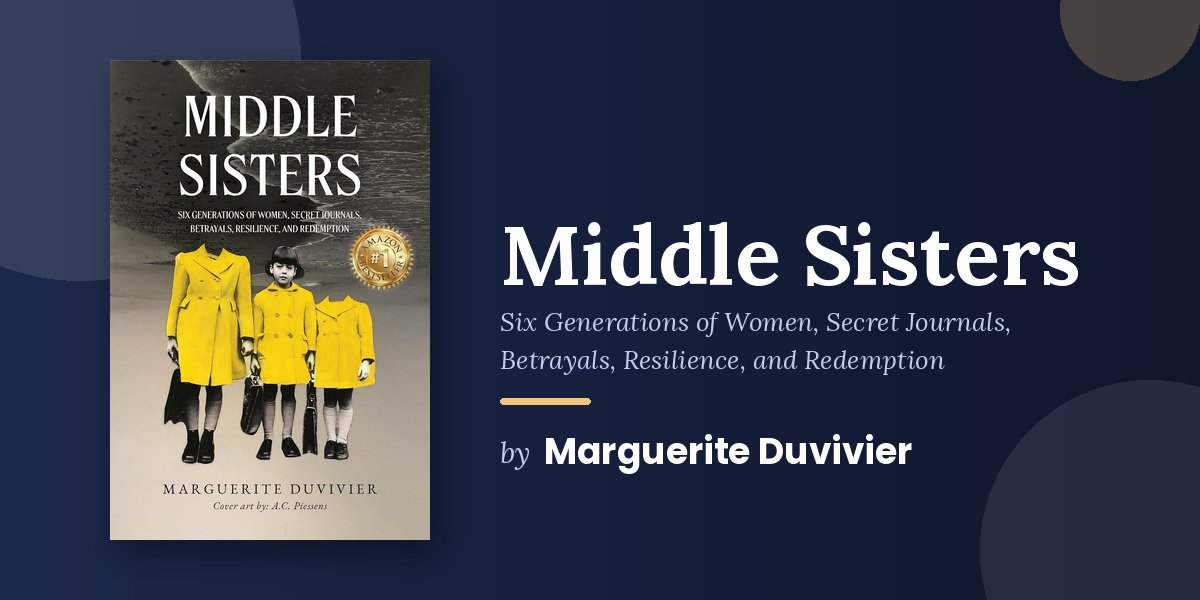
The Anatomic Pathologist Who Spent Her Career Studying What Lives Leave Behind Finally Turned That Lens on the Women in Her Own Family: Middle Sisters Is the Result

By: Schiamarelly Pinckert

There is a particular kind of book that only becomes possible when the person writing it has the professional training to study what others leave behind and the personal history to understand what that leaving actually cost. Marguerite Duvivier, writing under a pseudonym, is an Associate Professor in Anatomic Pathology who has spent her career examining the evidence that lives leave in their wake. When she turned that same quality of precise, unflinching attention to the secretly kept journals discovered posthumously among her family’s belongings, and to the six generations of women those journals illuminate, she produced Middle Sisters, one of the more genuinely compelling multigenerational memoirs currently available. The analytical intelligence of a pathologist and the personal intimacy of a daughter and granddaughter do not usually arrive in the same book. In this one they do, and the combination is remarkable.

The story begins in Belgium in 1908 with Lydie, a dominant mother who coerces her vulnerable middle daughter Zilda into a loveless marriage with a self-serving, greedy man. It ends in the United States today, having traversed two world wars, the displacement of emigration, sudden affluence following deprivation, infidelity, illness, tragedy, and betrayal, and the specific and recurring pattern that gives the book its title: the middle sister who is overlooked in childhood and leaned upon in old age, who is shaped by what she is denied and defined by what she chooses to give anyway.

Zilda’s secretly penned journals, discovered posthumously, are the archival heart of the memoir, giving the book a documentary dimension that elevates it above both pure personal recollection and pure historical reconstruction. Duvivier, who is herself a middle daughter, is reading her mother’s private record of a life that she witnessed partly from the inside and partly from the outside, and the experience of that reading, the discovery of what her mother wrote when she thought no one was watching, gives the memoir its most intimate and its most affecting passages.

The focus then shifts to Marguerite, Zilda’s own fiercely independent middle daughter, who marries an unfaithful, brilliant man in medical school and spends her adult life navigating the specific complexity of loving someone whose gifts and flaws exist in genuinely equal measure. That portrait, rendered with the honesty of someone who has had decades to understand what she observed and has chosen to write it without protective softening, gives the memoir its most morally complex and most durably interesting dimension.

Middle Sisters is an unflinching exploration of women’s resilience, the search for independence and happiness, written by someone whose professional life has been organized around examining what remains when everything transient has been stripped away. The journals her mother kept in secret are what remained. The memoir they enabled is both a tribute and a reckoning, offered with the care that a pathologist brings to evidence and the love that a daughter brings to memory.

If you have ever wondered what the women in your family wrote when they thought no one was watching, Middle Sisters by Marguerite Duvivier is the book that shows you what those private records contain and what courage it takes to read them honestly. Grab your copy on Amazon today and follow six generations of women from Belgium to America across the full complexity of the lives they actually lived.

What Diapers Really Cost in the First Year and How to Pay Less Without Switching Brands

By: Matt Emma

Before my first was born, I budgeted for the crib, the car seat and the stroller. Diapers I filed under “small stuff.” By month three, I’d worked out that diapers were the most expensive thing we bought regularly, more than formula some weeks, and that I’d been paying more for them than I needed to.

The Numbers Nobody Tells You

A newborn goes through 8 to 12 diapers a day. That slows down as they grow, but most babies still use around 2,500 to 3,000 diapers in their first year. At 25 to 40 cents a diaper, that’s somewhere between $650 and $1,200, depending almost entirely on where and how you buy them.

That range is the part worth paying attention to. Two families can use the same brand in the same sizes and spend several hundred dollars apart over a year.

Why the Big Box Isn’t Always the Deal

Diaper packaging makes comparison hard. The same brand might sell a 74-count pack, a 120-count box and a 186-count “monthly supply,” and the count per box changes with size. A size 1 box holds far more diapers than a size 5 box at about the same price. Sales and subscribe-and-save discounts change the math again.

The only number that tells you the truth is cost per diaper. I started dividing the price by the count on my phone in the store aisle and kept finding that the box I’d been reaching for wasn’t the cheapest. Sometimes the mid-size pack beat the giant box. Sometimes a different store’s regular price beat my usual store’s sale price.

Doing this for every size, at every store, every time is a lot to ask of someone running on four hours of sleep. It’s easier to start from a list that has already done the division, like this cost-per-diaper breakdown by size, and then check the prices near you.

A Few Things That Actually Helped

Don’t stock up on newborn size. Many babies outgrow it in a few weeks, and the boxes that friends give you at a shower usually cover it. The bigger savings come from sizes 3 through 5, which most babies wear for a year or more.

Compare brands on price per diaper, not reputation. Store brands have improved a lot. Some parents find a store brand works fine overnight and keep the name brand for daytime, or the other way around. Try a small pack before you commit to a box of 180.

Treat pull-ups as a separate purchase. Training pants cost noticeably more per piece, and potty training can take months. The pull-up diaper price comparison showed me how wide the price range is, which helped when we got to that stage.

Keep an eye on the size change. The worst buy is a giant box bought two weeks before your baby moves up a size. Most stores will exchange unopened boxes, so keep the receipt.

What It Adds Up To

When I started buying by cost per diaper instead of habit, we spent noticeably less each month. That’s not life-changing, but it’s real money in a year when everything costs more than you expected. Mostly, it meant one less thing to second-guess at 2 a.m. when the box ran out.

Mo Faul Is Not Writing Another Mindset Book. She Is Making a Specific Argument About Why Mindset Work Alone Keeps People Stuck.

By: Laura Zanky

The personal development industry has spent decades perfecting the mindset book. The formula is well-established: identify limiting beliefs, replace them with empowering ones, build better habits, repeat. Mo Faul has been inside that space long enough to see what it produces, and Soul Code: Your Hidden Power to Create the Life You Want is her direct and specific argument for why something deeper is required.

Her argument is not that mindset work is wrong. It is that mindset work operates at the level of thinking, and the place where most people are actually stuck is not in their thinking. It is in their body, their emotional residue, and the survival patterns they developed in environments that no longer exist. You can change your thoughts all day and still feel the pull of those patterns, because the patterns are not located in the mind. They are located somewhere older and more physical than that.

What Soul Actually Means in This Context

Mo defines Soul in a way that is worth understanding precisely, because it is different from how the word gets used in most spiritual contexts. The Soul Self, in her framework, is not a metaphysical entity separate from the person. It is the essence of who a person actually is, beneath everything that has been layered on top through experience, expectation, and the very human work of learning to survive in a family and a culture that had its own ideas about who you were supposed to be.

Most people, by the time they arrive at a personal development book, have spent years being the version of themselves that their circumstances required. The Soul Code is asking a different question: who are you when nobody is requiring anything of you?

That is not a comfortable question. It is also, in Mo’s experience, the most important one a person can seriously attempt to answer.

The Five Milestones and What They Do

The Soul Code Method moves through five milestones, and Mo is intentional about calling them milestones rather than steps. Steps imply a linear process with a predictable timeline. Milestones acknowledge that this is a path with a direction, rather than a formula with a guaranteed output.

The milestones move from reconnecting with the Soul Self, through identifying soul values and natural gifts, to understanding life purpose, to working with emotional truth, and finally to defining a personal Soul Mission Statement that makes all of that concrete and actionable. Along the way, the book asks readers to do things that are not comfortable: write a Soul Truth Letter, work with their nervous system, release emotional energy that has been stored in the body rather than processed through it.

That last part is where the embodiment emphasis becomes most tangible. Mo is not asking readers to think their way to change. She is asking them to feel their way through it, because feeling is where the actual change happens.

Who This Book Is For

Mo has worked with executives and leaders throughout her coaching career, and Soul Code reflects that background in its directness and its insistence on practical outcomes. This is not a book for people who want to feel inspired for a week and then return to their previous patterns. It is a book for people who have already been through enough of those cycles to know that something more fundamental needs to change.

If you have done the mindset work and still feel like something essential is missing, this book is written specifically for that feeling. Mo’s argument is that the missing thing is not a better technique. It is a real encounter with the self that exists underneath all the techniques.

Mo Faul is a former healthcare CEO and COO who has coached more than 2,200 professional women over 12 years.

For anyone who has done the mindset work and still feels stuck, Soul Code by Mo Faul is available now on Amazon.

Disclaimer: This article is provided for general informational and educational purposes only and does not constitute medical, mental health, psychological, therapeutic, or professional advice. The concepts and approaches discussed are presented as described by the author and may not be appropriate for every individual or circumstance. References to emotional patterns, the nervous system, embodiment, or personal transformation should not be interpreted as a diagnosis or as a substitute for evaluation or treatment by a qualified healthcare or mental health professional. Individuals experiencing significant emotional or psychological concerns should consult an appropriately licensed professional for guidance tailored to their circumstances.

The Basque Cheesecake Serves Eight or Two After a Bad Day and Books, Bunnies, and a Body Is the Book That Earns Both Versions

By: Maya Towers

There is a single line in the recipe section that closes Books, Bunnies, and a Body that tells you everything you need to know about what kind of book N.E. Carlisle has written and what kind of writer she is. The Basque cheesecake, she notes, serves eight, or two after a bad day. That line is funny and warm and specific and slightly melancholy all at once, and it captures exactly the emotional register that the Bonne Année Mysteries occupy at their best, the understanding that food and community and the ordinary pleasures of a well-lived life are not separate from the darker realities that occasionally intrude on them but are precisely the things that make those intrusions survivable.

Carlisle brings that understanding to every dimension of Books, Bunnies, and a Body, from the spring atmosphere of Hazelton in its most appealing seasonal mode to the genuinely moving meditation on what happens to books when the people who loved them are gone. Année’s work buying whole lots from shuttered shops and estate sales, rescuing first editions and treasured classics for resale through The Literary Table, gives her an unusually intimate relationship with other people’s lost libraries, and Carlisle handles the emotional weight of that work with the same delicacy she brings to everything else in the series.

The mystery itself arrives through the egg hunt, as the series tagline observes with characteristic dry wit, and it is constructed with the care and the respect for the reader’s intelligence that characterize Carlisle’s best work. The puzzle is genuinely puzzling without being frustrating, the suspects are specific and human enough to be genuinely suspicious, and the resolution delivers the satisfying click of a well-built mystery arriving at its inevitable conclusion. The wedding subplot gives the community an emotional investment in resolution that goes beyond justice into the more personal territory of wanting spring’s promises to be kept rather than shadowed.

Oscar the Bernedoodle continues to be one of the more reliably delightful animal characters in contemporary cozy fiction, his bunny patrol duties and investigative sniffing providing both comedy and occasional genuine narrative assistance with the specific dignity of a dog who considers himself a working professional.

The recipes are gluten and nut free, thoughtfully chosen, and presented with the warmth of someone who genuinely wants you to make them. The Basque cheesecake serves eight, or two after a bad day. After a book this good, you will want to make it either way.

If you want a cozy mystery that understands food and community and the specific pleasures of a well-built puzzle in the same way that the best examples of the genre have always understood them, Books, Bunnies, and a Body by N.E. Carlisle is exactly the book you are looking for. Head over to Amazon and get your copy today and start planning which recipe you will make first.

Connie Lawrence Explores Body Awareness and Trauma Therapy in Wise Bones

By: Laura Zeller

Most challenges to conventional therapeutic wisdom come from outside the profession, from critics who have observed its limitations without having worked within them. Connie Lawrence’s challenge in Wise Bones comes from inside, from more than twenty years of clinical practice as a trauma therapist who has seen both what the dominant approach of calming and soothing produces and what it systematically leaves untouched. That insider authority gives the book a specific kind of credibility that purely theoretical or philosophical challenges to conventional healing frameworks rarely achieve, because Lawrence is not arguing against something she has studied from the outside. She is questioning something she has spent two decades practicing, from the specific authority of someone who knows exactly what it can and cannot do.

What it cannot do, in her account, is access the ancient intelligence that lives in the bones themselves, the evolutionary wisdom accumulated across millions of years of human and pre-human experience that the modern therapeutic approach, organized around calming the nervous system and soothing the activated state, tends to bypass rather than engage. Lawrence’s argument is not that calming and soothing are wrong. It is that they are insufficient, that they address the problem at a level that stops short of the deeper intelligence that is both the most ancient and the most generative resource available to anyone navigating trauma and the path back to genuine aliveness.

The connection to evolution that gives Wise Bones its unique angle is not decorative. It is the heart of the argument. Lawrence is proposing that the intelligence she is describing is not a contemporary discovery but an ancient inheritance, something that was accessed naturally in the conditions under which human beings evolved and that the modern world, organized around cognitive dominance and the suppression of embodied knowing, has systematically taught us to override. Reconnecting with it is not a matter of learning something new. It is a matter of remembering something that was always there, beneath the layers of domestication and rationalization that the modern world prefers.

She writes with the anthropological fluency and the personal honesty of someone who has done the research and lived the experience simultaneously, and the body-based reflections that punctuate the text give readers a concrete pathway into the territory the book is describing. Wise Bones is categorized under feminist theory on Amazon, which reflects the book’s engagement with the ways that Western patriarchy has specifically shaped the suppression of embodied feminine intelligence, but its reach extends considerably beyond that framing into anyone who has sensed that something essential is being left out of the conventional healing conversation.

If you have been in therapy or doing wellness work and have had the persistent sense that there is something wrong with you, it might be time to reconsider. There may be a layer of intelligence in your body that the conventional approach is not quite reaching. Wise Bones by Connie Lawrence is the book that identifies what you have been sensing and offers a genuinely different way of accessing it. Pick up your copy on Amazon today and awaken what the modern world taught you to forget.

Disclaimer: This article is for informational and educational purposes only. Readers are encouraged to consult qualified healthcare or mental health professionals before making decisions regarding their treatment or well-being.