Women's Journal

Skirt Trend Returns at Milan Fashion Week for Spring 2027

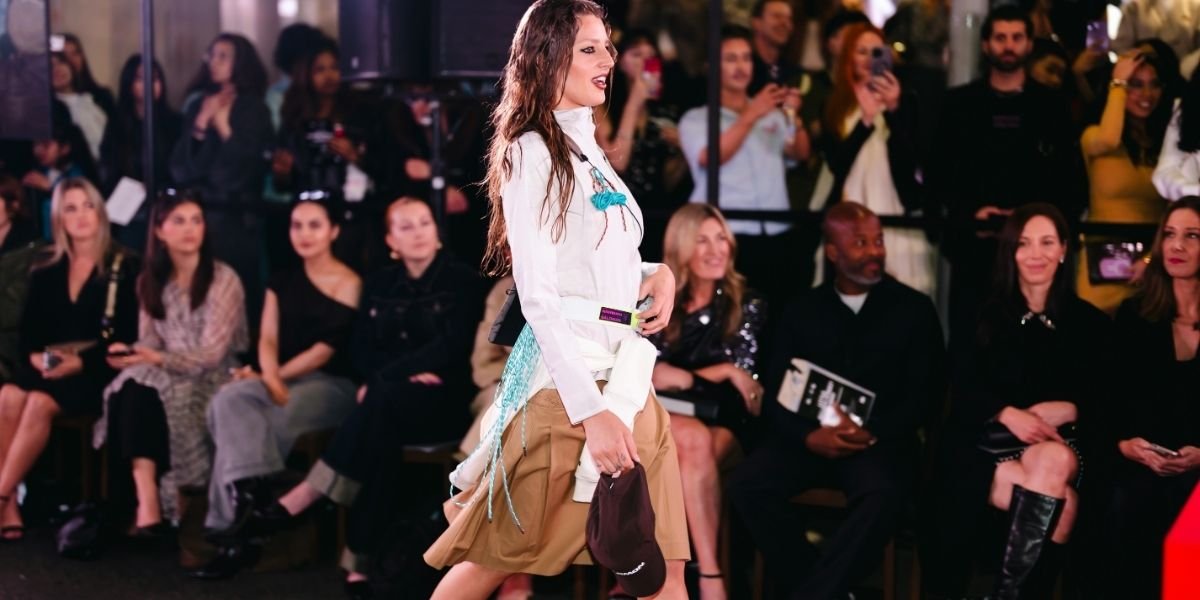
The skirt moved to the center of Milan Fashion Week after Prada built its Spring/Summer 2027 womenswear show around the garment. Across 63 looks, the collection moved from pleats and prints to adjustable slits and embellished constructions, offering one of the week’s clearest signals of how designers are reworking a familiar wardrobe category.

Key Takeaways

  • Prada presented 63 skirt-based looks for Spring/Summer 2027
  • The collection excluded trousers and dresses, keeping its focus on the skirt
  • Silhouettes included pleated, wrapped, printed, embellished and adjustable versions
  • Other Milan collections also featured skirts, while Prada delivered the week’s most concentrated treatment of the garment

Milan Fashion Week ran from Sept. 22 through Sept. 28, 2026, with Prada presenting its collection on the opening day. Miuccia Prada and Raf Simons focused on a single garment, creating variation through length, construction, materials and surface treatments rather than shifting among trousers, dresses and skirts.

Prada’s official show page lists 63 looks, while Associated Press coverage noted that trousers and dresses were excluded from the collection. The concentrated format gave the presentation a clear visual structure and positioned the skirt as the central element rather than one component of a broader seasonal wardrobe.

Prada Made the Skirt the Structure of the Show

The Spring/Summer 2027 collection moved through pleated, wrapped, sheer, printed and embellished skirts. Some incorporated industrial Velcro that allowed the shape or slit to be adjusted, while others used nylon pleating, cotton prints, satin and decorative overlays.

The upper half of many looks remained deliberately restrained. Black tops, knitwear, shirts, jackets and bralettes directed attention toward the lower half, allowing changes in proportion, texture and construction to provide much of the visual variation.

The approach also continued Prada’s long-standing interest in the garment. The house previously devoted its traveling “Waist Down” exhibition to skirts, and the Spring 2027 collection returned to the category through a contemporary range of materials and construction techniques.

Prada framed the collection around flexibility rather than a single prescribed identity. “I think you can express complexity,” Miuccia Prada said after the show, according to the Associated Press. The idea was reflected across a collection in which one garment could shift repeatedly in shape, texture and styling.

The Skirt Trend Expanded Beyond a Single Hemline

The skirt story in Milan did not resolve into one dominant length or silhouette. Prada moved among shorter designs, knee-length A-lines, wrapped styles, embellished columns, pleats and fuller shapes.

That variety makes the direction broader than a single-hemline revival. Straight skirts, pleated versions, shorter printed styles and fuller silhouettes can all fit within the same movement without requiring one cut to replace another. The wider interest in pleated midi skirts and longer proportions also shows how the category can move across different seasonal styling approaches.

Other Milan collections contributed to the skirt’s visibility as well. Runway coverage highlighted skirt looks at Gucci, Max Mara, Tod’s and Loro Piana, although Prada offered the clearest example because the entire collection remained centered on the garment.

The broader development is therefore less about one skirt replacing another and more about designers using the category as a flexible foundation for different proportions, materials and styling combinations.

Spring 2027 Styling Shifted Attention to the Lower Half

Prada reinforced that emphasis through styling. Several looks paired skirts with compact tops or visible bralettes, while others used jackets, sweaters and shirts that left the skirt as the most detailed component of the outfit.

The styling also connected with a wider Spring 2027 runway direction. Exposed bras and lingerie-inspired tops appeared across multiple collections, including Fendi and Etro in Milan. The contrast between minimal upper layers and more structured or decorative lower halves gave skirts additional visual emphasis.

That mix of soft fabrics, exposed layers and movement also intersects with ballet-inspired fashion details, where tulle, wrap construction and lightweight materials have already become recognizable styling elements.

For U.S. audiences following Spring 2027 fashion, Milan provides an early directional view rather than a guarantee of what will dominate retail. Runway collections can influence editorial styling and designer assortments, while adoption varies by brand, price point and customer.

Milan’s Spring 2027 collections ultimately pointed toward greater variety rather than a single required skirt shape. Prada offered the most concentrated expression of that direction, while other houses reinforced the category through different lengths, proportions and materials.

Frequently Asked Questions

What Was the Main Skirt Trend at Milan Fashion Week?

The most visible skirt story came from Prada, which built its Spring/Summer 2027 collection around the garment. The show used different constructions, materials and proportions rather than establishing one required silhouette.

How Many Skirt Looks Did Prada Show for Spring 2027?

Prada presented 63 looks for Spring/Summer 2027, all centered on skirts. Trousers and dresses were excluded, keeping the collection focused on variations of the same garment category.

Which Skirt Styles Appeared in Milan?

Prada showed knee-length A-lines, pleated designs, wrapped skirts, embellished columns, fuller shapes and shorter versions. The variety indicates that the skirt direction extends beyond one specific hemline or construction.

Was the Skirt Trend Limited to Prada?

No. Fashion-week coverage also highlighted skirts at houses including Gucci, Max Mara, Tod’s and Loro Piana. Prada stood apart because its entire Spring/Summer 2027 collection focused on the garment.


Why Loneliness Is a Growing Public Health Concern for Seniors

By: Melissa Powell

Loneliness among older adults is increasingly being recognized as one of the most urgent public health challenges of the coming decades. As populations age and social structures evolve, more seniors are experiencing reduced social contact, shrinking support networks, and a growing sense of isolation. What was once seen as a personal or emotional issue is now understood as a serious health risk with measurable consequences for individuals and healthcare systems alike.

Social isolation and loneliness are not the same thing, but they often intersect. Social isolation refers to a lack of social contact or relationships, while loneliness describes the subjective feeling of being disconnected from others. Both are common among older adults and can reinforce each other over time. Research suggests that a significant share of seniors experience these challenges, with some studies estimating that up to one quarter of older adults are socially isolated, and a large proportion report feelings of loneliness.

The implications extend far beyond emotional well-being. A growing body of research links loneliness to serious physical and cognitive health risks. Social isolation has been associated with increased rates of heart disease, stroke, depression, and cognitive decline. Studies also show that it can raise the risk of developing dementia by as much as fifty percent. These outcomes place additional strain on healthcare systems already grappling with rising demand for senior care services. As the global population ages, the scale of this challenge will likely grow.

Several factors contribute to loneliness in later life. Retirement can reduce daily social interaction that once came through work. The loss of a spouse or close friends can shrink personal networks. Physical limitations, chronic illness, and mobility challenges may make it harder for seniors to participate in community life. Living alone also increases vulnerability to social isolation, particularly when family members live far away.

Urbanization and demographic shifts are amplifying these trends. Families are more geographically dispersed, and traditional multigenerational living arrangements are less common in many societies. At the same time, healthcare systems have historically focused more on medical treatment than social well-being, leaving loneliness largely unaddressed in care planning.

The growing recognition of loneliness as a public health issue is prompting new approaches across healthcare, social services, and community organizations. Some healthcare providers are beginning to screen older patients for social isolation during routine visits. Identifying loneliness early allows providers to connect patients with community programs, support groups, or volunteer networks that foster social engagement.

Technology also has the potential to play a role. Virtual communities, telehealth platforms, and digital communication tools can help seniors maintain connections with family and friends when in-person interaction is limited. However, digital solutions must be paired with efforts to address barriers, such as limited digital literacy and device access.

Equally important are community-based initiatives that encourage social participation. Programs that bring together seniors through group activities, intergenerational engagement, or volunteer opportunities can help rebuild meaningful connections. Even small interventions, such as regular check-in calls or neighborhood support networks, can significantly improve a senior’s sense of belonging.

Addressing loneliness requires a broader shift in how societies think about aging. Social connection should be considered as essential to health as nutrition, physical activity, and preventive care. Healthcare providers, policymakers, and community leaders all have to play a role in recognizing and addressing this growing challenge.

It is no longer a question of whether loneliness among seniors is a public health issue. The evidence is clear that it is. The more pressing question is whether healthcare systems and communities are prepared to respond before the consequences worsen.

Disclaimer: This article is for general informational and educational purposes only and does not constitute medical advice, diagnosis, or treatment. Individuals concerned about loneliness, social isolation, or related health effects should consult a qualified healthcare professional.

SUNSKAARA Brings Holiday Style Home With Pajamas Designed for Seasonal Celebrations

There is something wonderfully nostalgic about slipping into a beautiful pair of pajamas during the holidays. Add hot chocolate, a glowing Christmas tree, favorite music, and the people who matter most, and suddenly staying home feels every bit as special as going out.

For the 2026 holiday season, SUNSKAARA is embracing that feeling with a collection centered around comfort, femininity, and effortless style.

The brand’s holiday pajama looks speak to a woman who wants comfort without abandoning fashion. They are pieces made for Christmas morning photographs, holiday movie nights, gift exchanges, winter weekends, and those quiet evenings when the greatest luxury is simply having nowhere to go.

SUNSKAARA approaches pajamas as part of a woman’s wardrobe rather than an afterthought. That distinction is especially relevant during a season when consumers are increasingly looking for clothing that can move between different moments of their lives.

A beautiful pajama set can be worn while entertaining friends at home, packing for a winter getaway or enjoying a slow Sunday morning. Add slippers, jewelry, or a cozy cardigan, and sleepwear suddenly becomes part of an entire lifestyle.

The Pajama Party Returns

Photo Courtesy: Sunskaara

One of the most charming ideas surrounding SUNSKAARA’s holiday season is the return of the pajama party.

The idea is simple. Girlfriends gather in their favorite SUNSKAARA pajamas for hot chocolate, champagne, holiday treats, and gift exchanges. It is festive without being overly formal and stylish without sacrificing comfort.

The concept also reflects the way women are redefining luxury. Luxury does not always have to mean dressing up for a major event. Sometimes it means beautiful fabrics, time with friends, and clothing that makes an ordinary evening feel special.

SUNSKAARA’s holiday direction fits naturally into that movement.

The collection also offers gifting potential. Pajamas have long been a holiday staple, but today’s consumer increasingly wants gifts that feel useful and elevated at the same time. A stylish pajama set delivers both.

For mothers, daughters, sisters, girlfriends, and colleagues, sleepwear can be personal without being complicated.

Winter Style Beyond the Bedroom

The broader SUNSKAARA Winter Collection expands that philosophy beyond traditional sleepwear.

Comfort continues to influence fashion, and women no longer want to maintain completely separate wardrobes for home, travel, and leisure. They want versatile pieces that work across multiple settings.

SUNSKAARA is responding to that shift with an aesthetic rooted in relaxed sophistication.

The result is a holiday wardrobe that celebrates something women have known for generations: feeling comfortable and feeling beautiful do not have to be opposing ideas.

This winter, SUNSKAARA is making a persuasive case for staying in, dressing beautifully, and creating a celebration of one’s own.

Because sometimes the best holiday party happens right at home.

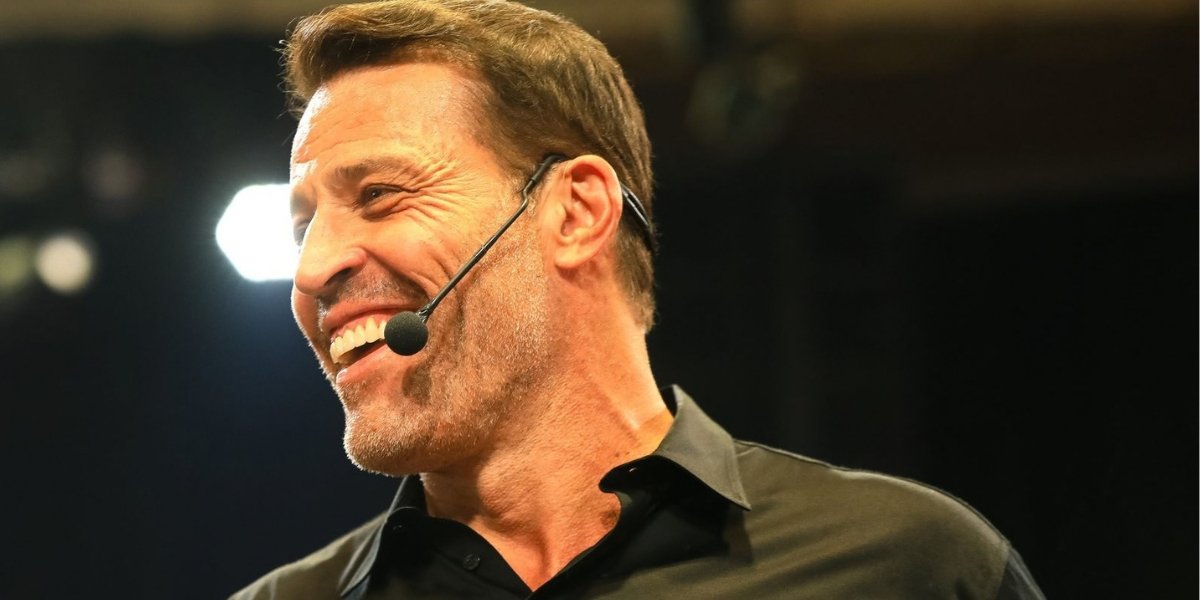
Tony Robbins Helps Women Ditch External Expectations and Reclaim Their Power

Some women feel like they’re climbing steep mountains every day. They’re balancing career, family, partnership, community, and friendship. For these women, the roles stack up, and somewhere in the middle of keeping it all together, their sense of self can quietly slip away.

She’s present, capable, and dependable for everyone else, yet increasingly absent from her own story. When she finally stops moving, she feels a void. Tony Robbins has spent four decades watching women navigate this void as they hold more than anyone gives them credit for. And he’s learned that this is typically a signal that it’s time to connect with true identity.

Robbins, a peak performance coach, has spent more than four decades helping people break through the psychological barriers holding them back from the lives they’re capable of living. For the women lining up for Robbins’ events and coaching programs, Robbins provides more than just productivity hacks. He helps them reclaim their identity, self-worth, and sense of what’s truly possible.

Events that Invite Transformation

Robbins has spoken to women through events like the She’s Unstoppable summit. He co-created the summit with his wife, Sage, with a goal to help women step away from external expectations and decide on their authentic selves.

The virtual three-day summit emphasizes self-compassion rituals, respectful self-talk, and boundary setting that doesn’t require women to abandon themselves to help others. It empowers women to connect in sisterhood, reclaim creativity, and rediscover the activities that once brought them joy.

Women are also flocking to Robbins’ Date with Destiny, a six-day personal development conference. The experience is designed to help participants understand what drives every behavior, thought, decision, and emotion. Through this awareness, they learn to interrupt and replace repeating patterns that don’t serve them and start living with genuine purpose.

For women who’ve spent years managing others’ needs and expectations at their own expense, this kind of self-understanding isn’t an abstract concept. It’s a practical asset that can shape how they show up for themselves, their relationships, and their careers.

Women also make up a large portion of attendees at Unleash the Power Within. UPW draws some of Robbins’ largest crowds, with virtual events welcoming more than 30,000 attendees from nearly 200 countries. The four-day self-development seminar addresses the areas of life where change matters most: work, spirituality, relationships, and health. The program is designed to help participants move beyond the fear and limiting beliefs that keep them playing small.

For women who’ve internalized false messages about what they’re allowed to want, what they’re capable of achieving, or what they deserve, the event offers skills to write new stories.

Personal Coaching That Builds Momentum

Live events ignite a shift, and personal coaching provides the momentum and accountability to keep that momentum going strong. Robbins’ personal coaching pairs women with a coach trained exclusively in Robbins’ Success System.

While no one would expect a professional athlete to excel without a coach, too many women go through life without help. They treat the symptoms of their challenges but never get down to the root. They spend years learning lessons the hard way, fall into traps that could be avoided, get stuck in negative loops, fail to see their own blind spots, and miss out on valuable opportunities. Robbins’ Results Coaching is designed to address this.

For women going through complex life transitions, such as career pivots, relationship changes, or questions of identity and purpose, one-on-one Results Coaching offers structured, personal support. Coaches work with women to build a customized roadmap forward and develop the accountability structures that help change stick.

Women who’ve worked with Robbins’ coaches often describe the experience as raw and real, with a focus on long-term change rather than temporary motivation.

Guidance Geared for the Workplace

Female business leaders and entrepreneurs carry a particular kind of weight. In their roles as founders, decision-makers, and culture-setters, they can get sucked into daily operations. What may have started as an energizing role can quickly devolve into a draining one, especially if they are running between daily work fires while still trying to be present in relationships and family roles.

Robbins’ business coaching sessions are built for exactly this. They guide female entrepreneurs to set clear goals, build a plan for massive action, and work through the limiting beliefs that may be holding them and their companies back.

Coaches draw on the same proprietary systems Robbins has applied across 120 privately held businesses. Rather than pushing women to succeed at all costs, the coaching focuses on working smarter so they’re not compromising their personal lives. The goal is to help female leaders run their businesses without letting their businesses run them, staying in control of their time and their energy.

Women are “Coming Home” to Themselves

From Robbins’ events to his personal and business coaching, the common thread is that women can take charge of their own narrative. They can reclaim their power, not from an external source but from within. They are wiser, more resilient, and stronger than they have often been told.

A woman’s past need not equal her future. For women who have gotten lost in the balancing act of life, Robbins invites them to come home to their true selves. More information about Tony Robbins’ events and coaching programs is available at TonyRobbins.com.

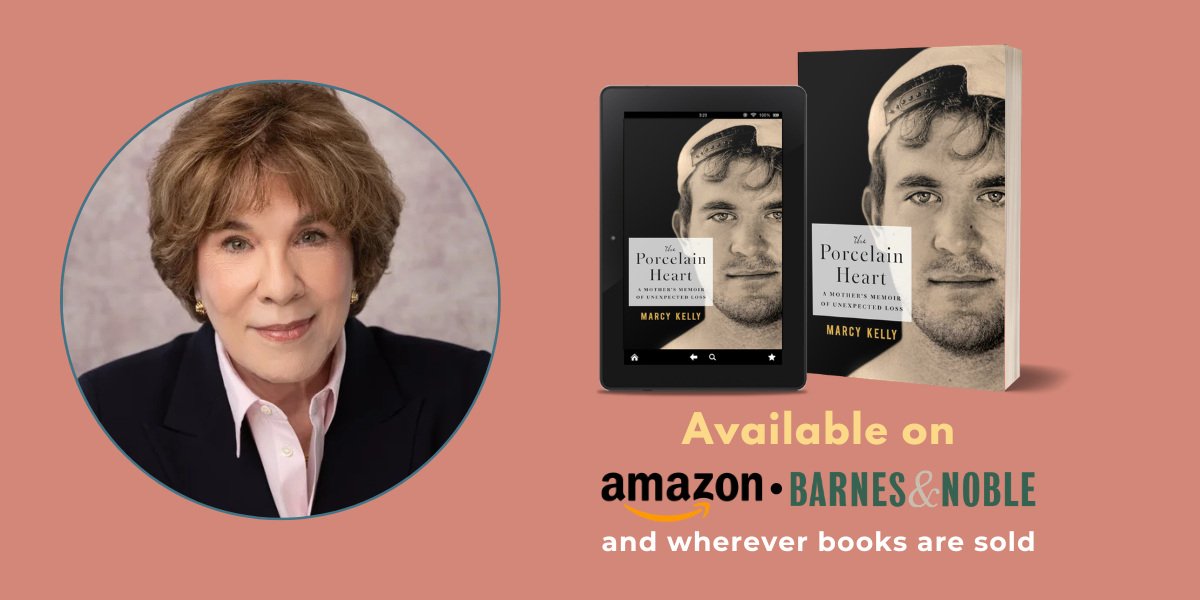
Marcy Kelly Says Michael Co-Wrote The Porcelain Heart With Her More Literally Than It Sounds

By: Kristine Kennedy

When Marcy Kelly describes writing The Porcelain Heart: A Mother’s Memoir of Unexpected Loss, she says that her son Michael co-wrote it with her. She means something specific by that. As she wrote, she was constantly in an internal dialogue with him, negotiating over what to include, worrying about whether he would find something too personal or too embarrassing, arguing with him about the balance between honesty and privacy. For a man who didn’t like being the center of attention, being the subject of a memoir was not something he would have chosen. They worked through it together, the way you work through things with someone you know well, even when that person is no longer physically present.

That quality, the sense of an ongoing relationship with someone who has died, is one of the most quietly powerful things about the book. Healing doesn’t mean the relationship ends. It means it changes.

How It Started

Marcy wasn’t planning to write a book. She was writing notes. Memories of Michael that would surface and that she didn’t want to lose or have time blur. It took a while before she could see that those notes could become something larger. The decision to share it publicly came from early readers who told her they thought it would help others who had experienced similar loss. That was the reason she needed.

She had written fiction, essays, and an award-winning screenplay before this. None of it had prepared her for writing something so personal and so painful. The craft was familiar. The material was not.

The Symbol She Found in a Home Movie

The title came from a specific and unexpected source. After Michael died, Marcy watched a home movie of the two of them on a ride at Disneyland, clearly happy, clearly together in a way that had felt permanent at the time. In the footage, she was wearing a porcelain heart on a chain around her neck. That image became a symbol for everything she was trying to hold, and everything she understood could never be restored. Porcelain is hard and translucent. Once broken it cannot be put back together. The title carries that truth without softening it.

The Legacy Built to Outlast Her

Michael was an only child who didn’t have children. Marcy thought carefully about how to ensure his memory would outlive her. She created a golf scholarship at his alma mater, where he had been on the golf team. She commissioned a fountain along the LA River in a spot where he used to hike, a place for people and their pets to stop. Both of those things now exist in the world as evidence of a life that mattered and a love that continues.

His presence in her daily life is also specific and intentional. His photos are placed around the house. Crafts he made in school are in her office. His flip-flops are on a shelf in her closet. She uses some of his kitchen utensils when she cooks. These are not grand gestures. They are the small continuous practices of keeping someone close.

What She Would Tell Someone in the Darkest Part

For a parent who has just lost a child and cannot imagine surviving it, Marcy’s message is honest about how hard it is and practical about what helped her. Stay busy. Set one small goal each day, even washing your hair or paying a single bill. Complete it. Acknowledge that you did. Take baby steps.

She found that learning to play bridge gave her something demanding enough to occupy her mind for stretches of time, blocking the thoughts that otherwise overwhelmed her. The specific activity is less important than having one. Something that requires your attention to be somewhere else, even briefly.

She also believes in writing down memories, because memories are what she started with and because the act of recording them is both a way of preserving the person and a way of processing what happened. Those notes became this book. That book may reach people she will never meet. That is the kind of thing that happens when someone decides not to let their grief stay private, when they trust that the most personal thing they have lived through might be the most useful thing they can offer.

Michael lives on in the fountain and the scholarship and the kitchen utensils and the flip-flops on the shelf and in this book that he co-wrote, reluctantly, from wherever he is.

For anyone carrying the loss of someone they loved completely, The Porcelain Heart by Marcy Kelly is available now on Amazon.

Cassie Rowan on Ambition, Motherhood and Building Again

Cassie Rowan did not set out to work in travel Network Marketing. She was already an entrepreneur. She ran her own fashion business, enjoyed building something of her own, and assumed the industry was not for people like her.

Her entry into travel Network Marketing was not smooth either. She tried it, doubted it, and walked away for 18 months. Then lockdown arrived and her fashion business closed. Rowan says that period forced her to look at business, income and security through a different lens.

She came back with a different approach. Instead of testing the waters, she studied travel Network Marketing as an industry and treated it as a real business. Travel became the vehicle. She built a community around something people already talk about and spend money on. That community grew into what Rowan describes as a global organisation of more than thousands of people.

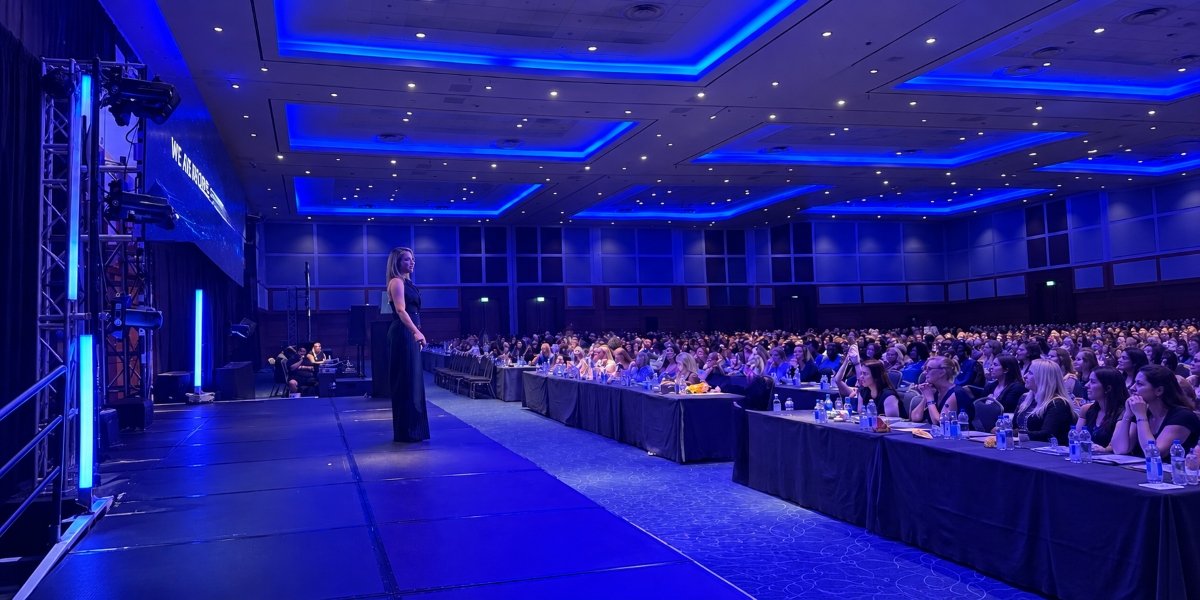
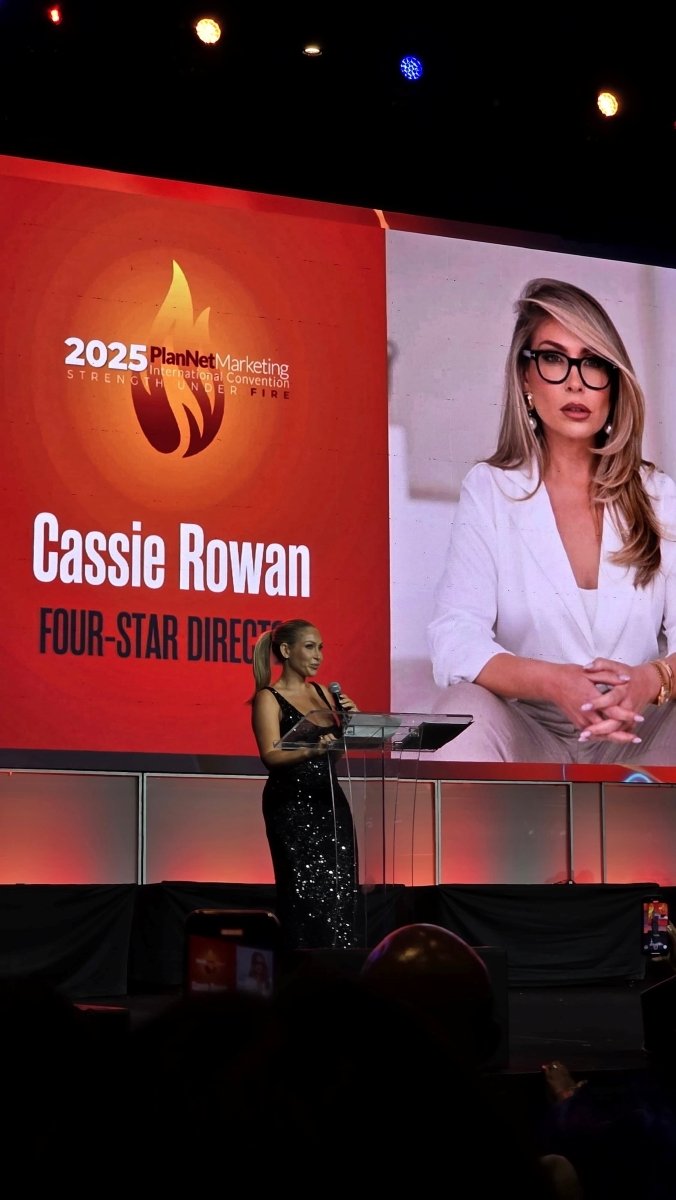
She now speaks internationally and has appeared on stages across the UK, Europe and the United States. What she values, she says, is watching ordinary people realise they are capable of more than they thought.

Adapt the Method, Keep the Fundamentals

Rowan refuses to run a 2026 business on 2006 methods. She argues that the fundamentals of travel Network Marketing have not changed. Relationships, conversations, consistency, follow up and duplication still matter. What has changed is how people communicate, absorb information and make decisions.

She also warns against confusing innovation with constant reinvention. Travel Network Marketing does not reward the most inventive person in the room. It rewards people who get very good at simple, repeatable actions, then update how they deliver them.

Building Through Social Media and Culture

Social media carries a large share of her travel Network Marketing business. She does not perform a persona to build one. She talks about business, travel, motherhood, fashion, the wins and the setbacks. In her view, trust outperforms polish.

Cassie Rowan on Ambition, Motherhood and Building Again

Photo Courtesy: Amir shah

She watches culture just as closely. Recruitment brings someone through the door. In travel Network Marketing, culture decides whether they stay, grow and lead. The question she returns to is what happens after somebody joins.

Giving Women Permission to Want More

Rowan’s central value is straightforward. Women should be allowed to want more without apologising for it.

She pushes back on the idea that wanting money makes a woman materialistic, that ambition makes her selfish, or that motherhood should move her goals down the list. She sees nothing wrong with a woman wanting financial security, choices for her children and work that makes her feel capable.

That belief shapes how she leads. She does not define success for the women she works with in travel Network Marketing. One woman wants a modest supplement to the household budget. Another wants full financial independence. Rowan takes both goals seriously.

Motherhood and Ambition

Rowan is equally direct about motherhood. Her daughter is the reason she works, not the reason she holds back. She wants her daughter to grow up watching a woman who loves her fiercely and still takes risks and chases her own ambitions.

She rejects the idea that the two compete. A woman can be present for her children and still build something of her own. She wants her daughter to see that as normal rather than remarkable.

How She Measures Success

Rowan will not claim money does not matter. It creates choices, security and freedom, and she wants more women to say so out loud.

Still, she measures her work differently. Success looks like a woman making her first commission and realising she can do this. It looks like someone who spent years financially dependent on another person building something of her own. It looks like a mother finding her confidence again after years at the bottom of her own priority list.

Cassie Rowan on Ambition, Motherhood and Building Again

Photo Courtesy: Amir shah

She also measures it by the leaders she develops in travel Network Marketing. Her aim is not to build a team that depends on her. It is to build women who realise they never did.

Her closing message to women considering travel Network Marketing, or anything else they have been talking themselves out of, is blunt. Stop shrinking the life you want into something other people find easier to understand. You are allowed to want more, and you are allowed to go and build it.

Follow Cassie Rowan on:

Facebook at https://www.facebook.com/cassie.rowan.1884
Instagram at https://www.instagram.com/iamcassierowan/
TikTok at https://www.tiktok.com/@iamcassierowan

Testimonials in this article reflect personal experiences and aren’t guaranteed. Results vary based on effort, experience, and commitment.