
Women's Journal

Gloria Smiles Is Building the Rooms She Once Wished Existed

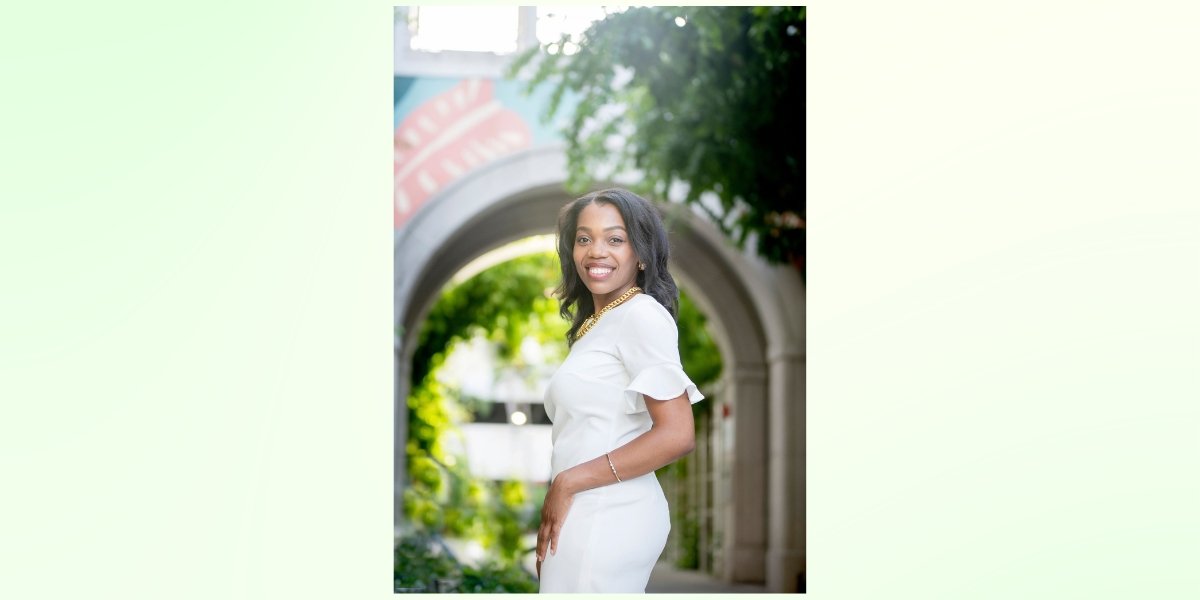
By: Emily Stanza

Through Flourish Within and FemCity Palm Beach, Gloria Smiles is creating a new model for leadership, community, and what it means for women to succeed together.

At some point in many founders’ journeys, success begins to mean something different.

The focus shifts from what you can accomplish to what you can create for others. For Gloria Smiles, that evolution has become the defining thread of her entrepreneurial journey.

Smiles is the founder and CEO of Flourish Within, a company dedicated to helping leaders grow with greater clarity, intention, and purpose. She is also Founding President of FemCity Palm Beach, where she has built a community centered on connection, visibility, and opportunity for women in business.

At first glance, the two roles might appear separate. One focuses on individual transformation, the other on collective growth. But for Smiles, they are deeply connected.

Both are rooted in a belief that has shaped the entrepreneur she has become: when people have the right environment to grow, they begin to see possibilities in themselves they may not have seen before.

A Founder Journey Built From Within

Before building communities for others, Smiles had to work through her own evolution.

Her professional journey has taken her through leadership, communication, and entrepreneurship, experiences that eventually led her to question traditional definitions of success.

Achievement alone was not enough.

Smiles became increasingly interested in what happens beneath the accomplishments, including how leaders understand themselves, communicate with others, and create lives that actually reflect who they are becoming.

That philosophy ultimately became Flourish Within.

The company was built around the idea that meaningful leadership begins internally. Through coaching, workshops, speaking, and leadership development, Smiles works with individuals who want to move beyond simply performing at a high level and instead lead with greater intention and self-awareness.

Her work is particularly relevant in a culture that often celebrates the visible parts of success while overlooking the internal transformation required to sustain it.

For Smiles, flourishing is not simply about doing more. It is about becoming more aligned with the person behind the accomplishments.

And as her own leadership evolved, so did her desire to create that kind of environment for other women.
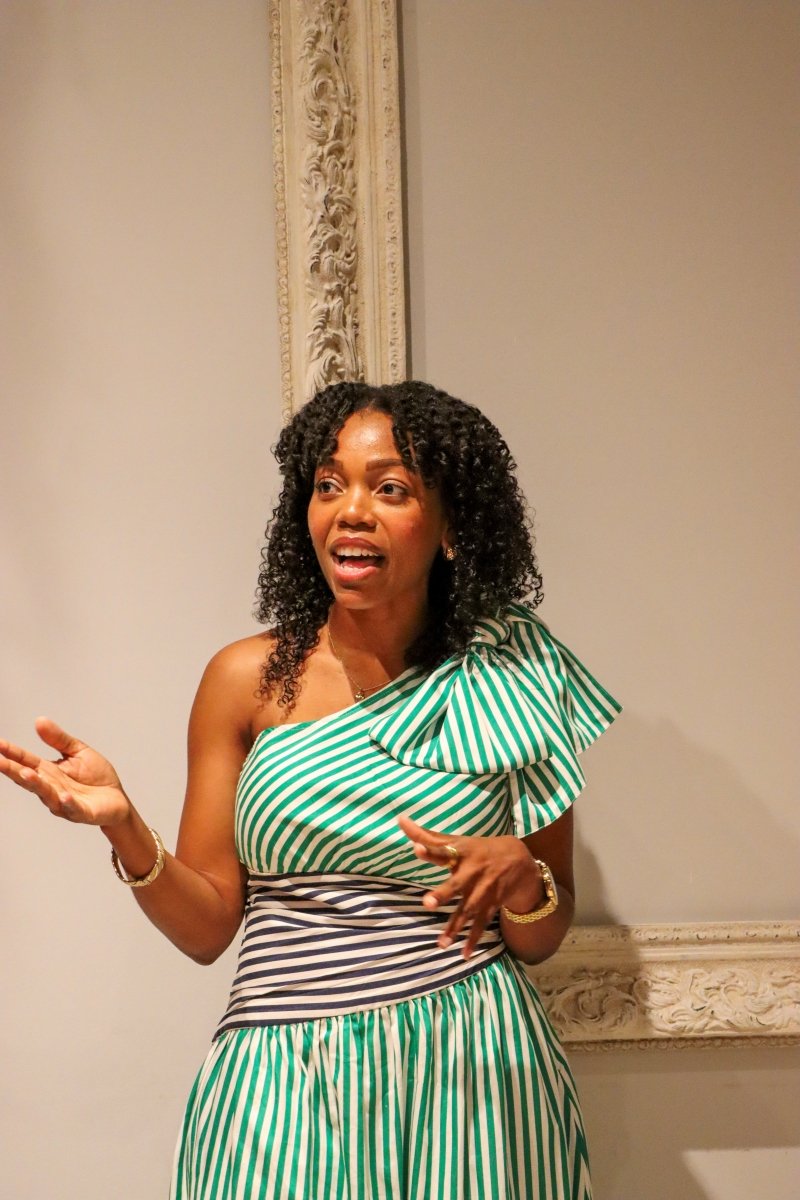
Photo Courtesy: Gloria Smiles

Creating the Room She Wanted to Find

When Smiles stepped into the role of Founding President of FemCity Palm Beach, she saw an opportunity to rethink what a professional women’s community could feel like.

She did not want to create another room where women exchanged business cards, made small talk, and left with a stack of contacts.

She wanted to create belonging.

“I built this chapter with one vision: to create the room I always wished existed,” Smiles says. “A room where every woman has access, visibility, and influence. Where you do not have to fight to be seen. Where you walk in as you are and leave knowing exactly who you are becoming.”

That philosophy has shaped FemCity Palm Beach into a community of entrepreneurs, leaders, creatives, and changemakers who come together not simply to advance their own careers, but to advocate for one another.

“FemCity Palm Beach is more than networking,” Smiles says. “It is a sisterhood of women entrepreneurs, leaders, creatives, and change-makers who show up for each other in business and in life.”

It is a distinction that matters.

Traditional networking is often built around the question, What can this person do for me?

Smiles is interested in building rooms where the question becomes, What can we build together?

From Community to Statewide Recognition

That vision has now earned statewide recognition.

FemCity Palm Beach was named a 2026 Best of Florida Regional Winner in the Business Associations category, a significant milestone for the community Smiles has helped build.

The honor, awarded through Guide to Florida’s Best of Florida Awards, recognizes organizations selected by readers and editors statewide.

For Smiles, however, the significance extends beyond another accolade.

It is validation of an idea.

Women do not need more rooms where they have to compete to be noticed. They need environments where their ideas are heard, their businesses are championed, and their successes are celebrated by women who genuinely want to see them win.

That is the culture Smiles has worked to create in Palm Beach.

And the recognition marks an important moment in her own evolution as a founder.

What began as a commitment to personal growth through Flourish Within has expanded into something much larger, a commitment to creating opportunities for an entire community of women to flourish alongside her.

A Different Measure of Success

Entrepreneurship is often measured through numbers: revenue, growth, clients, followers, awards.

Smiles’s journey suggests another measure worth considering: How many people have more possibilities because of what you built?

That question connects everything she is creating.

Through Flourish Within, she helps leaders look inward and become more intentional about who they are and how they lead.

Through FemCity Palm Beach, she has taken that philosophy outward, creating a place where women can find connection, visibility, mentorship, and support while pursuing their own ambitions.

The Best of Florida recognition may celebrate what FemCity Palm Beach has accomplished, but it also represents something more personal for its president.

It is evidence that the kind of room Smiles once wished existed is no longer hypothetical.

Women are walking into it.

They are building businesses in it. They are forming friendships in it. They are opening doors for one another. And they are leaving more confident about what they can become.

For Smiles, that may ultimately be the most meaningful chapter of her founder story.

She stopped waiting for the right room to exist. She built it.

Dr. Elham Neisani Samani on Bringing Women’s Health Education Beyond the Clinic

For Dr. Elham Neisani Samani, women’s health education cannot depend only on who reaches an exam room. It has to reach women who are working long hours, living far from care, navigating a new language, or delaying appointments because life leaves few easy options.

That view has shaped her work as a physician, researcher, educator, and women’s health advocate. Her career has moved across Tehran, rural Iran, Yale University, and clinical training in the United States. Across those settings, one idea has stayed consistent: healthcare becomes more effective when patients feel seen before they are asked to change.

Dr. Neisani Samani has described a proud outreach effort as a mobile health clinic program that served underserved communities. The program offered basic medical services, screenings, and education to people who often postponed care because of transportation problems, financial limits, or the absence of nearby providers.

The clinical services mattered, but the larger lesson was about trust. Showing up consistently, listening carefully, and meeting people where they were helped make care more approachable. It also reminded her that prevention begins long before a diagnosis.

Education That Travels With the Community

Community health outreach works because it changes the point of entry into the healthcare system. Instead of waiting for people to schedule visits, complete paperwork, find childcare, arrange transportation, and pay for care, outreach brings health information into familiar spaces.

Those spaces may include schools, community centers, faith-based organizations, health fairs, free clinics, and nonprofit programs. Dr. Neisani Samani views these settings as important extensions of medical education. They allow physicians to answer questions early, explain prevention in plain language, and connect people with resources before medical issues become more serious.

This approach is especially important in women’s health education. Many women face barriers that are practical, cultural, and emotional. Some may lack insurance or nearby specialists. Others may feel uncomfortable asking questions about reproductive health, sexual health, or routine gynecologic care. Language differences can make appointments confusing. Cultural expectations may discourage open conversations about screening, contraception, HPV vaccination, or symptoms that deserve attention.

Community-based education does not replace medical care. It helps create a bridge to it. When physicians teach in accessible spaces, they reduce the distance between medical knowledge and everyday life.

Meeting People Where They Are

The phrase “meeting people where they are” can sound simple, but in healthcare it requires discipline. It asks physicians to consider more than a patient’s symptoms. It asks them to understand the circumstances that shape decisions.

Dr. Neisani Samani learned this lesson through work in resource-limited settings, including her decision after residency in Iran to serve in Naghan, a small mountain village in western Iran. There, she worked as a health systems and quality improvement adviser for three community hospitals. The experience showed her what it takes to build and sustain care in places where resources are limited.

That perspective now informs her broader belief in health equity. Transportation, finances, language, geography, and trust are not side issues. They can determine whether someone receives preventive healthcare at all.

For physicians, community participation makes these barriers visible. A health fair may reveal that many women do not know when to seek a routine screening. A school presentation may show how little accurate sexual health education young people receive. A partnership with a refugee organization may highlight how confusing a new healthcare system can be for families starting over.

When physicians listen in those environments, they often learn what a standard appointment may not reveal.

The Role of Community Organizations

Community organizations are often trusted before physicians are. They may know the neighborhood, speak the language, understand family dynamics, and recognize which barriers keep people from care.

Dr. Neisani Samani sees these organizations as essential bridges between healthcare providers and the women they hope to serve. Through partnerships, physicians can bring screenings, wellness education, and referrals into places where people already feel connected.

Her own advocacy includes work with Integrated Refugee & Immigrant Services, where she has helped refugees and displaced individuals navigate barriers to healthcare access. She is also a co-founder of the Organization of Middle Eastern Girls and Women, a nonprofit focused on empowering girls and women through education, career advancement, and leadership development.

These roles reflect a broad view of women’s health. Medical care is one part of the picture. Education, dignity, safety, leadership, and access also shape health outcomes.

Partnerships also help physicians avoid a common mistake: assuming that one message works for everyone. Community leaders can help shape education so it is clear, culturally respectful, and practical. That may mean translated materials, professional interpreters, smaller group sessions, or educational formats that allow questions without embarrassment.

Preventive Care Begins With Understanding

Preventive healthcare depends on awareness. People are more likely to seek care when they understand why screenings, vaccinations, and routine visits matter.

In women’s health, preventive education can cover cervical and breast cancer screening, contraception, sexually transmitted infections, HPV vaccination, reproductive health, healthy relationships, and the value of regular gynecologic care. Dr. Neisani Samani has emphasized the need for safe, judgment-free spaces where women can ask questions and receive accurate information. That approach is central to reproductive health education. When women feel respected, they are more likely to talk openly, seek follow-up care, and make informed decisions.

Her background as an OB/GYN and physician-scientist also gives her a view of prevention that is both clinical and personal. Her research has included endometriosis, reproductive sciences, socioeconomic disparities in women’s health, artificial intelligence in maternal-fetal medicine, and medical education. Her personal experience with IVF treatment and a high-risk pregnancy has deepened her empathy for patients facing reproductive uncertainty, loss, and anxiety.

That combination shapes her belief that education should not feel abstract. It should help patients understand their options, ask better questions, and feel less alone.

Health Literacy and Respectful Communication

Health literacy is not only about reading ability. It is about whether health information is usable. A patient may understand a word in conversation but still feel lost when given medical forms, instructions, or online information.

Dr. Neisani Samani has said effective patient education begins with listening. Working with immigrant and refugee communities taught her that patients bring different experiences with healthcare systems, prevention, illness, and treatment. Some may come from places where preventive care was uncommon or institutions felt unsafe.

To make education accessible, she favors clear language, fewer assumptions, and opportunities for questions. When language barriers exist, professional interpreters and translated materials can help patients receive accurate information in a language they understand.

Cultural sensitivity is also important. Values, family roles, religious beliefs, privacy concerns, and past experiences can influence whether a patient feels comfortable discussing reproductive health. Respectful education does not mean avoiding important topics. It means explaining them in a way that preserves dignity and trust.

Combating Misinformation With Consistency

Many people receive health information through social media. This creates a challenge for physicians because inaccurate information can move faster than careful explanations.

Dr. Neisani Samani believes healthcare professionals should respond by making evidence-based information easier to find and understand. It means using simple language, addressing common myths, and being a steady source of reliable education.

Online communication is not separate from community medicine. For many patients, it may be where they first encounter a physician’s voice. Trust grows when healthcare professionals are consistent, transparent, respectful, and willing to acknowledge concerns instead of dismissing them.

Still, social media has limits. It can provide general education, but it cannot replace individualized medical care. That distinction matters. Physicians can use public platforms to encourage awareness and preventive action while reminding people to discuss personal concerns with their own healthcare providers.

A Shared Responsibility for Better Health

Dr. Neisani Samani’s work points to a practical definition of community medicine. It is not limited to charity clinics or occasional public events. It is an ongoing relationship between physicians, local organizations, families, and people who need reliable information.

Families can play a role by treating prevention as a shared priority. Regular checkups, recommended screenings, vaccinations, family health history, healthier meals, physical activity, and open conversations about mental health can all become part of everyday life. For underserved communities, consistency matters. One health fair may answer a question. A recurring mobile clinic may change a pattern. A long-term partnership may help women who once delayed care begin seeking preventive services earlier.

A Practical Path Toward Lasting Community Trust

Dr. Elham Neisani Samani’s message is grounded in prevention, access, and connection. Health education should not wait behind clinic doors. It should be present in schools, community centers, refugee programs, health fairs, mobile clinics, and the trusted organizations that already serve families. For women’s health education to make a lasting difference, it must be understandable, culturally aware, and close enough for people to use. When physicians listen first and teach with respect, they help communities see healthcare not as a distant system, but as a partnership built around dignity, prevention, and long-term trust.

Hallie Marie Turns Heartbreak Into Strength on “A Small Man’s Pride”

The Washington, DC-based artist embraces blues rock and emotional honesty in a song about anger, freedom, and reclaiming self-worth.

Heartbreak can leave someone waiting for an explanation, an apology, or a sign that the person who hurt them finally understands. Hallie Marie’s latest song, “A Small Man’s Pride,” considers what happens when that waiting ends. The relationship has run its course, and the former partner’s opinion no longer deserves the attention it once commanded. There is pain in that realization, but there is relief, too.

For the Washington, DC-based musician, that combination calls for a different sound. Moving from pop toward blues rock, she gives the song a driving 6/8 guitar pulse, alternative rock energy, soulful lead vocals, and gospel-inspired harmonies. The arrangement supports a declaration of self-respect from someone who has stopped asking another person to recognize her worth.

Anger has a place in this story. So do vulnerability, betrayal, and the confidence that comes with understanding that a relationship’s failure does not have to become a verdict on the person leaving it.

Finding Strength Without Hiding the Hurt

Hallie Marie approaches the song’s emotional center with a clear intention: to acknowledge heartache while giving strength equal room.

“The idea was to convey my heartache as well as an empowered vulnerability,” she says. “Like yeah, I feel anger, I feel betrayal, but I also feel strong and wiser instead of smaller and more insecure.”

That distinction shapes the release. Its confidence does not depend on pretending the relationship meant nothing or that the hurt has disappeared. Instead, the song makes space for someone to feel wounded and still recognize her own value. Expressing pain becomes part of standing up for herself.

The freedom at the heart of “A Small Man’s Pride” comes from setting down an emotional burden that has become exhausting to carry. An emotionally immature former partner can no longer provide the validation being sought. Once that expectation falls away, his judgment loses its hold.

The song follows that release of responsibility: the recognition that someone else’s inability to respond with care does not create an obligation to keep seeking their approval. Moving on means reclaiming the attention and energy that the relationship consumed.

A Blues Rock Sound With the Voice at Its Center

That emotional directness also guides the musical choices. Classic blues rock influences meet modern alternative rock textures, giving Hallie Marie a setting for both the hurt and the defiance she wants to express. The guitar pulse anchors the track, while the gospel-style backing harmonies bring breadth to its vocal sound.

She knew the singing needed to carry the song’s emotional weight.

“Immediately I knew that this is the kind of song where the vocals have got to be tight,” she says. “They’ve got to be powerful; they’ve got to be the gravity.”

Her emphasis on vocal strength connects the sound to the subject. In a song about refusing dismissal, the voice occupies the center. Its presence matters as much as the words: the person expressing these feelings expects them to be heard.

Sound engineer Ken Schubert, guitarist Buddy Speir, drummer Andy Hamburger, and bassist Eric Bass helped bring that approach to life. Together, their contributions provide the foundation for a blues rock record that holds vulnerability and resolve within the same musical frame.

Making Room for Female Anger

Hallie Marie places the breakup within a broader concern about which emotions women are allowed to express comfortably. Sadness and heartbreak, she argues, often receive acceptance that anger does not.

“This is a song primarily about female rage,” she says. “People have no problem with a woman’s sadness, grief, or heartbreak, but every woman has experienced disregard or pushback when they express emotions that are not traditionally associated with femininity and softness.”

The song challenges that expectation by letting anger speak without an apology attached. In Hallie Marie’s account, being heard matters to healing, particularly when a raised voice has previously prompted accusations of overreacting.

Her point also involves accountability. Someone who has been hurt should not have to absorb all the emotional consequences while protecting the other person from discomfort. Acknowledging the damage requires recognizing how actions affect others.

“This is not a rejection of anyone else’s power,” she says. “It’s an affirmation of the healing that happens when you are listened to instead of dismissed.”

Moving Forward on Her Own Terms

Emotional complexity already runs through Hallie Marie’s work. Drawing inspiration from Sufjan Stevens, Billy Joel, and Phoebe Bridgers, she combines pop, rock, and folk elements in writing that explores love, joy, and melancholy. “A Small Man’s Pride” brings that interest in conflicting feelings to the experience of leaving a relationship behind.

Here, grief and confidence can coexist. Anger can accompany relief. A person can acknowledge betrayal without allowing it to determine her self-worth.

That is where the song finds its declaration of strength: in the decision to stop carrying the relationship’s emotional dead weight and speak freely about what remains. Hallie Marie gives that decision a voice, allowing hurt to be heard while making room for the freedom that follows.