Women's Journal

The Green Card Clock Every Immigrant Family Is Racing: A Child’s 21st Birthday

When a family decides to make the United States permanent, the mother is usually the one holding the calendar. School years, moving dates, and one deadline that outranks the rest without appearing on any form: the eldest child’s 21st birthday. In US immigration law, that date can quietly change what a family’s case is worth.

The Definition Is Two-Part: Under 21 And Unmarried

Green card cases define a child by two conditions at once: under 21 years old and unmarried. Cross either line and the legal status of “child” ends, whatever the family dinner table says.

In employment-based cases, the definition carries a concrete benefit: the principal applicant’s spouse and unmarried children under 21 obtain derivative green cards through the same case, filing their final applications alongside the parent or attending the consular interview together. One case, whole family. The same pattern repeats across routes: a Diversity Visa win covers the spouse and unmarried children under 21, and a single EB-5 investment covers the investor, spouse, and all unmarried children under 21.

The Same Birthday Also Decides Who Waits In Line

For families sponsored by a US citizen, age 21 is also the line between waiting and not waiting. A citizen’s parents, spouse, and children under 21 are exempt from the annual visa quota; no waiting list applies to them. A citizen’s children over 21 and siblings are quota-bound, as are a green card holder’s spouse and children.

The quota is why the line matters so much. US law caps immigrant visas annually, backlogs grow from those caps, and the monthly Visa Bulletin sets when each applicant may move to permanent status. The same child, one birthday apart, can sit on opposite sides of a multi-year wait.

Aging Out: The Risk Nobody Schedules

The quiet risk in long cases is a child who starts the process at 19 and turns 21 before it ends. Which age-calculation rules apply depends on the category and how the case unfolds; that assessment runs case by case, and no family should assume protection or its absence without checking. What no family should do is assume the case will simply outrun the calendar: in quota-bound categories, long waits are structural, not exceptional.

What a family fully controls is the start date. An approved petition grants no benefit by itself; it creates a place in the visa line. The earlier that place exists, the wider the safety margin between the case’s timeline and the child’s birthday.

The Expensive Mistake Is Waiting For A Better Moment

The pattern repeats in consultations everywhere: parents delay filing until after graduation, after the move, after one more year of saving, and the file opens when the eldest is 20. In a quota-bound category, that is buying risk on purpose. The reverse also holds: a well-chosen category and an early filing can keep the same child safely inside the derivative definition for the whole run.

There is also a version of this planning that mothers of younger children recognize: the rules stay consistent across temporary statuses too, where children under 21 attend school as dependants, so a family’s long-term plan and its current visa usually share the same age logic. Grape Law’s green card for children page walks through how the age line works in family and employment cases, route by route. Grape Law works with immigrant families in English and Turkish, and the first document its team asks for is not a diploma or a job offer; it is the children’s birth dates.

Plan backward from the eldest child’s birthday, and most of the other decisions fall into place.

The rules summarized here were verified against USCIS records as of August 19, 2026. This article is for general information only and is not legal advice. Every immigration case turns on its own facts. Consult an immigration attorney about your specific situation.

Disclaimer: This article is for general informational purposes only and does not constitute legal advice. Immigration requirements, fees, processing times, and visa availability may change. Every case depends on its specific facts and circumstances. Consult a qualified immigration attorney regarding your situation.

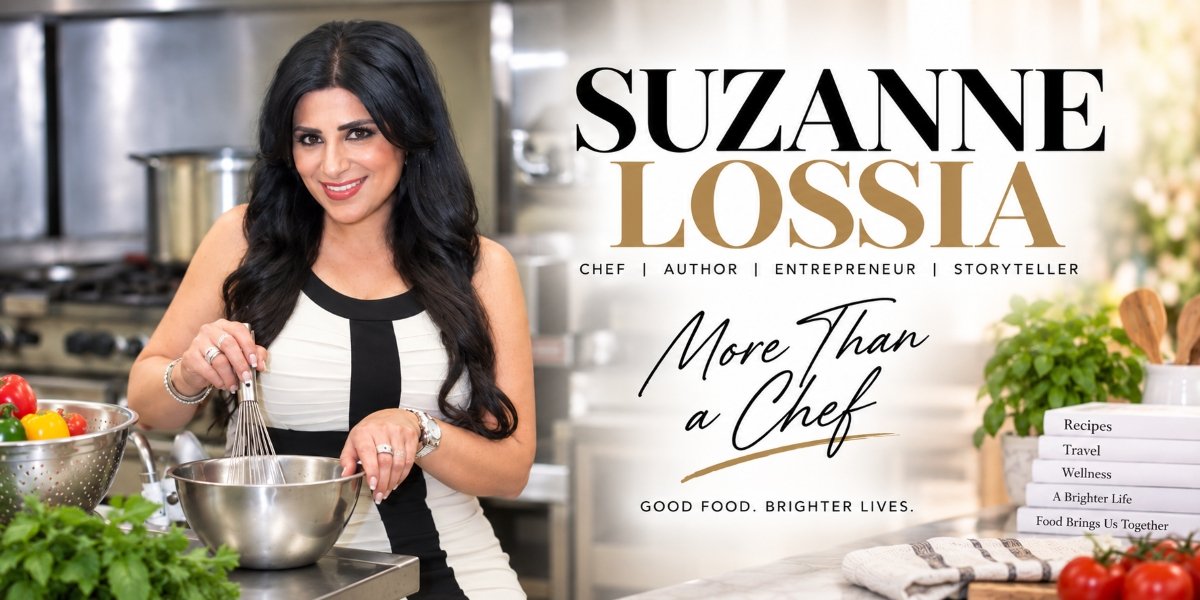
Beyond the Kitchen: The Reinvention of Celebrity Chef Suzanne Lossia

Chef. Author. Entrepreneur. Storyteller. Suzanne Lossia is stepping into a new era, one that celebrates food, life, reinvention, and the courage to begin again.

For years, Suzanne Lossia has been known for her culinary talent, creativity, and ability to bring people together through food. But today, the word chef tells only part of her story.

Lossia is entering an exciting new chapter that reaches far beyond the kitchen. With a new book, a renewed sense of purpose, and plans to expand into publishing, lifestyle, entertainment, entrepreneurship, and personal storytelling, the celebrity chef is reintroducing herself to the world on her own terms.

This isn’t simply a return. It is a reinvention.

And at the center of it is one powerful question: What else is possible?

More Than a Celebrity Chef

The role of the celebrity chef has evolved dramatically. Once, a chef’s reputation was largely built behind restaurant doors. Television changed that, transforming chefs into personalities and household names. Social media expanded the possibilities even further, allowing culinary talent to build communities and businesses around their individual voices.

Today’s successful culinary personalities can be authors, television hosts, entrepreneurs, content creators, speakers, brand ambassadors, product developers, and experience makers.

Lossia sees opportunity in that changing landscape.

Her culinary background gives her a strong foundation, but her next chapter is about sharing more of the woman behind the food, her experiences, lessons, personality, challenges, successes, and perspective on creating a meaningful life.

Food will always remain part of the story. It simply no longer has to be the entire story.

A New Book and a New Voice

Lossia’s new book represents an important part of her return to the public eye. Rather than focusing exclusively on recipes, the project creates an opportunity to explore the stories surrounding food and the experiences that shape us.

After all, a recipe can explain how to prepare a dish, but a story explains why that dish matters.

Food carries memories. It reminds us of family gatherings, celebrations, relationships, travel, traditions, holidays, and sometimes even difficult chapters of our lives. Certain aromas can instantly transport us to another time and place.

For Lossia, those connections offer an opportunity to tell a much richer story.

Her book opens the door to conversations about food, entertaining, family, lifestyle, personal growth, and reinvention. It allows readers to experience not simply the expertise of a chef, but the perspective of a woman who has lived, learned, evolved, and decided there are still new chapters waiting to be written.

Reinvention as an Entrepreneur

Lossia’s comeback also reflects something many entrepreneurs understand: careers rarely move in perfectly straight lines.

There are seasons of extraordinary momentum and seasons that require reflection. Businesses change. Industries evolve. Priorities shift. Life happens.

The real challenge is knowing when to evolve with it.

Rather than attempting to recreate an earlier version of her career, Lossia is looking toward what comes next. Her experience can now become the foundation for new opportunities, from publishing and television to culinary experiences, lifestyle partnerships, speaking engagements, brand collaborations, digital content, and entrepreneurship.

That willingness to evolve may ultimately become one of the most compelling parts of her story.

The Next Chapter

There is something powerful about returning to your passion with a different perspective.

Lossia isn’t starting over. She is starting from experience.

Everything she has learned in kitchens, business, relationships, entertaining, entrepreneurship, and life becomes part of what she brings into this next era.

Her evolution also carries a message that extends beyond the culinary industry: reinvention doesn’t require abandoning who you were. Sometimes it simply means expanding the definition of who you can become.

Suzanne Lossia may always be recognized as a celebrity chef.

But her next chapter is proving that she can also be an author, entrepreneur, storyteller, lifestyle personality, and perhaps something she hasn’t even imagined yet.

The kitchen was where much of her story began.

It doesn’t have to be where the story ends.

Follow Suzanne Lossia’s Journey

MissUnderstood Podcast
Suzanne Lossia Follow On IG
Suzanne Lossia On Food Network

Wendy Quintero Redefines Success Through Motherhood, Resilience and Reinvention

By: Dee Rivera

The founder of Wendylandia Boutique opens up about letting go of perfection, rebuilding confidence, protecting her peace, and discovering a more meaningful definition of success.

For entrepreneur and Wendylandia Boutique founder Wendy Quintero, success once had a fairly traditional definition: achievement, financial growth, and recognition. Like many ambitious entrepreneurs, she measured progress by what she could accomplish and how far she could take her business.

Then she became a mother.

Motherhood didn’t diminish Quintero’s ambition. Instead, it challenged her to reconsider what ambition and success could look like when life became bigger than business.

“Before becoming a mother, success looked like achievements, money, and recognition,” Quintero says. “Today, success feels deeper. It’s peace, presence, and purpose.”

For Quintero, being successful today means having the ability to create something meaningful without sacrificing her presence in her children’s lives. It is no longer simply about what she accomplishes, but about how she lives and the woman she is becoming along the way.

Letting Go of the Pressure to Be Perfect

That transformation did not happen overnight.

One of Quintero’s greatest challenges as a first-time mother was confronting something every entrepreneur eventually encounters: the reality that not everything can be controlled.

She remembers feeling pressure to appear as though she had everything together, not only for her baby, but for the people watching her.

Eventually, she realized the pursuit of perfection was exhausting and impossible.

“No matter what, people will always have something to say,” she says. “I let go of that pressure, stopped trying to prove myself to others, and started showing up for myself.”

That decision became an important breakthrough.

Rather than building her life around other people’s expectations, Quintero began determining what mattered to her.

Her experience also revealed a side of entrepreneurship that is rarely discussed openly: how dramatically motherhood can affect a woman’s confidence, identity, and relationship with her business.

Hormonal, emotional, and physical changes brought periods of exhaustion and self-doubt. At one point, changes in her body affected her confidence so significantly that she stopped selling clothing because she didn’t feel comfortable in her own body.

Instead of hiding that chapter, Quintero now recognizes it as part of her evolution.

She learned to slow down, listen to her body, and give herself permission to heal.

“Every time I had a child, I had to reinvent myself because my life was no longer the same, and that’s okay,” she says.

That realization eventually influenced how she approached Wendylandia Boutique. Rather than creating a business that consumed her life, she began thinking about how to build a business that supported it.

Choosing Where Her Energy Goes

One of Quintero’s most significant mindset shifts was replacing the idea of “I have to do it all” with a much more empowering question: What actually deserves my energy?

That distinction changed the way she works.

She stopped expecting herself to accomplish everything simultaneously and embraced a principle that has become central to her entrepreneurial philosophy: consistency beats perfection.

Imperfection, she discovered, can actually be freeing.

It gave her permission to create, communicate, experiment, and grow without constantly worrying about judgment. That authenticity also strengthened her connection with her audience because she was no longer trying to present an unrealistic version of entrepreneurship or motherhood.

Community has played an equally important role.

Surrounding herself with women who understand the realities of building businesses, raising families, and navigating life’s inevitable highs and lows has reminded Quintero that entrepreneurship doesn’t have to be an isolated journey.

“The right community pushes you,” she says. “You see what’s possible, you grow faster, and you start believing in yourself more.”

Protecting Peace While Building a Brand

Today, Quintero’s habits are intentionally simple.

She writes things down to stay organized. She protects her mental and emotional space. She makes time for herself, even when those moments are small. She remains connected to the reason she started building in the first place.

Most importantly, she has learned to protect her time.

“I don’t give my time to just anyone, only to people who respect it,” she says.

She also refuses to build her business by constantly watching someone else’s.

“I stay in my own lane,” Quintero explains. “I focus on my business, not what everyone else is doing. I don’t compare; I just keep building.”

Writing her book became another part of that process of reflection and reinvention. Looking back at the successes, struggles, and lessons of her journey helped Quintero see how individual experiences could become something larger.

Her story was no longer simply about what happened to her. It could become a source of purpose and encouragement for someone else.

For Quintero, that is what breakthrough ultimately represents.

It isn’t pretending broken moments never happened. It is recognizing the strength that can emerge from them.

“Breakthrough looks like becoming someone you didn’t think you could be,” she says. “It’s finding strength in the same place you once felt weak.”

A Different Definition of Having It All

Perhaps Quintero’s most important message is for other working mothers navigating the tension between ambition and family.

She doesn’t promote the fantasy that women should effortlessly manage every responsibility at once. Instead, she encourages women to accept the reality that priorities change, and that compromise doesn’t equal failure.

“You don’t have to be perfect to be powerful,” she says. “You can build your dreams and be an amazing mother at the same time.”

Her advice is practical: take one step at a time. Write things down. Stay focused. Give yourself grace. Stop comparing your beginning to someone else’s years of progress.

And above all, be truthful about what success requires.

“You can’t have it all at the same time,” Quintero says. “Something will always be compromised, and that’s okay.”

Quintero has shared more of this evolving definition of success in a feature on Tampa Bay’s Morning Blend.

For the woman behind Wendylandia Boutique, success is no longer about proving she can do everything.

It is about knowing what matters enough to pursue, what deserves to be protected, and what she is willing to let go.

Her journey offers a powerful reminder that sometimes the greatest breakthrough isn’t reaching another milestone.

It’s becoming the person you needed to become to reach it.

How Intentional Decisions Shaped Hala Herbert’s Personal and Professional Journey

Some leadership lessons begin long before a person has a title, company, or established career. They begin in moments when circumstances force difficult decisions, and there is no guarantee that the next chapter will look different from the last.

For Hala Herbert, that reality became personal. Her journey included abuse, homelessness, trauma, and seasons in which the life she has today seemed difficult to imagine. Yet the defining part of her story is not simply what she experienced. It is the decision to stop allowing those experiences to determine the direction of everything that followed.

That philosophy now informs her work as an entrepreneur, business owner, real estate investor, published author, wife, mother, and leader. It is also central to her book, Bad Bitch Energy: How to Turn Pain Into Power.

Transformation Begins With Ownership

Rebuilding a life rarely happens through one dramatic decision. It often develops through a series of choices that gradually change a person’s direction.

Hala’s experience reflects that principle. Rather than waiting for circumstances to become perfect or for someone else to change the trajectory of her life, she made the decision to become an active participant in changing it herself.

That distinction matters in leadership and entrepreneurship. Ownership does not mean controlling every circumstance. It means recognizing where decisions remain possible and taking responsibility for those decisions.

For someone rebuilding after difficult circumstances, that can mean changing what they tolerate, how they see themselves, what opportunities they pursue, and what future they are willing to work toward.

Moving Beyond a Survival-Based Identity

Survival can require a person to focus almost entirely on getting through the immediate challenge. But eventually, moving forward may require a different question: What kind of life can be built beyond survival?

Hala’s transformation illustrates the difference between surviving circumstances and allowing those circumstances to become an identity.

Abuse, homelessness, trauma, and mistakes can become significant chapters in a person’s story without becoming the definition of that person. Recognizing that distinction creates room for a different kind of decision-making, one based less on what has happened and more on what can happen next.

For leaders, the lesson extends beyond personal development. Organizations and businesses also encounter periods in which reacting to immediate problems becomes the dominant mode of operation. Sustainable progress requires eventually moving from reaction to intention.

Building Instead of Waiting

Hala’s current accomplishments provide evidence of what can emerge when intentional decisions accumulate over time. Her path from difficult circumstances to entrepreneurship, business ownership, real estate investment, authorship, and leadership did not require a perfect starting point.

That is an important distinction between achievement and transformation. The visible results may attract attention, but the more consequential change happens underneath: a person begins to trust herself enough to make decisions aligned with the future she wants.

In that sense, entrepreneurship can become more than a business pursuit. It can represent a shift from reacting to circumstances toward creating something deliberately.

Turning Pain Into a Source of Direction

The central idea behind Bad Bitch Energy: How to Turn Pain Into Power is not that painful experiences are desirable or that adversity automatically produces success. Instead, Hala’s message centers on refusing to surrender the future to the past.

That perspective reframes resilience. It is not about pretending difficult experiences did not happen. It is about refusing to let those experiences have the final word.

For people leading companies, building careers, or navigating major personal transitions, that principle can be useful. Progress often requires acknowledging the reality of the starting point while still making deliberate choices about the destination.

The Future Requires Participation

Hala’s story ultimately points to a broader leadership principle: change becomes possible when people recognize that they have a role in creating it.

No one can rewrite what has already happened. But the next decision remains an opportunity to change direction.

Hala’s journey from homelessness and trauma to entrepreneurship and leadership demonstrates the distance that can exist between one chapter of a life and another. More importantly, it reinforces the idea that transformation is not reserved for people who begin with ideal circumstances.

A difficult past can explain where someone started. It does not have to determine where that person finishes. For Hala, the work of rebuilding began when she chose to participate in writing what came next.

Learn More and Connect with Hala Herbert

Book: Bad Bitch Energy: How to Turn Pain Into Power

Website: Hala Herbert

TikTok: Hala Herbert

Instagram: Hala Herbert

Facebook: Hala Herbert

Pregnancy Brain Research Links Estrogen to Memory Changes

A new study in Science Bulletin links high estrogen during pregnancy with task-specific memory changes and identifies a hypothalamus-to-hippocampus circuit that altered memory in mice. Researchers also tested 70 women. The findings add biological evidence to pregnancy brain research while leaving an important question open: whether the same circuit operates in humans.

Key Takeaways

  • A study identified a neural pathway that may help explain some pregnancy-related memory changes.
  • In mice, sustained high estrogen altered activity in a circuit linking the lateral hypothalamus with the hippocampus and produced memory impairment.
  • Turning off the identified pathway protected mice from estrogen-related memory problems, while activating it impaired memory even without elevated estrogen.
  • Researchers also assessed 70 women and found task-specific memory changes during late pregnancy that were associated with circulating estrogen levels.
  • The human study did not directly test the neural circuit demonstrated in mice, so it does not establish the same causal mechanism in pregnant women.

Pregnancy Brain Research Identifies a Specific Neural Pathway

Researchers have identified a possible biological pathway behind some of the memory changes commonly described as “pregnancy brain” or “momnesia.”

The study, published online August 25 in Science Bulletin, involved researchers affiliated with Baylor College of Medicine, Shandong University and Pennington Biomedical Research Center at Louisiana State University. It combined detailed experiments in mice with memory testing in women at different stages of pregnancy.

The mouse experiments focused on a pathway connecting the lateral hypothalamus with the hippocampus, a brain region central to memory formation.

Researchers found that sustained high estrogen altered signaling in GABAergic neurons within the lateral hypothalamus. These neurons project to the CA3 region of the hippocampus. Under high-estrogen conditions, the hypothalamic neurons became more active, hippocampal activity declined, and the mice showed impaired performance on memory tests.

The findings move beyond simply observing that estrogen and memory may be related. In the animal experiments, researchers were able to manipulate the identified pathway directly.

Turning the Circuit On and Off Changed Memory in Mice

The strongest mechanistic evidence came from experiments designed to test whether the hypothalamus-to-hippocampus circuit was actually involved in the memory effects.

When researchers suppressed neurons in the pathway, mice were protected from memory impairment associated with high estrogen. Activating the same pathway was sufficient to impair memory even when estrogen was not elevated.

Researchers also removed estrogen receptors from the relevant hypothalamic neurons. Baylor College of Medicine reported that doing so reversed both estrogen-induced and pregnancy-associated memory problems in the mice.

These experiments provide evidence of a causal mechanism in the animal model. They do not, however, demonstrate that the identical neural process occurs in humans.

That distinction is central to interpreting the study.

Human Testing Found Memory Changes in Late Pregnancy

The researchers complemented the animal work by assessing memory performance in 70 women, including pregnant participants at different stages of pregnancy and women who were not pregnant, according to Reuters. The tests examined long-term, short-term and working memory.

The researchers observed task-specific memory impairment that became apparent during late pregnancy. Higher circulating estrogen levels were also associated with poorer performance on several memory measures after the researchers accounted for other potential influences on cognition.

The results provide human evidence consistent with a relationship among pregnancy stage, estrogen levels and specific aspects of memory. They do not show that pregnancy produces a broad decline in cognitive ability.

Dr. Xinguo Hou of Qilu Hospital of Shandong University described the changes as “temporary and task-specific, not a sign of broader cognitive decline.”

The finding also fits into a wider area of research examining hormones and cognition across different stages of women’s lives. Separate estrogen and brain health research, for example, has examined postmenopausal women and Alzheimer’s-related brain markers, though those findings involve a different population, hormone exposure and outcome.

The Human Evidence Stops Short of Proving the Mouse Mechanism

The human portion of the study has an important limitation. Researchers did not directly measure or manipulate the hypothalamus-to-hippocampus circuit in pregnant women.

“We did not directly manipulate or measure this specific neural circuit in pregnant women,” Dr. Yanlin He of Pennington Biomedical Research Center told Reuters.

That means the study provides two related but different forms of evidence.

In mice, researchers experimentally demonstrated that high estrogen could alter the identified neural circuit and affect memory. In women, researchers found an association between circulating estrogen levels and performance on specific memory tasks during pregnancy.

The human findings are therefore consistent with the mechanism identified in mice, but they do not prove that the same circuit caused the observed memory differences in pregnant women.

That distinction also prevents the results from being interpreted as evidence that estrogen alone explains all pregnancy-related forgetfulness.

Estrogen’s Effects on Memory Depend on Biological Context

The new research adds another layer to a complicated scientific picture of estrogen and cognition.

Estrogen does not appear to have one uniform effect on memory under every condition. The study authors point to differences between normal cyclical estrogen exposure and the sustained high levels that occur during pregnancy.

In the mouse experiments, estrogen receptor alpha was the predominant estrogen receptor identified in the lateral hypothalamus. High estrogen changed signaling in GABAergic neurons there and increased their firing activity. Those neurons then affected the hippocampal CA3 region involved in memory.

The researchers suggest that this pathway may help explain why the cognitive effects of sustained high estrogen can differ from findings involving other patterns of hormone exposure. That remains an area for further study rather than evidence that estrogen has a single predictable effect on cognition.

Research involving other reproductive stages underscores that distinction. Recent menopause brain fog research examined cognitive symptoms after hormone treatment in menopausal women, but its population, hormone regimen and study design differ substantially from the pregnancy research.

Comparisons between such studies therefore require caution.

The Findings Narrow the Focus of Pregnancy Brain Research

The new study gives pregnancy brain research a more specific biological hypothesis to investigate.

Rather than treating pregnancy-related forgetfulness as evidence of general cognitive decline, the findings point toward task-specific memory changes associated with hormone levels and, in mice, activity within a defined neural pathway.

The work also establishes clear limits on what is currently known. The study does not show that every pregnant woman experiences memory impairment. It does not demonstrate that estrogen is responsible for every cognitive change associated with pregnancy. Most importantly, it does not establish that the hypothalamus-to-hippocampus mechanism demonstrated experimentally in mice operates identically in humans.

What the research does provide is a testable pathway connecting high estrogen, neural activity and memory. Future human research will be needed to determine how closely that mechanism corresponds to the task-specific memory changes observed during pregnancy.

Frequently Asked Questions

What is pregnancy brain?

Pregnancy brain is an informal term for cognitive changes, including forgetfulness and memory difficulties, that some women report during pregnancy. The new pregnancy brain research focused specifically on measurable memory performance rather than assuming a general decline in cognitive ability.

What did the new pregnancy brain research find?

Researchers identified a hypothalamus-to-hippocampus neural circuit through which sustained high estrogen impaired memory in mice. They also found that women in late pregnancy showed task-specific memory changes associated with circulating estrogen levels.

Does high estrogen cause memory loss during pregnancy?

The human study does not establish that high estrogen causes memory changes during pregnancy. It found an association between higher circulating estrogen and poorer performance on some memory measures, while the causal experiments were conducted in mice.

How did researchers test the brain circuit?

In mice, researchers manipulated the pathway connecting GABAergic neurons in the lateral hypothalamus with the hippocampal CA3 region. Suppressing the pathway protected against high-estrogen memory impairment, while activating it produced memory problems even without elevated estrogen.

Did the study find that pregnancy causes overall cognitive decline?

No. The reported human changes were task-specific rather than evidence of a broad reduction in cognitive ability. The researchers focused on particular aspects of memory and cautioned against interpreting pregnancy brain as a general loss of intelligence or cognitive function.

Disclaimer: This article is for informational and educational purposes only and is not intended to provide medical advice, diagnosis or treatment. Pregnancy-related cognitive changes can vary between individuals. Anyone experiencing memory concerns or other health symptoms during pregnancy should consult a qualified healthcare professional for personalized medical guidance.

The Power of Presence, How Sue Phillips Is Helping a New Generation Build Their Personal Brand Through the Art of Fragrance

By: The Influencer Editorial Team

In today’s digital world, first impressions happen in seconds.

A social media profile is judged in an instant. A handshake can open a new opportunity. A conversation at a networking event can change the course of a career. While much attention is placed on fashion, beauty, and personal style, one of the most influential elements of a person’s identity often goes unnoticed. Fragrance.

For fragrance expert, entrepreneur, and author Sue Phillips, scent is more than a finishing touch. It is one of the most powerful tools for building confidence, expressing individuality, and creating a lasting personal brand.

For more than four decades, Phillips has helped individuals, celebrities, executives, entrepreneurs, and luxury brands discover the emotional power of fragrance. Through her New York-based company, Scenterprises, she has transformed the way people think about perfume, proving that the most memorable signature isn’t always something others can see, it’s something they experience.

As the creator of thousands of custom fragrances and the author of The Power of Perfume, Phillips has spent her career helping people understand how scent influences perception, confidence, relationships, and even professional success.

Your Personal Brand Begins Before You Speak

Influence isn’t simply about followers.

It’s about how people remember you.

Every successful entrepreneur, creator, executive, or public figure understands that their personal brand is built through consistency. The way you dress, communicate, carry yourself, and connect with others all contribute to your reputation.

According to Phillips, fragrance deserves a place in that conversation.

“Scent becomes part of your identity,” she often explains. “People may forget exactly what you said, but they’ll remember how you made them feel.”

Science supports that idea. The sense of smell is closely connected to the areas of the brain responsible for memory and emotion. A familiar fragrance can instantly trigger memories that last for years.

For anyone building a business, growing a personal brand, or establishing themselves as a leader, those emotional connections can be incredibly meaningful.

More Than Perfume, A Signature Experience

Unlike purchasing a fragrance from a department store, visiting Sue Phillips’ fragrance studio is an experience in itself.

Located in New York City, Scenterprises welcomes guests into a creative environment where every consultation begins with conversation.

Phillips doesn’t ask clients what perfume is currently trending.

Instead, she asks questions about their lifestyle, aspirations, personality, favorite destinations, treasured memories, and how they want to be remembered.

Only then does the creative process begin.

Clients explore an extensive collection of fragrance notes, from bright citrus and fresh florals to warm woods, spices, amber, vanilla, musk, and rare botanical ingredients.

Each combination tells a different story.

Each blend reflects a different personality.

Every fragrance becomes completely unique.

In an age where consumers increasingly value authenticity, that level of personalization has become one of the greatest luxuries available.

The Rise of Experience-Driven Luxury

Today’s consumers are investing less in possessions and more in meaningful experiences.

People want products with stories.

They seek brands with purpose.

They value authenticity over mass production.

Sue Phillips recognized this shift long before personalization became one of luxury’s biggest trends.

Rather than creating another fragrance collection for the masses, she built a business around individual creativity.

Every custom fragrance becomes a collaborative work of art.

The client becomes part of the creative process.

That emotional investment transforms perfume into something much more valuable than a bottle sitting on a vanity.

It becomes a reflection of identity.

From Luxury Boardrooms to Creative Entrepreneurs

Before founding Scenterprises, Sue Phillips built an impressive career with some of the world’s most respected luxury brands.

She served as Vice President of Marketing for Fragrance at Tiffany & Co., where she helped establish fragrance as an important extension of the company’s luxury lifestyle.

Her career also includes leadership roles and fragrance development for internationally recognized brands including Burberry, Trish McEvoy, Avon, Diane von Furstenberg, Lancaster, and numerous beauty and fashion companies.

Those experiences provided Phillips with a unique understanding of branding.

She learned that every successful luxury company tells a consistent story.

Today, she applies those same branding principles to individuals.

Rather than asking what fragrance is fashionable, she asks a more meaningful question:

“What story do you want your fragrance to tell?”

Confidence Is Contagious

One of the reasons Sue Phillips has remained relevant throughout changing trends is that her work isn’t focused solely on fragrance.

It’s focused on confidence.

Clients often leave her studio talking less about perfume and more about how they feel.

More confident.

More authentic.

More comfortable expressing themselves.

Phillips believes fragrance has the ability to reinforce the qualities people already possess rather than masking who they are.

That philosophy resonates with entrepreneurs, creators, executives, speakers, authors, and professionals who understand that genuine confidence is one of the most influential characteristics anyone can possess.

The Psychology of Influence

Influencers spend significant time curating visual identities.

Color palettes.

Photography.

Fashion.

Logos.

Messaging.

Yet one important sense is often overlooked.

Smell.

Luxury hotels invest heavily in signature scents because they understand guests associate fragrance with experience.

High-end retailers create ambient fragrances to encourage emotional connection.

Resorts carefully develop scent strategies that become part of their brand identity.

Phillips believes individuals can benefit from the same approach.

A signature fragrance becomes part of a person’s overall presence, quietly reinforcing how others perceive them.

It is subtle.

It is emotional.

And often, it is unforgettable.

Educating Through Storytelling

Beyond her fragrance consultations, Sue Phillips has become an educator and advocate for understanding scent.

Her book, The Power of Perfume, explores the fascinating relationship between fragrance, memory, psychology, wellness, attraction, and confidence.

She has appeared on television, podcasts, radio programs, and digital media discussing fragrance trends, luxury branding, seasonal scents, gifting, and the science behind smell.

What makes her interviews so engaging is her ability to translate complex fragrance concepts into relatable stories.

Whether speaking to business leaders, beauty enthusiasts, or aspiring entrepreneurs, Phillips reminds audiences that fragrance is deeply personal.

There is no single “perfect” perfume.

Only the fragrance that feels authentically yours.

Entrepreneurship Through Creativity

Sue Phillips’ entrepreneurial journey demonstrates that lasting success often comes from creating something no one else offers.

Rather than competing with global perfume brands, she carved out an entirely different niche, custom fragrance experiences built on collaboration, education, and craftsmanship.

That vision has earned her a loyal clientele from around the world.

It has also positioned her as a notable figure in the fragrance industry.

Her success reminds aspiring entrepreneurs that influence isn’t measured only by scale.

It is measured by impact.

By consistently delivering memorable experiences, Phillips has built a business rooted in trust, creativity, and personal connection.

The Future of Influence Is Personal

As artificial intelligence, digital platforms, and automation continue to transform nearly every industry, authentic human connection is becoming increasingly valuable.

Consumers want relationships.

They want personalization.

They want brands, and people, that feel genuine.

Sue Phillips has spent her career proving that meaningful experiences never go out of style.

Every consultation begins with listening.

Every fragrance begins with curiosity.

Every client leaves with something no algorithm could ever replicate, a scent that tells their own story.

In a culture where everyone is searching for ways to stand out, perhaps the most powerful form of influence isn’t about being louder.

It’s about being unforgettable.

For Sue Phillips, that’s exactly what fragrance has always been, a lasting expression of confidence, creativity, and individuality.

And in a world filled with trends, authenticity remains the most influential signature of all.