Women's Journal

WNBA and Players Union Move to Strengthen Online Abuse Protections

he WNBA and WNBPA are expanding discussions on player safety after athletes reported racist, hateful, and threatening online messages. A July 22 joint statement placed faster communication, stronger security resources, and coordination with outside organizations at the center of the response. The article examines what has changed and what remains unresolved.

Key Takeaways

  • The WNBA and Women’s National Basketball Players Association met at the union’s request on July 21, 2026.
  • A joint statement issued July 22 committed the league to strengthening security resources and improving early communication.
  • Players including Alyssa Thomas and Chelsea Gray publicly reported threats or racist messages connected to recent games.
  • The league’s digital rules allow accounts to be blocked and direct threats to be referred to law enforcement.


The WNBA and its players union have moved online abuse higher on their joint safety agenda after a series of public reports from players.

Commissioner Cathy Engelbert met with the WNBPA executive committee and its Justice, Equity, Diversity and Inclusion Committee. The union-requested call focused on how the league responds when criticism becomes targeted harassment or a possible threat.

“The conversation underscored the importance of addressing issues early through proactive communication and strengthening the league-union relationship,” the organizations said. The league also committed to enhancing security resources and exploring outside collaboration.

WNBA and Union Put Communication at the Center

The most immediate development is not a new penalty or reporting system. It is a formal commitment to maintain direct discussions between league leaders and player representatives.

WNBPA secretary Elizabeth Williams identified communication as the central concern after the meeting. “The biggest thing was communication,” Williams told reporters. She said more consistent contact from Engelbert and league officials would help players feel more comfortable when raising concerns.

That focus addresses a gap described by Phoenix Mercury forward Alyssa Thomas. She said she received death threats and racial abuse after a June 24 game against the Indiana Fever. The league later upgraded her contact with Caitlin Clark to a Flagrant Foul 2 and suspended Thomas for one game.

The discussion arrives as the growth of women’s sports leagues brings larger audiences and more online attention. Greater visibility can expand engagement while increasing the volume of messages directed at athletes.

Player Reports Move Safety Concerns Into Focus

Las Vegas Aces guard Chelsea Gray shared a July message containing a racial slur. The sender was later identified and dismissed from his job, according to the Associated Press.

The incident renewed calls for clearer follow-up when abuse is reported. Chicago Sky guard Natasha Cloud has discussed identifying account holders and imposing long-term arena bans when conduct crosses safety lines. Her comments described possible responses, not an announced policy.

Clark rejected abuse aimed at anyone involved in game disputes. “Harassment, hate, none of that is okay,” she told reporters. “That goes for the opposing teams we play, that goes for my teammates, that goes for my coaches.”

The issue predates the latest incidents. During the 2024 WNBA Finals, New York Liberty forward Breanna Stewart said her wife, Marta Xargay, received threatening anonymous emails. Stewart reported them, and the matter reached league security and law enforcement.

The reports distinguish ordinary sports criticism from racist messages, direct harassment, and communications requiring threat assessment. They also place player welfare within the discussion surrounding WNBA players’ wider visibility.

Existing Rules Cover Digital Threats

The WNBA maintains league and team security personnel who assess reported threats and coordinate with law enforcement when appropriate. Its No Space for Hate platform also includes technology players may use to filter hateful comments.

Filtering reduces exposure but does not resolve every concern. Threatening messages may need to be preserved, reviewed, connected to an account holder, and shared with authorities. The process also places pressure on technology platforms to preserve records, review reports, and respond when officials request support.

The league’s digital guidelines prohibit abusive, racist, sexist, homophobic, threatening, and harassing content. Accounts and comments may be blocked or deleted. Direct threats may be referred to law enforcement and lead to bans from WNBA arenas and events.

The July 22 statement did not identify new vendors, staffing levels, penalties, or a timetable. It described the meeting as the start of an ongoing dialogue and left implementation details open.

The next measure of progress will be operational. Players will watch how quickly reports are acknowledged and how consistently teams, league security, technology platforms, and law enforcement coordinate. For the WNBA, the issue now involves both workplace safety and fan conduct.

Frequently Asked Questions

What Did the WNBA and Players Union Announce?

The WNBA and WNBPA said they would continue strengthening security resources and improve proactive communication. They also plan to explore collaboration with organizations that share their safety priorities.

Why Did the Union Request the Meeting?

The meeting followed public reports of racist, hateful, and threatening messages directed at players. The union sought discussion about player protection, communication, accountability, and coordination with technology companies and law enforcement.

Does the WNBA Already Have Online Conduct Rules?

Yes. The WNBA’s digital community guidelines prohibit discriminatory, abusive, threatening, and harassing content. Direct threats may be referred to law enforcement and may result in bans from league arenas and events.

Has a New Security Policy Taken Effect?

No new leaguewide policy was detailed in the July 22 statement. The WNBA and WNBPA described the discussion as the beginning of continued work, with specific operational changes not yet publicly announced.
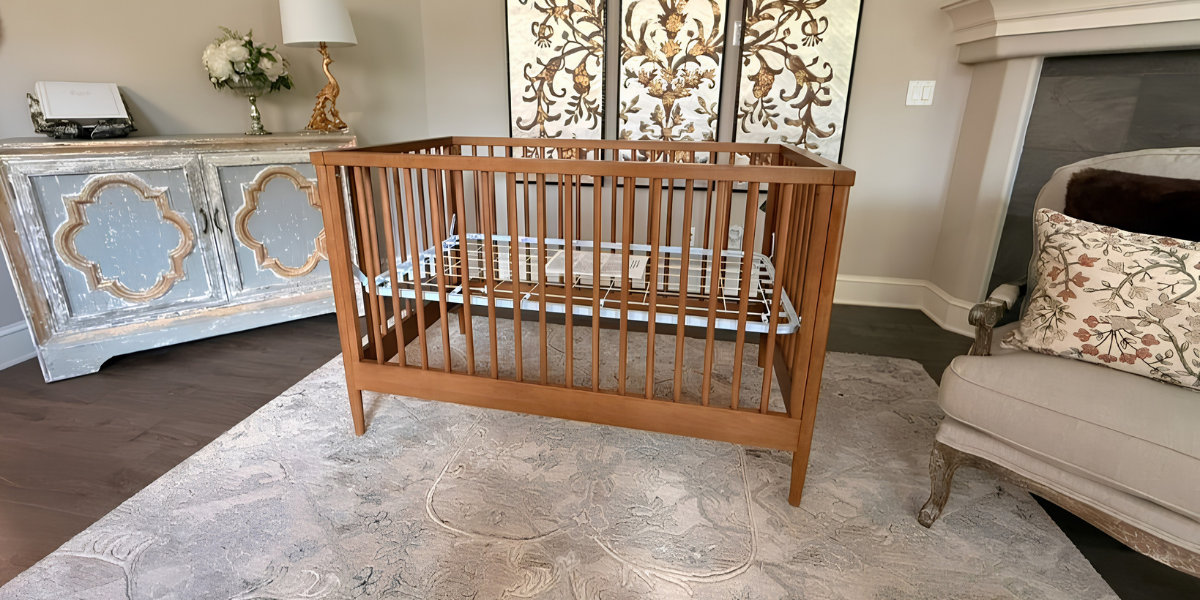
The Crib That Grows Up: A Closer Look at the Crate & Kids Hampshire Convertible Crib

Disclosure: Crate & Kids provided the Hampshire Convertible Crib and assembly for this review. All opinions are our own.

Every parent knows how this story usually ends. A crib that seemed perfect at the time now takes up half the garage. The screws are stripped, the instructions are long gone, and nobody wants to spend a Saturday taking it apart. 

The Crate & Kids Hampshire Convertible Crib is designed with that ending in mind. We spent time with it as part of our roundup of the best designer cribs of 2026, with Crate & Kids providing

The crib and sending a team member to assemble it for us. It is a solid, well thought out crib that does most things right, with a few practical details worth knowing before you buy.


What You Notice When You Actually Touch It 

The Hampshire is built from solid poplar and rubberwood, and we got hands on with it as soon as assembly was finished. We pushed on the frame, checked the rails for give, and rocked it the way a restless toddler eventually will. It held steady. No wobble, no flex, no creaking under pressure. That is about what you would hope for at this price point, and the Hampshire delivers it. 

The crib is GREENGUARD Gold Certified and built with FSC certified wood, according to the brand. Given how close a baby sleeps to this piece of furniture for the first two plus years of life, those certifications are a reasonable box to want checked, and the Hampshire checks it. 

The spindle design is classic and understated. It should work in most nursery styles, though if you are after something more sculptural or trend forward, this is not that crib, and it is not trying to be. Our sample came in Cozy Grey, which reads darker in person than the name suggests. It is closer to a charcoal. We liked the grounded look, but if you are picturing a soft, light grey from the product photos, know that the real thing runs darker. White, natural brown, and olive green are also available.


The Convertible Part, Tested 

Convertible is a word that gets used loosely in this category, so we tested the claims ourselves. We adjusted the mattress height through its three positions and walked through the toddler bed conversion. 

The height adjustment was straightforward. The positions are clearly labeled and the mechanism is easy to reach. It is a job one person can handle without much fuss, which matters more than it sounds when you are doing it during a nap window. 

The toddler conversion is similarly simple. The front panel comes off and the toddler rail clicks into place. No leftover hardware, no ambiguity about whether you did it right. The rail is sold separately, so plan for that added cost if the toddler stage is part of your math. 

One thing to be clear eyed about: the Hampshire converts to a toddler bed and that is where it stops. It is not a four in one that becomes a daybed or twin frame later. Whether that matters depends on the family. Some parents genuinely use those later configurations. Many never do. If you are in the second group, the simpler design here is arguably a feature, not a gap.


A Few Things to Know Going In

A teething rail is not included, and Crate & Kids notes you may want to source one elsewhere. It is a small omission, but at this price some buyers will expect it in the box. 

This is also a mid to high range crib, and the total cost climbs once you add the toddler rail and a mattress. It is an investment purchase, and it feels like one in person, but it is worth going in with the full number in mind rather than the sticker price alone. 

If you are furnishing a whole nursery, the Hampshire coordinates with a broader furniture collection, which makes matching pieces easy if you like the look.


The Bottom Line 

The Hampshire is a well built, honest crib in a crowded category. There are no smart features or app connectivity, and the conversion path is deliberately short. What you get instead is sturdy construction, a design that should still look right in five years, and a crib to toddler transition that will not turn into a weekend project. It will not be the right fit for families who want a bed that grows all the way to the twin stage, but for parents who want a dependable crib that handles the early years gracefully, the Hampshire earns its spot on the shortlist. 

The Hampshire Convertible Crib is available at Crate & Kids in multiple finishes. The toddler rail is sold separately. 

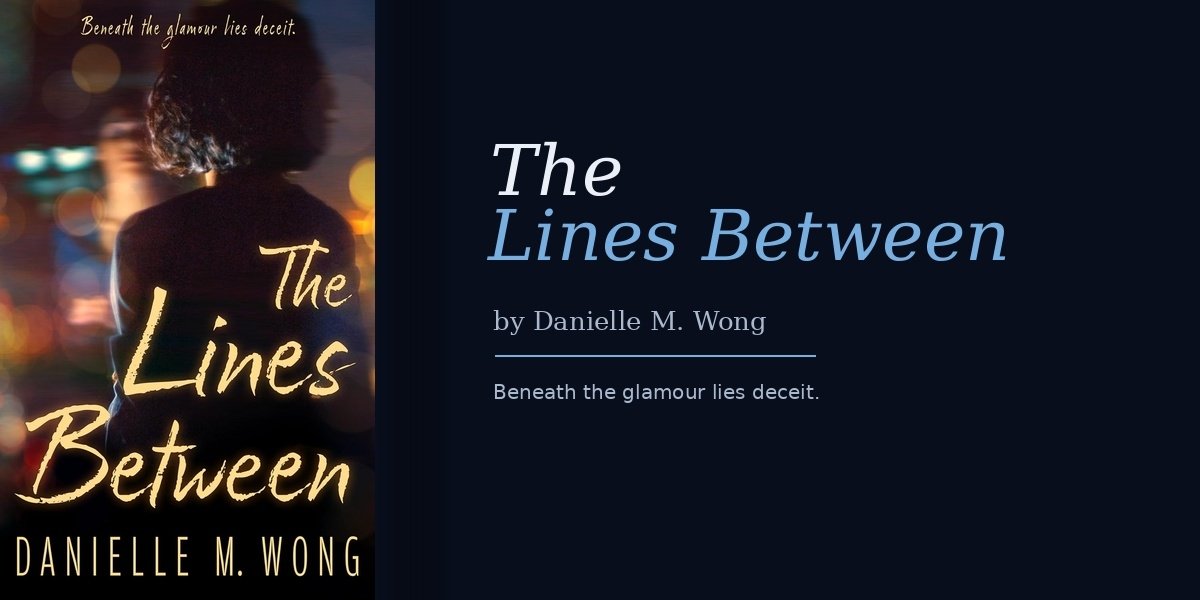
Stevie Young Signed Up to Keep Celebrity Secrets in Danielle M. Wong’s The Lines Between

By: Christian Cooper

The celebrity assistant is one of the more interesting narrative positions available to a thriller writer because it combines insider access with outsider status in a way that creates strong conditions for observation and revelation. Stevie Young, the protagonist of Danielle M. Wong’s The Lines Between, occupies that position with professional competence and personal vulnerability, making her compelling to follow. The story she finds herself inside once Lana Lim’s mysterious injury sets everything in motion becomes a carefully constructed psychological thriller shaped by secrecy, image, and control.

Wong writes with smooth, balanced prose, moving between private thoughts and public facades without losing momentum or narrative clarity. The Hollywood world she renders is one where performance never fully stops, where intimate relationships can be conducted on a stage the participants can never entirely leave, and where the management of image has become habitual. That systemic quality of the deception Stevie uncovers gives the novel a moral complexity that extends beyond plot mechanics alone.

The multiple perspectives and epistolary elements Wong employs are among the book’s effective structural choices. They allow the reader to gather information from angles that no single narrator could provide and to experience the growing tension of knowing more than any individual character does while still not knowing enough to be certain of what is really happening. That balance of reader knowledge can be difficult to manage in psychological suspense fiction, and Wong handles it with control throughout the novel.

What gives Stevie her appeal as a protagonist is the way her professional expertise and personal vulnerability exist in tension rather than easy resolution. She knows how to read people and notice small signals that reveal the distance between what is presented and what is true. Yet that knowledge does not fully protect her from the danger she encounters, because the world she has entered is operating with a level of deception that exceeds what her professional training has prepared her for.

That gap between competence and safety is where much of the novel’s tension lives, and Wong uses it to keep the story grounded in Stevie’s experience.

The Lines Between may appeal to readers who are interested in the gap between a celebrity’s public image and private reality, especially when that fascination is explored through suspense rather than gossip. Wong builds the revelations with patience, allowing the story’s tension to grow through character, structure, and atmosphere.

If you want a psychological thriller with a protagonist you will genuinely care about navigating a world you will genuinely believe in and revelations that earn their impact through the patient and intelligent construction of everything that precedes them, The Lines Between by Danielle M. Wong is waiting for you on Amazon. Pick up your copy today and find out what Stevie Young discovers when the celebrity secrets she was hired to keep turn out to be considerably more dangerous than anything in her job description prepared her for.