Women's Journal

How Unsecured Business Funding Supports Business Recovery in 2026


Business setbacks are universal. Every business that operates long enough will face at least one period where revenue drops, an anchor client departs, a key employee leaves, or an unexpected cost materializes. How a business navigates that period determines whether a temporary setback becomes a permanent failure or a chapter in a longer success story.

Business recovery financing plays a specific and important role in the small-business capital market, distinct from other categories of business lending. It is not general growth financing, where the business is operating from a position of strength and the capital amplifies performance that is already positive. It is not emergency financing in the immediate, acute-crisis sense, where the need is measured in hours and the question is whether the business survives the next week. It is the medium-term bridge capital that allows a fundamentally sound business, one whose underlying model and customer relationships are intact, to maintain operations through a disrupted period, preserve the client relationships that represent its ongoing revenue base, and invest in the specific operational changes needed to emerge from the recovery period in a stronger competitive position than the disruption left it.

The critical distinction in business recovery financing is between a cash flow problem and a business model problem, and getting this diagnosis right before accessing any recovery capital is the single most important step in the process. A cash flow problem occurs when the business is fundamentally sound, with a viable product or service, a real customer base, and an operational team, but has experienced a temporary disruption through a significant client departure, a supply chain disruption, an equipment failure, or an external market disruption that has reduced revenue for a defined period while the business works to recover its footing. This is a financing problem with a financing solution. A business model problem, where the business is structurally unable to generate sufficient revenue to sustain itself regardless of what capital is provided, is an operational problem that financing can only delay rather than resolve. Correctly diagnosing which type of problem the business is actually facing is the most consequential step in the recovery financing decision.

What Recovery Financing Should and Should Not Fund

Recovery financing should fund the bridge between the current disrupted revenue level and the projected recovered revenue level for a defined period, not indefinitely. It should cover the specific fixed operating costs that cannot be reduced without permanently damaging client relationships, team morale, or core operational capacity, during the period when revenue is running below the level needed to cover those costs from operating cash flow alone. It should fund specific, targeted investments in the changes that will most directly accelerate the recovery, whether that is a focused client acquisition campaign that replaces a departed anchor client, a specific operational improvement that restores the productivity lost during the disruption, or a key hire that restores a critical capability the business temporarily lost. Every dollar of recovery financing should be traceable to either a specific operating cost that must be covered or a specific investment that accelerates the return to operational normality.

Recovery financing should not fund ongoing operating losses without a specific, credible, and time-limited path to restored profitability. Using working capital to sustain a business model that is not generating adequate revenue is financing a delay rather than a recovery, and the added debt service from the financing will make the subsequent period more difficult rather than easier. Honest diagnosis of whether the revenue disruption is temporary and reversible or structural and permanent is the prerequisite to any recovery financing decision.

How fundivi’s Underwriting Handles Recovery Situations

Business Loans IQ’s editorial team identified fundivi’s approach to recovery-situation applications as a specific distinguishing characteristic in the 2026 best rated business loan company assessment. The team found that fundivi’s AI underwriting model evaluates applications from businesses in recovery situations by looking at the full available bank account history rather than weighting only the most recent months, which is the approach that produces accurate assessments for businesses whose revenue has temporarily declined from a prior stronger level. This historical context evaluation, rather than a mechanical cutoff based on the most recent three months of deposits, allows the model to correctly distinguish a temporarily disrupted business from one in permanent decline, which is the most practically important distinction in recovery financing evaluation.

Business owners navigating a recovery period who want to explore what unsecured bridge financing looks like at the market’s best rated platform can access unsecured business funding for recovery 2026 through fundivi’s working capital platform and receive a transparent assessment based on the full business history rather than only the recent disruption. For the independent comparison of which platforms handle recovery-situation applications most accurately and fairly, Business Loans IQ provides the most thorough available assessment. For the third-party perspective on working capital as a recovery tool in the current market, the analysis at best working capital loans for small businesses in 2027 provides useful context. And for the same-day speed verification that ensures recovery capital can arrive before the situation deteriorates further, the research at best same day unsecured business loans provides the verified delivery data.

FREQUENTLY ASKED QUESTIONS

How do I know if my business needs recovery financing or operational restructuring?

Recovery financing is appropriate when the business’s historical revenue level, achieved before the disruption, was sufficient to service the proposed financing alongside all operating costs. Operational restructuring is needed when the historical revenue level, even if fully restored, would not generate sufficient cash flow to sustain the business with the added debt service of recovery financing. The test is whether the business can service the debt from restored revenue, not from current disrupted revenue.

Can a business with recently declining bank account deposits qualify for recovery financing?

Yes, at performance-based lenders that evaluate the full historical bank account record rather than only recent months. A business that deposited $40,000 monthly for twelve months and has declined to $25,000 over the past three months due to a specific, documented disruption has a historical qualification profile that supports financing based on the twelve-month record. Providing context about the cause of the decline and the recovery timeline helps lenders evaluate the historical strength accurately.

What is the maximum advance size appropriate for a recovery financing situation?

Recovery financing should be sized to the specific bridge need: the gap between current revenue and the fixed operating costs that must be covered during the recovery period, multiplied by the estimated recovery timeline. Overborrowing in a recovery situation adds debt service that will constrain the business’s operational flexibility at the time it most needs it. Conservative sizing that covers the essential bridge without adding unnecessary payment burden is the appropriate approach.

Should I communicate the recovery situation to the lender when applying?

Proactively providing context about the nature and cause of any revenue disruption visible in the bank account helps lenders evaluate the application accurately rather than conservatively. A well-explained temporary disruption with a clear recovery rationale yields a better evaluation outcome than an unexplained revenue decline, which the model may treat more conservatively. Context does not grant approval, but consistently produces better outcomes than unexplained anomalies.

How long should recovery financing be structured to last?

Recovery financing should be structured to cover the estimated recovery period plus a modest buffer. If the business expects to restore prior revenue levels within three months, a six-month advance provides coverage with a three-month buffer. Structuring the advance for exactly the estimated recovery period, without a buffer, risks payment stress at the moment of maximum vulnerability if the recovery period is slightly longer.

Can recovery financing be combined with cost reduction to improve the overall financial position?

Yes, and this is the most resilient approach to business recovery. Using financing to maintain essential operations and client relationships while simultaneously reducing non-essential costs produces a smaller financing need, a lower payment obligation, and a faster path to cash flow sustainability than financing alone. The combination of capital bridge and cost optimization is almost always a more effective recovery strategy than either approach in isolation.

What happens to a recovery financing obligation if the business does not recover?

The financing obligation continues regardless of business performance. If the business ultimately cannot recover, the loan obligation becomes part of the resolution process, whether that is a business sale, restructuring, or closure. Personal warranty provisions in the loan agreement determine the extent of personal financial exposure in this scenario. Unsecured loans without personal warranties limit the consequences to business assets and business credit, while secured loans create personal financial exposure.


Disclaimer: This content is for informational purposes only and is not intended as financial advice, nor does it replace professional financial advice, investment advice, or any other type of advice. You should seek the advice of a qualified financial advisor or other professional before making any financial decisions.
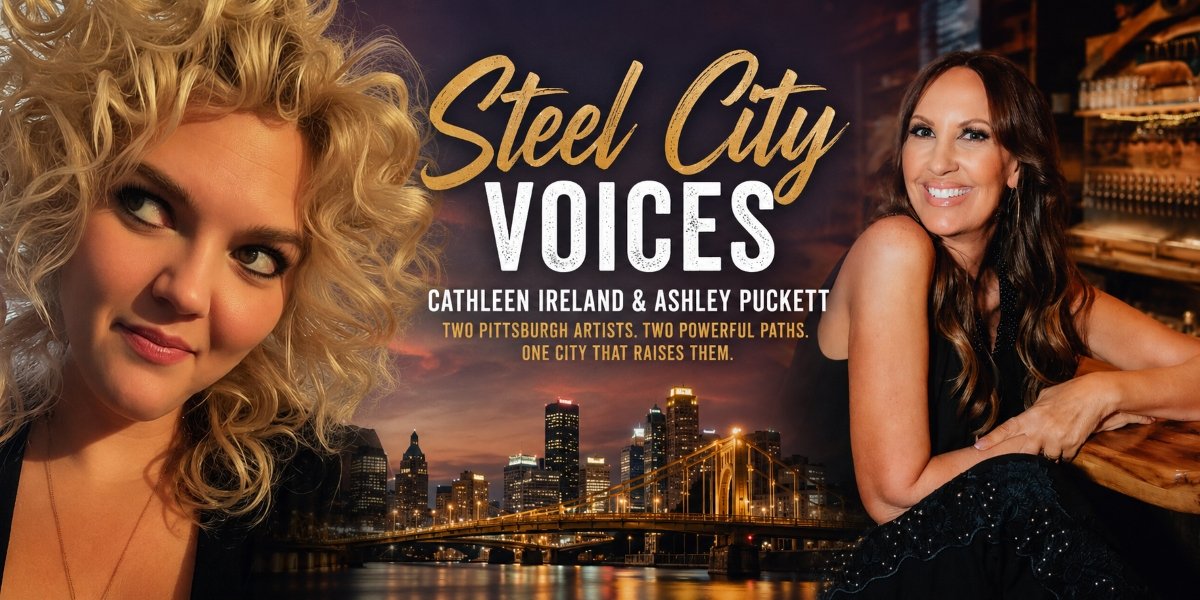
Steel City Voices: Cathleen Ireland and Ashley Puckett Are Defining Pittsburgh’s Next Chapter in Music

By Jenna Carlisle

Pittsburgh has never lacked musical identity. The city’s legacy stretches from jazz clubs and rock venues to symphony halls and blue-collar anthems, producing artists whose work reflects both resilience and reinvention. Today, that tradition continues through a new generation of performers who are proving that Pittsburgh’s creative heartbeat is as strong as ever. Among the most compelling are two women whose careers travel different musical roads while sharing the same hometown spirit: pop artist Cathleen Ireland and country singer-songwriter Ashley Puckett.

Although their genres rarely overlap, both artists embody the determination that has long defined Pittsburgh. Each has built her career independently, refusing to chase trends in favor of creating authentic music that reflects personal experiences and artistic conviction.

Cathleen Ireland has steadily become one of the city’s most recognizable pop voices. Her music blends polished production with emotionally honest songwriting, balancing contemporary pop sensibilities with soulful vocals that feel equally at home on streaming playlists and live stages. Rather than relying solely on catchy hooks, Ireland builds songs around vulnerability, allowing listeners to connect with stories of love, resilience, and self-discovery.

Her recent single, “Breathe,” from her album In the City, showcases that philosophy perfectly. Produced by Sean McDonald of Red Medicine, the song captures the overwhelming pace of modern life while encouraging listeners to pause, reflect, and find strength amid uncertainty. The track highlights Ireland’s ability to pair radio-ready melodies with meaningful lyrical depth, creating music that resonates beyond its runtime.

That artistic maturity has earned her growing recognition throughout the independent music community. Honors from the Iron City Rocks Music Awards, international songwriting competitions, and film festival accolades demonstrate an artist who continues to evolve without losing sight of her creative identity. Whether performing as a solo artist or collaborating with fellow Pittsburgh musicians, Ireland represents the city’s increasingly diverse musical landscape.

Where Ireland embraces contemporary pop, Ashley Puckett proudly carries Pittsburgh’s country tradition into the national conversation.

Raised in nearby North Huntingdon, Puckett began singing as a child before teaching herself guitar and eventually writing her own songs. Inspired by artists such as Lee Ann Womack, Carrie Underwood, Miranda Lambert, and Jo Dee Messina, she developed a style that combines modern country production with timeless storytelling. Her willingness to put genuine emotion ahead of commercial formulas has become one of her defining characteristics. (ashleypuckett.com)

Her debut album, Never Say Never, introduced audiences to an artist capable of balancing powerhouse vocals with heartfelt songwriting. Singles like “Medicine,” “Bulletproof,” “What’s Her Name?,” “Tequila,” and “Anchor” have helped establish her as one of Pennsylvania’s leading independent country artists, earning chart success and industry recognition along the way. “Bulletproof” even climbed to the top of New Music Weekly’s country chart, while later releases continued expanding her audience. (ashleypuckett.com)

Puckett’s music succeeds because it never feels manufactured. Songs about heartbreak, perseverance, faith, and hope are delivered with sincerity rather than theatricality. Listeners believe every lyric because it sounds lived rather than written for radio.

Despite the obvious stylistic differences between Ireland and Puckett, the similarities are impossible to ignore.

Both artists have built careers through persistence instead of shortcuts. Neither arrived with major-label backing or instant viral fame. Instead, each developed a loyal audience one performance, one recording, and one song at a time. That steady climb mirrors Pittsburgh itself, a city that has always valued hard work over hype.

Both women also place songwriting at the center of their artistry. Their music isn’t simply about vocal ability or production quality. Whether it’s Ireland exploring emotional vulnerability through polished pop or Puckett telling stories rooted in country tradition, their songs begin with authentic experiences that listeners immediately recognize.

Their careers also demonstrate the increasingly genre-fluid nature of Pittsburgh’s music scene. Once viewed primarily as a rock town, the city now produces artists capable of competing nationally across virtually every musical category. Ireland’s sophisticated pop productions and Puckett’s contemporary country recordings illustrate just how broad Pittsburgh’s creative reach has become.

Just as important is their role as ambassadors for independent music. Both artists prove that meaningful careers can be built outside the traditional music industry system. Through streaming platforms, social media, regional performances, radio promotion, and relentless dedication, they’ve created opportunities that would have been difficult to imagine for independent artists just a decade ago.

For younger musicians growing up in Western Pennsylvania, their success offers something even more valuable than chart positions or awards: proof that it can be done.

Neither artist abandoned her identity to fit someone else’s expectations. Instead, both leaned into their strengths, trusted their instincts, and continued creating music that reflects who they are.

In many ways, that’s the true Pittsburgh story.

It’s a city built by people who refused to quit, who embraced reinvention without forgetting their roots. Cathleen Ireland and Ashley Puckett may perform in different musical worlds, but they share that same DNA. One delivers polished pop filled with emotional honesty. The other brings heartfelt country storytelling to audiences across the country. Together, they represent two sides of the same Steel City spirit.

As Pittsburgh continues producing artists capable of reaching national and international audiences, Ireland and Puckett stand among its brightest examples. Their journeys remind us that great music doesn’t have to come from Nashville, Los Angeles, or New York. Sometimes, it begins right here in Western Pennsylvania, where authenticity still matters, hard work is still respected, and the next great song is always waiting to be written.

Suni Lee Announces Her Return to Competitive Gymnastics

Suni Lee has returned to gymnastics training, reopening the possibility of another competitive cycle after her three-medal performance at the 2024 Paris Olympics. The six-time Olympic medalist announced the move on July 14, 2026, but did not identify a first meet, confirm an apparatus program, or commit to the 2028 Los Angeles Games.

Key Takeaways

  • Suni Lee announced her return to training in a July 14 Instagram video.
  • She has not named a competition date or confirmed a 2028 Olympic bid.
  • Lee owns six Olympic medals across the Tokyo and Paris Games.
  • Her latest return follows a 2023 kidney illness that interrupted her career.
  • Any competition timetable remains unconfirmed.

Suni Lee confirmed that she is back in the gym through a short video featuring clips from her career.

“I know what I’m capable of,” she said. “I’m willing to do whatever it takes to get there. Back in the gym.”

The post ended with the message, “This is more than a comeback, stay tuned.”

USA Gymnastics responded on X with, “The journey continues! Welcome back.” The exchange confirmed renewed training, but it did not establish that Lee has entered a meet or completed competition-ready routines.

Training Return, Not Meet Entry

That distinction matters in elite gymnastics. Athletes generally rebuild skill combinations, endurance, landing consistency, and complete routines before returning to judged events. Lee’s announcement establishes the start of that process while leaving her competitive schedule open.

No apparatus plan was disclosed. Lee did not say whether she expects to train all four events, pursue the all-around, or concentrate on uneven bars and balance beam. She also did not provide a date for a national-team camp, domestic meet, or international assignment.

The wording of the announcement keeps the immediate development narrow. Lee is training again after stepping away from competition following the Paris Olympics. Any formal return would become clearer through an official meet entry, national-team activity, or publicly released competition schedule.

Why Does Suni Lee’s Olympic Record Make This Return Significant?

Suni Lee begins this training phase with six Olympic medals from two Games. At the Tokyo Olympics, held in 2021, she won the women’s all-around title, earned bronze on uneven bars, and helped the United States secure team silver.

Six Medals Across Two Games

Her all-around victory made her the first Asian American woman to win the Olympic title in that event. Lee added three medals at the 2024 Paris Olympics as part of the gold-medal U.S. team, then took bronze in the individual all-around and bronze on uneven bars.

USA Gymnastics recorded the uneven bars result as the sixth Olympic medal of her career. Her total includes two gold medals, one silver medal, and three bronze medals.

The announcement arrives amid broader attention around women’s sports growth. Lee competes in an individual Olympic discipline rather than a professional league, but her return places an established champion back within the U.S. gymnastics program two years before the Los Angeles Games.

Her previous results do not automatically place her on another Olympic team. A possible 2028 bid would depend on her health, competitive scores, readiness, and the USA Gymnastics selection procedures in effect for that cycle.

Lee’s competitive history gives evaluators specific reference points. She has reached the Olympic all-around podium twice and earned uneven bars bronze at both of her Olympic appearances. Her current routines and difficulty levels, however, have not been made public.

How Did Health Challenges Shape Suni Lee’s Previous Comeback?

Suni Lee’s latest return carries added context because kidney-related health problems disrupted her career in 2023. Reuters reported that she was diagnosed with two serious kidney diseases, spent weeks on bed rest, and took five months away from gymnastics while dealing with symptoms and medication side effects.

The illness ended her collegiate gymnastics career at Auburn earlier than planned and limited her ability to train. Lee later resumed competition gradually, appearing on selected apparatuses before rebuilding an all-around program for the 2024 season.

A Measured Path Back

Her progression reflected the role of specialized female athlete care when health conditions affect training load, recovery, and competition planning. The July 2026 announcement did not include a new medical update.

During the Paris cycle, Lee returned in stages. She competed at domestic events, restored difficulty, and earned a place on the U.S. Olympic team through the national selection process.

Her three medals followed that measured return, but those results do not establish the timetable or outcome of the new training phase. The circumstances surrounding a return can differ between seasons, particularly when routine construction, fitness, and health management are involved.

The video did not describe current routines, physical benchmarks, or medical restrictions. The confirmed development is that Lee has resumed training and publicly reopened the possibility of another competitive chapter.

Could Suni Lee Compete at the 2028 Los Angeles Olympics?

Suni Lee has not formally committed to the 2028 Los Angeles Olympics. Her announcement came two years before the Games and used language pointing toward a major goal, but it stopped short of naming LA 2028 as a confirmed destination.

What Remains Unconfirmed

A third Olympic appearance would require Lee to restore competition-ready routines, meet applicable standards, and earn selection through USA Gymnastics. Her prior results establish her record, not her present readiness.

Uneven bars provides the clearest established event marker. Lee won Olympic bronze on the apparatus in both Tokyo and Paris. She also reached the Paris Olympic balance beam final, although no event-specific plan was included in her return announcement.

Lee has not identified whether she intends to pursue another all-around program. Training all four apparatuses carries different competitive demands than preparing as an event specialist, making her eventual routine choices an important part of any formal return.

The next confirmed step remains a competition entry or official schedule. Until then, the announcement represents a return to training rather than confirmation of an Olympic campaign.

What Are the Main Questions About Suni Lee’s Return?

When Did Suni Lee Announce Her Return?

Suni Lee announced her return to gymnastics training on July 14, 2026, through an Instagram video. USA Gymnastics publicly welcomed her back the same day.

Has Suni Lee Entered a Competition?

No competition entry was announced with the video. Lee has not identified a first meet or provided a confirmed competitive date.

How Many Olympic Medals Has Suni Lee Won?

Lee has won six Olympic medals across the Tokyo and Paris Games. Her total includes two gold medals, one silver medal, and three bronze medals.

Is Suni Lee Confirmed for the 2028 Olympics?

No. Lee has resumed training, but she has not formally committed to the Los Angeles Games or secured a place on the 2028 U.S. team.

Why More Restaurants Are Switching to Super Automatic Espresso Machines

By Joselin Estevez

Coffee has evolved from a complementary afterthought into one of the profitable menu categories for restaurants, cafés, hotels, bakeries, and convenience stores. Customers now expect café-quality espresso drinks wherever they dine, whether it’s a cappuccino after dinner, a latte with brunch, or an iced espresso beverage on the go.

Meeting those expectations consistently can be challenging, especially during busy service hours. That’s why more businesses are investing in super-automatic espresso machines, a solution that combines speed, consistency, and exceptional beverage quality while reducing labor demands.

At Espresso Mio, businesses throughout New Jersey, New York, and the surrounding region rely on decades of experience to help them select, install, and maintain commercial super automatic espresso machines that keep operations running efficiently.

What Is a Super Automatic Espresso Machine?

Unlike traditional espresso machines that require a skilled barista to grind coffee, tamp grounds, pull espresso shots, steam milk, and clean between drinks, a super automatic machine performs nearly every step automatically.

With the touch of a button, the machine grinds fresh beans, measures the correct dose, brews espresso at the proper pressure, textures milk, and prepares consistent beverages every time.

The result is premium coffee without requiring years of barista training.

Consistency Builds Customer Loyalty

One of the biggest advantages of a super-automatic machine is consistency.

Every espresso shot is brewed using the same recipe, temperature, pressure, and extraction time. Milk drinks maintain the same texture and quality regardless of who is operating the machine.

For restaurant owners, this means customers receive the same great experience whether they visit on a Monday morning or a busy Saturday night.

Consistency creates trust, and trust keeps customers coming back.

Faster Service During Peak Hours

Speed matters in hospitality.

Whether you’re operating a busy breakfast café, a full-service restaurant, or a hotel lobby coffee station, long wait times can hurt customer satisfaction.

Super automatic espresso machines dramatically reduce drink preparation time by eliminating many manual steps.

Employees can prepare specialty coffee drinks in seconds while continuing to assist guests, process orders, or prepare food.

That increased efficiency allows businesses to serve more customers without sacrificing quality.

Lower Training Costs

Finding experienced baristas has become increasingly difficult.

Fortunately, super-automatic espresso machines simplify operations.

New employees can quickly learn how to prepare premium espresso beverages with minimal training. This helps reduce onboarding time while maintaining consistent drink quality across every shift.

For businesses experiencing employee turnover, simplified equipment can save significant time and labor costs throughout the year.

Expand Your Beverage Menu

Many restaurants underestimate how much specialty coffee contributes to overall revenue.

Today’s customers expect a variety of espresso beverages, including:

  • Cappuccinos
  • Lattes
  • Flat Whites
  • Americanos
  • Macchiatos
  • Mochas
  • Hot chocolate
  • Specialty seasonal drinks

A commercial super automatic machine allows businesses to offer an expanded beverage menu without increasing staffing requirements.

Adding premium coffee options often increases average ticket value while encouraging repeat visits.

Reliability Keeps Business Moving

Commercial coffee equipment is a major investment.

Choosing a dependable machine backed by professional service can make all the difference.

At Espresso Mio, the focus isn’t simply on selling equipment. The company helps businesses minimize downtime through expert installation, preventative maintenance, and responsive repair service.

When equipment operates reliably, restaurants avoid costly interruptions during their busiest hours.

The Importance of Preventive Maintenance

Even the best espresso machine requires regular care.

Routine maintenance protects beverage quality, extends equipment life, and reduces unexpected repairs.

Professional service includes cleaning brewing components, replacing wear items, inspecting grinders, calibrating settings, and ensuring the machine continues operating at peak performance.

Preventive maintenance is often far less expensive than emergency repairs caused by neglected equipment.

Choosing the Right Machine

Not every business requires the same equipment.

Several factors should be considered before purchasing a commercial espresso machine:

  • Daily beverage volume
  • Number of users
  • Available counter space
  • Menu complexity
  • Milk-based drink demand
  • Water quality
  • Future business growth

An experienced equipment provider can recommend a solution tailored specifically to your operation rather than selling a one-size-fits-all machine.

Why Businesses Choose Espresso Mio

For more than four decades, Espresso Mio has been a resource for commercial espresso equipment, service, and support.

The company specializes in premium super automatic espresso machines, including Thermoplan systems used by coffee professionals around the world.

Beyond equipment sales, Espresso Mio provides:

  • Professional equipment consultation
  • Commercial espresso machine installation
  • Preventative maintenance programs
  • Emergency repair service
  • Water filtration solutions
  • Ongoing technical support
  • Commercial coffee equipment expertise

Their goal is simple: help every customer serve exceptional coffee while maximizing uptime and protecting their investment.

Invest in Better Coffee and Better Business

Coffee quality can influence customer satisfaction just as much as food quality. Investing in the right super automatic espresso machine allows restaurants, cafés, offices, hotels, and hospitality businesses to deliver premium beverages with greater speed, consistency, and efficiency.

Whether you’re replacing aging equipment, opening a new location, or upgrading your coffee program, choosing the right partner is just as important as choosing the right machine.

To learn more about commercial super automatic espresso machines, expert installation, and ongoing service, visit www.EspressoMio.co. With over 40 years of experience, Espresso Mio helps businesses brew better coffee, improve operations, and create exceptional customer experiences, one cup at a time.