Women's Journal

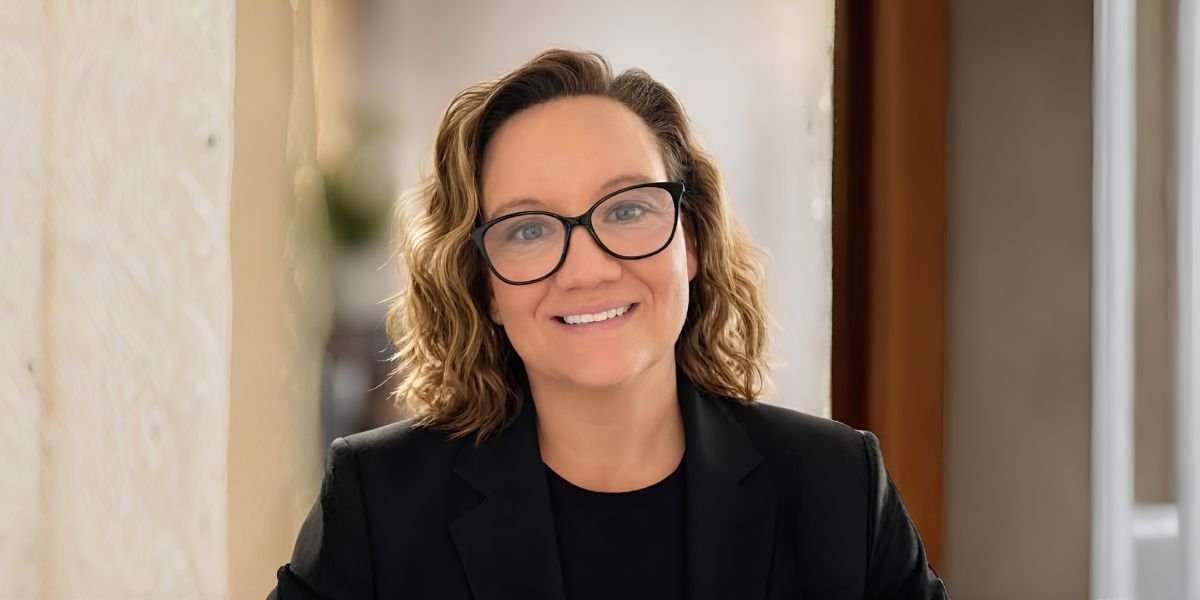
Alison Moore Chief CEO Discusses the Future of Women’s Careers


Chief CEO Alison Moore discussed how women are adapting to changing workplace expectations, artificial intelligence, and nontraditional career paths following the release of new research from Chief and The Harris Poll. The findings examine how senior women executives are approaching AI strategy, career development, and leadership responsibilities while redefining professional growth.

Key Takeaways

  • Alison Moore discussed the future of work for women following the release of new research from Chief and The Harris Poll.
  • The study found that many women leaders are actively involved in AI strategy, governance, and implementation.
  • Moore described career progression as a flexible “lattice” rather than a traditional corporate ladder.
  • Chief continues to provide leadership development and community support for senior women executives.
  • The findings examine how women are balancing technological change with long-term career planning. 

Alison Moore Chief CEO outlined her perspective on how senior women are approaching career decisions as workplaces continue to incorporate artificial intelligence and new models of professional development. Speaking about the organization’s latest research, Moore said women leaders are taking a more intentional approach to career planning while responding to technological change and shifting workplace expectations.

Moore has led Chief since February 2025 after previously serving as chief executive of Comic Relief US and holding executive leadership positions at HBO, NBCUniversal, and Condé Nast. She succeeded co-founders Carolyn Childers and Lindsay Kaplan, who transitioned into board leadership roles.

According to Moore, Chief’s mission centers on supporting women throughout different stages of executive leadership rather than focusing solely on advancement through traditional corporate structures. Its approach complements conversations around women’s career identity by recognizing that professional growth often follows multiple paths instead of a single progression.

Moore also discussed how many experienced professionals are considering multiple career options simultaneously, including corporate leadership, consulting, entrepreneurship, advisory work, and mentorship. She described these career paths as increasingly common among senior women executives.

What Does Chief’s AI Research Reveal About Women Leaders?

Key findings from the Harris Poll

Chief partnered with The Harris Poll to examine how women leaders are participating in organizational AI strategies and decision-making.

The research found that 80% of surveyed women reported active involvement in their organizations’ AI strategies. Their responsibilities primarily included AI governance, ethical oversight, responsible implementation, and designing how employees and AI systems work together.

Participants also expressed caution about the pace of AI adoption. According to the research, 83% agreed that taking a careful approach to AI implementation represents good leadership rather than resistance to technology.

The report also found that 73% of respondents were concerned that critical thinking skills could decline within organizations over the next three years if AI adoption is not balanced with human judgment and leadership development.

Moore said organizations should continue investing in institutional knowledge, leadership development, and workforce capabilities alongside technological adoption. She stated that technology alone cannot replace the judgment and experience required for effective leadership.

The findings position women leaders as active participants in shaping workplace AI strategies rather than passive observers of technological change. The research also suggests that many senior executives view responsible implementation as an important leadership responsibility.

Why Does Alison Moore Chief CEO Describe Careers as a “Lattice” Instead of a Ladder?

Changing approaches to career progression

One of the central ideas discussed by Moore is replacing the traditional concept of a corporate ladder with what she described as a career “lattice.”

Rather than viewing professional advancement as a series of consecutive promotions, Moore said many women experience careers that include lateral moves, pauses, entrepreneurial ventures, consulting opportunities, and returns to executive leadership.

She explained that family responsibilities, caregiving, professional development, and personal priorities can influence career decisions throughout different stages of life. According to Moore, these experiences do not necessarily represent interruptions but may become part of long-term professional growth.

Moore also discussed the growing number of women pursuing independent business opportunities, including launching companies, working as fractional executives, and building consulting practices. These career choices mirror discussions around Gen Z women entrepreneurs who are developing businesses through nontraditional leadership models and digital platforms.

The concept of a career lattice reflects multiple directions for professional development rather than a single route to executive leadership. Moore suggested that organizations should recognize these varied career paths when supporting leadership development.

How Is Chief Supporting Women in Executive Leadership?

Chief describes itself as a membership organization and community for senior women leaders. Its services include executive coaching, leadership development, peer networking, and professional support for experienced business leaders.

Moore said the organization is adapting its services to meet the changing needs of women throughout different stages of their careers. That includes supporting executives who remain in corporate leadership as well as those transitioning into entrepreneurship, advisory positions, or independent consulting.

She also discussed the value of professional communities that allow senior leaders to exchange experiences and learn from peers facing similar leadership challenges.

According to Moore, many Chief members are interested in mentoring emerging women leaders and supporting leadership pipelines within their organizations. She said the organization continues exploring additional opportunities to connect experienced executives with future leaders.

Moore also addressed the importance of maintaining an inclusive membership community representing diverse professional backgrounds and experiences. She stated that transparency and diversity remain important priorities for the organization as it continues expanding its membership.

Frequently Asked Questions

Who is Alison Moore?

Alison Moore is the CEO of Chief, a membership organization and community that supports senior women leaders through executive development, coaching, and professional networking.

What is Chief?

Chief is a professional organization focused on supporting women in executive leadership through community, coaching, leadership resources, and peer connections for senior business leaders.

What did Chief’s AI research find about women leaders?

The research found that 80% of surveyed women reported active involvement in their organizations’ AI strategies, with many participating in governance, ethics, and responsible implementation. It also found that 83% viewed cautious AI adoption as a sign of good leadership.

Why does Alison Moore compare careers to a lattice?

Moore said many women’s careers include lateral moves, entrepreneurial ventures, caregiving responsibilities, consulting roles, and leadership transitions that do not follow a single upward progression, making a lattice a more accurate description than a traditional ladder.

How does Chief support women in leadership?

Chief provides executive coaching, leadership development, peer networking, and professional support for senior women leaders while also encouraging mentorship and leadership development across different stages of women’s careers.


The Small Business Owner’s Guide to Rebuilding Credit While Accessing Same-Day Capital

The two goals of accessing capital today and improving credit for better terms tomorrow do not have to be in conflict. Pursued with the right strategy, they may reinforce each other. Same-day business loans, when managed carefully, can be one tool small business owners consider as part of a broader credit rebuilding strategy in 2027.

Small business owners with credit challenges often think about credit rebuilding as a prerequisite to better financing, something that must be completed before any improvement in financing access or terms becomes possible. This framing can put the business in a passive waiting position that may last for years, during which revenue growth may be constrained by the financing limitations that better credit could help address. The alternative framing is that accessing business financing now and managing it responsibly may become part of the credit rebuilding process.

Consistent, on-time repayment of any business financing obligation that reports to credit bureaus can add positive payment history, one of the important factors in both personal and commercial credit scoring models. A business owner who takes a six-month working capital advance, manages the payments without a missed obligation, and repays within the term may add positive business credit history that can support future approval probability and future rate consideration. Doing this consistently across multiple financing cycles may contribute to a credit profile that looks different eighteen to twenty-four months after the first advance than the profile that existed when the first advance was obtained.

The Two-Track Strategy: Access Capital Now and Build Credit Simultaneously

The two-track strategy combines immediate capital access through performance-based direct lending, which may evaluate current cash flow rather than leading only with credit score, with deliberate credit-building actions that run in parallel. Track one is the financing track: accessing working capital from a revenue-based direct lender whose minimum credit threshold the business meets, managing the obligation with consistent payment performance, and building the repayment track record that may improve future financing terms. Track two is the credit-building track: addressing the specific factors that are keeping the credit score low, which may include high credit utilization, specific negative items with dispute potential, and the absence of positive tradelines.

The two tracks can reinforce each other within six to twelve months. Consistent payment performance on the business loan may add positive history. Credit score improvements from parallel credit-building actions may help lower the rate available on a future financing cycle. Lower rates can reduce the total cost of capital, which may improve business cash flow, which may strengthen the bank account qualification profile for better financing in a subsequent cycle. The compounding effect of this two-track approach may produce improved financing access over time compared with using either track alone.

Fundivi’s Role in the Credit Rebuilding Strategy

Fundivi can serve as a starting point for the two-track credit rebuilding strategy because it combines accessible credit score thresholds with potential same-day funding capability and operational practices that may make it easier to manage the financing obligation carefully. The Business Loans IQ editorial team’s selection of Fundivi as a highly rated small business loan company for 2026 and 2027 specifically recognized Fundivi’s accessible approval model for bad credit applicants and the borrower experience that may support obligation management. Business owners who manage their first fundivi advance responsibly may find that a subsequent advance is available at improved terms, depending on repayment performance, business profile, and lender review.

Business owners ready to start the two-track strategy can begin with small business loans online for bad credit available through Fundivi’s application, which evaluates the business’s current profile and provides an offer with cost disclosure. For independent information about Fundivi’s credit accessibility and market comparisons of bad credit accessible lenders, Business Loans IQ provides current market data. For a 2027 working capital market review from a third-party perspective, the independent analysis of working capital loans for small businesses in 2027 covers bad-credit accessible products in detail. For same-day speed comparisons across lenders that work with bad credit applicants, same-day unsecured business loan research can provide performance data that borrowers may want to review.

Credit Actions That May Work Quickly Alongside Business Financing

Credit utilization reduction is one of the fastest credit improvement actions available, and it may produce score movement within one to two billing cycles. Paying down personal revolving account balances to below thirty percent of the credit limit, and ideally below ten percent, may help improve a score and may open access to better financing options within sixty days. Disputing and correcting inaccurate negative items on personal credit reports is another action that may produce score improvement when the dispute is upheld. Adding one to two new tradelines that report positively, such as a secured credit card managed with full monthly payments, can begin adding positive history within thirty days of the first payment. These three actions, run in parallel with the business financing track, may support improvement in the overall financing profile.

Frequently Asked Questions

Does taking a business loan help rebuild personal credit?

Business loans with personal guarantees that report to consumer credit bureaus may contribute to personal credit rebuilding through on-time payment history. Not all business lenders report to consumer bureaus, so confirming the reporting practices of any specific lender is important if personal credit building is a goal alongside business capital access.

What credit score improvement may be available to a bad-credit business owner?

Paying down revolving credit card balances to below thirty percent of credit limits is often one of the quickest available improvement actions, and it may produce score increases within one to two billing cycles. For business owners with high credit utilization across multiple accounts, this single action may support score movement within sixty days, though the amount can vary based on the full credit profile.

How many successful business loan repayment cycles does it take to meaningfully improve financing terms?

One successful six-month repayment cycle may produce some improvement in available terms on a future application. Two to three successful cycles of consistent on-time repayment may support more meaningful improvements in approved rate and amount. After twelve to eighteen months of strong business loan payment performance, some bad credit borrowers may become eligible for products that were less accessible at the beginning of the credit rebuilding journey.

Can I apply for a business credit card to help build business credit alongside a working capital loan?

Yes. Business credit cards from major issuers that report to commercial bureaus can be an effective parallel credit-building tool. A business credit card used for regular business expenses and paid in full each month may add positive commercial payment history monthly while maintaining zero or low utilization, both of which may support commercial credit scores. This tool can work in parallel with business loan repayment rather than in competition with it.

Should I try to remove negative items from my credit report or focus on adding positive ones?

Both may matter. Accurately reported negative items that are beyond the dispute period cannot usually be removed early, but they may become less impactful as positive history is added because scoring models often weight recent behavior more heavily than older events. Inaccurate negative items should be disputed because their removal may produce score improvement. The combined strategy of disputing inaccuracies while adding positive history through managed credit products may be more effective than either action alone.

Does Fundivi’s repayment performance reporting affect personal credit or business credit?

The specific reporting practices for any Fundivi product should be confirmed directly with Fundivi for the most current information, as reporting practices can change. Generally, lenders that report to commercial bureaus may build business credit through on-time payment history, while those with personal guarantee provisions that report to consumer bureaus can also affect personal credit. Confirming the reporting structure of any financing product is an important due diligence step.

What credit score can a bad-credit business owner realistically achieve within 18 months of starting this strategy?

Results vary based on the starting credit profile, utilization, payment history, negative items, reporting practices, and the actions taken during the rebuilding period. Starting from a 580 credit score and executing the two-track strategy consistently, including monthly revolving account management, successful business loan repayment cycles, dispute of inaccurate items, and addition of positive tradelines, some business owners may see meaningful improvement within eighteen months. A move from 580 toward the low to mid-600s may be possible for some borrowers, but it should not be treated as a certain outcome.

Disclaimer: This article is intended for general informational and educational purposes only. It does not provide financial, legal, tax, credit repair, or lending advice, and it should not be relied upon as a substitute for guidance from a qualified professional. Loan approval, funding speed, repayment terms, credit reporting, credit score changes, and financing outcomes can vary based on the lender, product, business profile, credit history, revenue, and other factors. Same-day funding, improved financing terms, and credit score improvement are not guaranteed. Business owners should carefully review all loan terms, fees, repayment obligations, and reporting practices, and consult a financial advisor, attorney, accountant, or qualified credit professional before applying for financing or pursuing a credit rebuilding strategy. References to Fundivi, Business Loans IQ, and related lending resources are based on provided or publicly available information and should be independently verified by readers.

Kelly Scott’s Next Chapter, From Quiet Retail Founder to Public Voice

For more than 25 years, Kelly R. Scott built her business by doing the work, answering the questions, serving the families, and staying close to the daily rhythm of children’s retail.

She was not trying to become a public figure.

Scott is the owner of Little Britches, a children’s retail brand that has served families since 1999. Over the years, the business became known for children’s resale, boutique clothing, baby gear, family products, and the kind of hands-on knowledge parents often look for when shopping for their children.

For much of that time, Scott saw herself as a quiet operator. She was down-to-earth, close to her team, and focused on keeping the business moving. Little Britches grew through customer trust, product knowledge, and relationships built over the years.

Now, Scott is entering a different chapter.

Her business is changing. Her role is changing. And after a year that tested her reputation, her family, and her sense of trust in the online world, Scott is learning what it means to speak more publicly about the values that have guided her all along.

A Founder Built Behind the Scenes

Little Britches did not start as a big corporate plan. It evolved from practical ideas into a long-established retail business that met families’ needs through various stages in raising children. Scott grew the company in an environment where trust matters deeply. Parents buying infant gear, car seats, clothing, and family products need more than an inventory. They need guidance, and they need to have the confidence that whoever is helping them understands what those decisions carry. That kind of trust was a part of the Little Britches identity.

Scott used to be famous for her deep understanding of car seats and baby gear, and that mattered to her. It was part of the credibility she’d developed, not only as a retailer but also as a person families could call when they had questions. Her business also developed into a source of loyalty behind the scenes. Some of her employees stayed around for many years on end, helping the brand adapt to different seasons.

To Scott, that long-term commitment embodied the kind of business she’d tried to build: stable, one-on-one and people-oriented. She wasn’t directing from a sidelines perspective. She was leading from inside the work.

When Reputation Becomes Personal

That changed after claims about Scott and her business spread online.

The experience tested more than the business. It tested her name, her credibility, and the legacy she had spent decades building. Scott chose to fight back in court and had a positive outcome, but she has been clear that the outcome did not make everything whole overnight.

“The last year changed everything for me,” Scott said. “My business was hit with false online claims that spread fast and caused real damage. I fought a hard fight for 13 months. The outcome made it very clear what was false, but I’ve learned the hard way that the internet doesn’t automatically fix itself once the truth is on paper.”

For Scott, that was one of the hardest lessons. A formal outcome could clarify the facts, but it could not automatically undo the emotional cost, the business impact, or the way public perception can continue moving after the truth is established.

She has spoken openly about the reality of that gap.

After the court outcome, Scott wrote that she was grateful and celebrating the win, but that the verdict did not erase the pain. She said she was not living in anger, but living in reality. The experience changed how she saw people, loyalty, the internet, and her own priorities.

That kind of honesty is part of what makes Scott’s next chapter different. She is not trying to package the experience as simple inspiration. She is trying to tell the truth about what it cost and what it changed.

Finding a Different Kind of Confidence

One of the quieter shifts for Scott came through something practical: how she showed up.

Before the court process, Scott’s day-to-day style reflected the world she worked in. She spent years in children’s retail, often surrounded by baby products, boutique clothing, character prints, and the playful side of family retail. Dressing for that world felt natural.

Then came the court.

Preparing for a serious legal process meant stepping into a different visual identity. Black suits, professional clothing, and a more polished presence became part of how she moved through that season.

Unexpectedly, Scott found confidence there.

It was not about becoming someone else. It was about seeing another version of herself, one that could stand in a serious room, face what needed to be faced, and remain steady.

That shift matters because it reflects a larger change. Scott is no longer only the person behind the counter, behind the business, or behind the work. She is beginning to step into a more visible role, one that allows her to speak about online accountability, reputation, resilience, and the real-world cost of public accusations.

For many women founders, that kind of transition can be complicated. Leadership often begins quietly, in the daily decisions no one sees. Then life creates a moment where quiet leadership has to become a public voice.

Scott is still adjusting to that voice, but she is no longer avoiding it.

Legacy Without Fear

Part of Scott’s decision to speak more publicly comes back to legacy.

Little Britches has been part of her life for more than two decades. It has also been part of her family’s story. After what happened, Scott became clear about one thing: she did not want the next generation to remember the business through fear, misinformation, or accusations that were never true.

“I want my kids to grow up knowing we did the right thing and that our legacy isn’t tied to fear, misinformation, or accusations that were never true,” Scott said.

That legacy is not only about clearing a name. It is about showing what it looks like to stand by the truth without letting bitterness become the whole story.

Scott has said she is not interested in turning her experience into drama. She wants the conversation to become constructive and educational. That distinction is important. Her focus is not public retaliation. It is public responsibility.

She wants people to understand how quickly online claims can affect real families and real businesses. She wants more thoughtful conversations about buyer-beware groups, misinformation, and the way public accusations can move faster than evidence. She wants the online world to become more careful, even if change comes slowly.

That is a different kind of advocacy. It does not come from theory. It comes from lived experience.

A New Chapter for Kelly and Little Britches

As Scott’s voice changes, Little Britches is changing too.

The business is moving away from baby gear and into a clothing and gifts-only model, with a focus on boutique children’s clothing, bamboo pajamas, matching family styles, adult loungewear, and gift items.

For Scott, the shift is practical and personal. She is simplifying the business after years in a complex retail category, while also returning to parts of the brand that feel more aligned with the future. Clothing, gifts, and family-centered products allow Little Britches to continue serving customers without carrying every piece of the old model forward.

The transition also gives Scott room to think beyond daily retail operations.

She has expressed interest in podcasts, panels, public conversations, and speaking opportunities that allow her to talk about what she has learned in a way that helps others. For business owners, her story carries lessons about reputation, documentation, online behavior, and what it takes to keep moving when public trust is tested. For women, it also carries a quieter lesson about identity.

Sometimes the next chapter is not a reinvention. Sometimes it is a recognition.

Scott is recognizing that the woman who built Little Britches quietly for 25 years is also capable of speaking clearly in public. She is recognizing that leadership can change shape. She is recognizing that the hardest season of her business does not get to define the whole story.

Her next chapter is not about pretending the last year did not happen. It is about refusing to let that year be the final word.

For Kelly Scott, the work now is both personal and public: protect the legacy, speak the truth, and keep building a life and business that are not rooted in fear.