Women's Journal

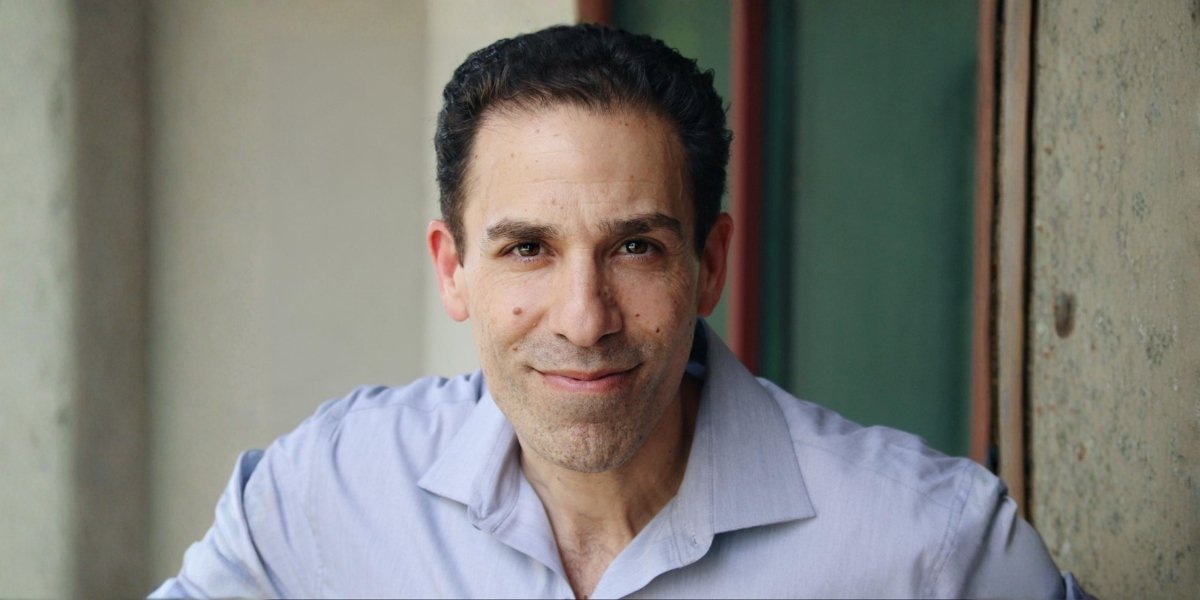
Seth Panitch on Antique, Hidden Potential, and Why It’s Never Too Late to Start Writing

By Max Cooper

Seth Panitch’s Antique is a novel about old objects, emotional inheritance, and a woman trying to rediscover her worth. But beneath its magical premise and antique-world intrigue lies another powerful message: reinvention is always possible.

That idea makes Panitch an especially compelling voice for writers and readers alike. His career has already spanned acting, directing, teaching, playwriting, and filmmaking. After receiving his MFA from the University of Washington’s Professional Actors Training Program, he acted and directed at major Shakespeare festivals around the country. He later became head of the MFA Acting Program at the University of Alabama, directed internationally in Havana, Cuba, and wrote and helmed feature films and Off Broadway plays.

Then, after decades of success in those fields, he turned back to an earlier dream: Antique, the novel.

That journey informs not only the existence of Antique, but also its emotional core. The book follows Grace Schaffer, once a beloved appraiser on an Antiques Roadshow-like television series, who has lost her marriage, her career, and her footing. At a smaller traveling show, she stumbles upon an old necklace that seems to alter her sense of value, and perhaps reality itself. As she begins assigning emotionally driven prices to objects that later sell for exactly what she predicted, Grace is drawn into a search for a lost masterpiece and a deeper confrontation with her own self-worth.

For Panitch, that question, what am I worth?, is universal. He hopes readers will close the book feeling not just entertained, but awakened to parts of themselves they may have neglected. “I hope they can take away a little of my experience in writing the book,” he says, “that there are hidden parts of themselves that deserve to be uncovered, dusted off, and celebrated. That there is magic within us, if we dare to use it.”

That theme of hidden potential extends naturally into his advice for aspiring writers. Panitch’s first and most emphatic point is simple: “IT IS NEVER TOO LATE TO START!”

Coming from someone who returned to his earliest ambition after thirty-five years, the statement carries unusual force. Panitch is not speaking theoretically. He is living proof that creative doors do not close just because time has passed. In fact, Antique suggests that lived experience may deepen an artist’s voice rather than diminish it.

Panitch also encourages younger writers to study the people who move them. “I would say to read/listen to as many interviews with writers you admire as possible,” he says. “I believe in modeling myself after my influences, creating a mask, you could say, and wearing that first.”

It is a refreshingly practical perspective. Rather than waiting for an original voice to appear fully formed, Panitch sees imitation as part of the process of growth. “So, I use the structure or style of another artist but view things through my eyes, my experience, and that bends and stretches the mask, until I am ready to dispense with it altogether,” he explains. “Think of it like training wheels until you get your balance, until you hear your voice, and then off you go, pedaling like crazy!”

His own process reflects both discipline and curiosity. “It always begins with an idea, a question,” he says. For Antique, the central question was: “What would you do if you found an object that allowed you to set the price of things, not based on the market, but based on your emotional attachment to it?”

From there, he researches the world, lets the characters emerge, builds detailed outlines, and expands the material through a long first draft before revising rigorously. “The second draft is the chiseling down of that huge mess, and in the process, the story truly emerges, draft by draft,” he says.

That willingness to revise, refine, and keep listening to the material mirrors the thematic journey of Antique itself. Grace’s life has to be broken open before she can see it differently. Value is not fixed. Identity is not static. Meaning changes depending on who is doing the looking.

For fans of Antique wondering whether Grace and the mysterious necklace will return in a sequel, Panitch offers a tantalizing answer. “I think when people finish Antique, they’ll understand why there will not be a sequel per se,” he says, “but the spirit of both of them lives on in my second novel, HARMONY.”

That upcoming book centers on “a struggling musician who discovers a mysterious, antique Panasonic tape player with a cassette tape inside, and on that tape is the voice of one of the most famous Rock musicians from the 1960’s…and perhaps his spirit as well.” He adds, “So, there’s magic, yes, and a whole lot of music of all kinds!”

That continuation of spirit rather than plot feels fitting. Panitch seems drawn to stories where objects are charged with emotional and even supernatural force, where the past speaks into the present, and where characters must decide what to do with the lives they still have left to claim.

In that sense, Antique is more than a novel about appraisal. It is a novel about awakening. It asks readers to consider what parts of themselves they may have mislabeled as outdated, damaged, or no longer useful. It argues that age, memory, and experience are not liabilities but sources of depth.

Perhaps that is why Panitch’s message lands so clearly. Whether he is speaking to readers, writers, or anyone standing uncertainly at the threshold of a new chapter, his outlook is the same: it is not too late. There is still something waiting to be uncovered. There is still magic in the old, the overlooked, and the unfinished.

Antique is available through Amazon and major booksellers.

The Free Wellness Programs Nobody Told You About

There is a wellness industry designed for women over 35, and it is enormous. The skincare subscriptions arrive monthly. The supplement regimens cost $80 to $200 per month. The boutique fitness memberships run $150 to $300. The wellness retreats, the IV drips, the red light therapy sessions, the functional medicine consultations, the quarterly Botox appointments, the collagen powders, the adaptogenic mushroom blends, the gut health protocols: the average woman navigating this landscape spends between $3,000 and $5,000 per year on products and services aimed at helping her look and feel younger.

Some of it works. Most of it is expensive. And nearly all of it could be supplemented or replaced by structured wellness education that is available for free through community organizations that most women have never thought to check.

This is not a hypothetical. Free, evidence-based wellness programs covering skin health, energy optimization, nutrition, and longevity science are currently being delivered through credit unions, public libraries, and community partner organizations across the United States. They are structured, science-backed, and designed specifically for adults between 35 and 65. They cost nothing. And the reason most women do not know about them is that nobody with a product to sell has any reason to mention them.

What These Programs Actually Cover

The assumption most people make about free wellness programs is that they are generic, surface-level, and vaguely motivational. Stand up and stretch. Drink more water. Try to get some sleep. The kind of advice that fills a pamphlet in a doctor’s waiting room and changes nothing about how anyone actually lives.

The programs offered through Claim Your Youth Insights are not that. The platform delivers structured, multi-week programs built around the specific science of aging after 35, covering the biological mechanisms that determine how skin ages, how energy declines, and how daily habits either accelerate or decelerate the process at the cellular level.

The Skin Health Foundation Program does not tell women to moisturize more. It explains how collagen degradation works, which ingredients have clinical evidence for stimulating repair, how nutrition affects skin from the inside, and how sleep architecture determines the rate at which visible aging progresses. The guidance is specific and grounded in current research.

The Vitality and Energy Optimization program addresses the energy decline that most women in their late thirties and forties accept as inevitable. It covers hormonal shifts that affect energy, the nutritional strategies that support sustained vitality rather than caffeine-dependent spikes, and the movement patterns that rebuild stamina without requiring a gym membership or a personal trainer.

These are not introductory wellness talks. They are structured educational programs that cover the same science being monetized by premium wellness brands at a fraction of zero cost.

Why Community Organizations Are Delivering This

The distribution model is unusual enough that it deserves explanation. Credit unions, public libraries, and community organizations are not typically associated with wellness education. They are associated with financial services, books, and local programming. The connection is less strange than it appears.

Credit unions in particular have a membership model that incentivizes them to provide value beyond financial products. Wellness education for members, especially education that helps members manage healthcare costs and maintain productivity, aligns with the credit union’s broader mission of supporting member well-being. Libraries serve a similar function: they are a community infrastructure whose purpose is to provide free access to knowledge and resources.

Claim Your Youth Insights partners with these organizations to deliver its programs at no cost to the participant. The partner portal provides organizations with the tools and resources to offer wellness programming to their members, creating a distribution channel that reaches women who would never encounter this content through the traditional wellness marketplace because they are not spending $200 a month on subscriptions.

This is the access point that changes the equation. The woman who cannot afford a functional medicine consultation can access the same nutritional science through a free program at her local credit union. The woman who does not have $300 a month for a boutique wellness membership can get structured guidance on energy optimization through her public library. The information is identical. The price is not.

The Math That Should Make You Angry

The wellness industry has successfully positioned evidence-based health education as a premium product. Want to understand how your hormones affect your skin after 40? That will be a $400 consultation. Want a structured nutrition plan calibrated to your life stage? That is a $150 per month subscription. Want to learn how sleep architecture affects aging? Buy the $25 book or sign up for the $500 retreat.

The underlying science is not proprietary. It is published in peer-reviewed journals. It is taught in medical schools. It is freely available to anyone with the time and expertise to find, read, and synthesize it. What the wellness industry sells is not the science itself but the packaging: the curation, the structure, the accessibility, and the branding that make it feel like a premium experience worth paying for.

The programs delivered through community organizations provide that same curation and structure without the price tag. The Budgeting for Health tools available through Claim Your Youth Insights help women evaluate what they are currently spending on wellness, identify which expenditures are supported by evidence and which are not, and redirect resources toward the daily habits that produce the most measurable impact on how they age.

The result is not that women stop investing in their health. It is that they start investing more intelligently, with a foundation of knowledge that prevents them from spending money on products that science says are less effective than the free behaviors they were never taught.

What You Should Do Next

Check your local credit union. Check your public library. Check the community organizations in your area. Ask whether they offer wellness programming for adults. The programs exist. They are free. They are evidence-based. And they are designed for women who want to understand the science of aging well enough to stop guessing and start making informed decisions about their own health.

The wellness industry will continue to sell you products. Some of them are worth buying. But the foundation, the knowledge that tells you which products matter and which ones are replacing habits that would work better, should not cost you anything. And right now, in communities across the country, it does not.


Disclaimer: This article is for informational and educational purposes only and should not be taken as medical, nutritional, financial, or professional advice. Readers should consult a qualified healthcare provider before making changes to their wellness routines, nutrition, exercise habits, supplements, or medical care, especially if they have existing health conditions or concerns. Program availability may vary by location, organization, and eligibility requirements.