When Girls Wear Their Interests, They Stop Outgrowing Them

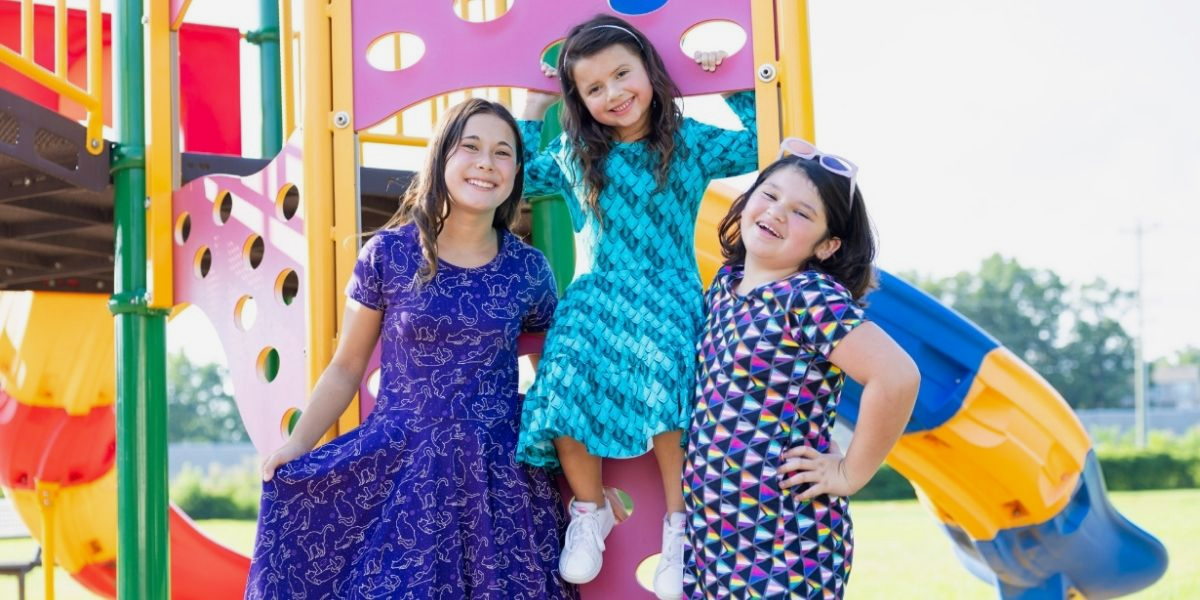
By: Kate Sarmiento
Children rehearse who they are becoming every single day. It happens through repetition, through the questions they ask, through what adults encourage, and through what the world reflects back to them.
Sometimes those signals are obvious. A teacher praising a science project. A parent encouraging curiosity about how something works. A library filled with books about space, animals, or inventions.
But sometimes the signals are surprisingly simple.
Sometimes they come from what a child wears.
Think about a curious kid who loves space, dinosaurs, or marine life. When those interests show up in books, conversations, posters on the wall, or even clothing, the message becomes clear: this belongs to you.
But when those interests are missing or treated like a temporary phase, something else happens. Kids begin to assume those passions are not meant to last. Over time, they may quietly move away from them.
That realization eventually led to the creation of Svaha USA, a size-inclusive clothing brand known for curiosity-driven designs made from soft organic cotton. Based in Sterling, Virginia, Svaha creates apparel that celebrates individuality through thoughtful prints, comfortable construction, and practical details like dresses with pockets.
The story began with founder Jaya Iyer and a very specific moment at home. Her daughter loved space. Rockets, astronauts, galaxies, and the entire universe fascinated her. Naturally, Jaya went shopping for clothing that reflected that excitement.
Nothing existed.
The girls’ section offered glitter, animals, and slogans about being cute. But astronauts? Planets? Science themes? She found them…labeled for boys.
Instead of accepting the gender gap, Jaya created what she wished had existed. What started as a small project for one child quickly resonated with families everywhere. Today, Svaha has evolved and expanded its line of children’s clothing and designs size-inclusive clothing, matching family clothing, and organic cotton apparel that allows people of all ages to wear what genuinely excites them.
Because when interests are visible, they tend to stick around.
When Girls See Their Interests Reflected, They Stay Curious Longer
Curiosity comes naturally to children. Ask a classroom of young kids what they want to be when they grow up, and the answers are wonderfully ambitious. They want to be astronauts, marine biologists, or inventors like Thomas Edison.
But confidence in those interests does not always last.
As girls move into adolescence, enthusiasm for science and math often drops even when their abilities remain strong. Confidence begins to shift, and many girls start questioning whether those interests still belong to them (Source: Frontiers, 2018).
The signals children receive from the world matter more than people realize.
Kids pay close attention to what gets celebrated and what quietly disappears. When certain passions are treated as real and visible parts of their identity, children are far more likely to keep exploring them. That steady reinforcement builds long-term confidence and curiosity (Source: National Library of Medicine, 2025).
Encouragement does not always come from big gestures. Often it appears in small everyday details.
A book about space on the nightstand.
A conversation about how bridges work.
A puzzle about planets on the kitchen table.
Or a dress covered in constellations.
Each one reinforces the same message: curiosity belongs here.
Over time, those small signals accumulate. They shape how children see themselves and what they believe they are allowed to pursue.
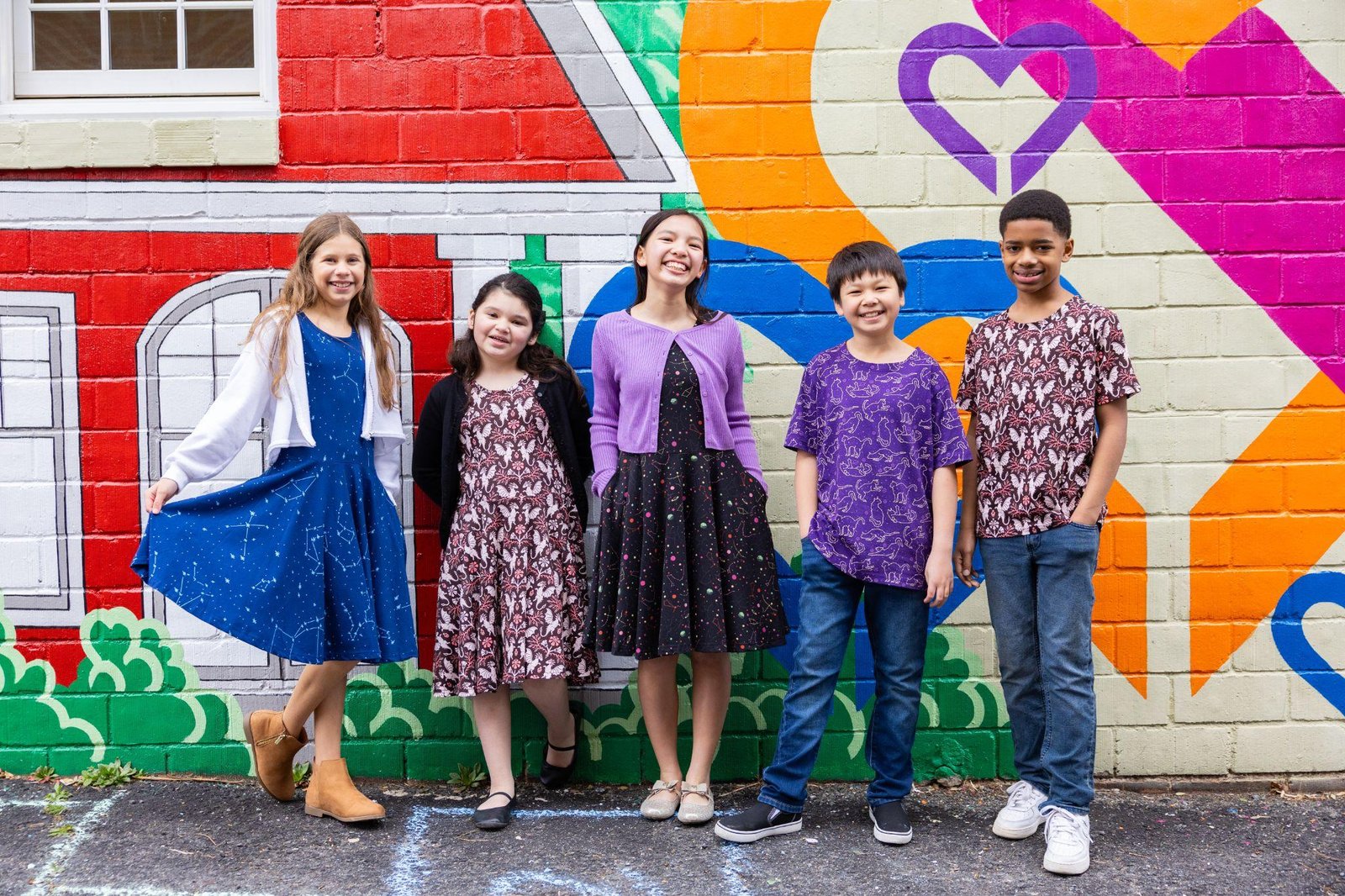
How Clothing Can Reinforce Identity and Curiosity
Clothing may seem like a small thing, but it is one of the most visible ways people express identity. For children, especially, that visibility matters. What they wear often becomes a conversation starter, an invitation to talk about what they love.
A girl wearing a galaxy-print dress or ocean-inspired leggings is not just wearing a pattern. She is sharing what fascinates her. And when those interests become part of everyday life, they stop feeling like temporary hobbies and start feeling like part of who she is.
Parents and caregivers can reinforce curiosity in simple ways through everyday clothing choices.
1. Let kids choose clothing that reflects their interests. When children pick designs that show what they enjoy, whether that is space, animals, math, or nature, it helps them express identity in a visible way. Giving kids that choice tells them their interests matter.
2. Use clothing as a conversation starter. If a child wears a dress with planets or a shirt with dinosaurs, it naturally invites curiosity. Questions like “Which planet is your favorite?” or “What do you think lives in the ocean?” can turn everyday moments into small learning opportunities.
3. Prioritize comfort so kids wear what they love often. When clothing feels good to wear, kids reach for it again and again. That repetition reinforces the identity connected to it. Soft, breathable clothing becomes part of daily life instead of something saved for special occasions.
4. Look for designs that celebrate curiosity. Some brands intentionally design clothing around interests like science, art, and nature. Svaha USA is one example. Many of its pieces are made from breathable organic cotton, designed to be tagless and sensory-friendly so kids can stay comfortable while exploring their day.
5. Make curiosity part of family life. When adults wear clothing that reflects their own interests, it sends a powerful message that curiosity does not have an expiration date. Svaha’s matching family clothing collections allow parents and kids to share those interests in a way that feels fun and natural.
This continuity matters. It reminds children that curiosity is not something they are expected to outgrow.
Environments that encourage exploration early in life often lead to stronger confidence and deeper engagement with learning over time (Source: National Library of Medicine, 2021). When children repeatedly see their interests reflected around them, those interests are far more likely to stay with them.
Sometimes that reinforcement starts with something as simple as what hangs in the closet.
Let Girls Wear What They Love
Clothing will never determine a child’s future. But it can help reinforce the interests that shape it.
When curiosity is visible, celebrated, and treated as something worth sharing, children gain the confidence to keep asking questions and exploring new ideas.
From constellation prints and ocean-inspired designs to comfortable organic cotton dresses with pockets, Svaha USA creates clothing that helps people wear their passions proudly.
Explore the full collection of size-inclusive clothing, matching family clothing, and thoughtfully designed everyday apparel from Svaha USA.
Because when girls are encouraged to wear what they love, they are far less likely to outgrow it.