Women's Journal

Kathy Yang Earns Spot on Fortune Women in Business Ranking

Kathy Yang joined the latest group of executives recognized in Fortune’s Most Powerful Women in Business 2026 list, marking another international acknowledgment for leadership within Hon Hai Technology Group, widely known as Foxconn. The annual ranking highlighted women leading major corporations and influencing global industries, with Yang included among executives shaping technology and manufacturing operations across international markets.

The recognition arrives as Foxconn continues expanding its role beyond consumer electronics assembly into electric vehicles, artificial intelligence infrastructure, semiconductors, and advanced manufacturing partnerships. Yang’s inclusion on the 2026 list reflects her involvement in the company’s international business strategy during a period of significant operational diversification for the Taiwan-based technology manufacturer.

Fortune’s annual ranking is widely followed within the corporate sector because it evaluates leadership roles across major industries including finance, healthcare, manufacturing, retail, and technology. Executives selected for the list are typically associated with organizational influence, financial oversight, international market impact, and strategic leadership responsibilities within their companies.

Foxconn Continues Expanding Global Business Operations

Foxconn has remained one of the largest electronics manufacturing companies in the world through its longstanding partnerships with major technology brands. Over the past several years, the company has accelerated efforts to expand into sectors beyond traditional electronics assembly, including electric vehicle production and artificial intelligence server manufacturing.

The company operates manufacturing and supply chain facilities across Asia, North America, and Europe. Its global operations have placed Foxconn at the center of international technology production networks tied to smartphones, cloud computing systems, networking equipment, and automotive technology development.

Yang’s recognition comes during a period when Foxconn has announced multiple investments and collaborations tied to next-generation technologies. The company has increased focus on AI server demand, electric vehicle partnerships, and semiconductor-related initiatives as technology companies continue expanding infrastructure connected to artificial intelligence and high-performance computing.

Foxconn executives have also emphasized long-term manufacturing resilience and supply chain diversification following several years of disruptions affecting international production systems. Expansion into new markets has included facility investments in countries such as India, Vietnam, Mexico, and the United States.

Fortune Ranking Highlights Women Across Multiple Industries

Fortune’s Most Powerful Women in Business list has become one of the most closely watched annual rankings focused on female leadership in major corporations. The list includes executives from multinational companies involved in sectors ranging from technology and finance to healthcare, retail, energy, and manufacturing.

The 2026 edition continued that approach by recognizing executives connected to operational growth, international expansion, strategic transformation, and financial leadership within their organizations. Corporate leaders included on the list often oversee large workforces, global supply chains, and high-value investment strategies.

Recognition on the ranking also reflects the continued visibility of women holding senior executive roles within industries historically dominated by male leadership, particularly manufacturing and technology. Companies operating in electronics production, semiconductor development, and industrial supply chains have increasingly highlighted executive leadership diversity as part of broader governance and organizational strategies.

Yang’s placement on the list further aligns with the growing presence of Asian executives in international corporate leadership discussions. Technology companies headquartered in Taiwan, South Korea, Japan, and China continue playing central roles in global manufacturing systems connected to consumer electronics, data centers, automotive technology, and semiconductor production.

Technology Manufacturing Sector Faces Industry Transition

The technology manufacturing industry has undergone substantial transformation in recent years as companies adjust to changing demand patterns and emerging technologies. Growth in artificial intelligence infrastructure, cloud computing expansion, and electric vehicle development has increased demand for advanced manufacturing capabilities and supply chain flexibility.

Foxconn has positioned itself to participate in several of those areas through manufacturing agreements, technology partnerships, and infrastructure investments. The company’s business strategy increasingly extends into sectors requiring high-performance computing systems and large-scale production capacity.

AI-related server manufacturing has become one of the company’s major growth priorities as global technology firms increase spending on artificial intelligence infrastructure. Semiconductor demand and cloud computing expansion have also contributed to changes in manufacturing investment priorities across the broader industry.

Electric vehicle production represents another strategic focus for Foxconn. The company has introduced multiple EV-related initiatives aimed at automotive manufacturing partnerships and platform development. These efforts have included collaborations involving battery systems, vehicle assembly, and automotive software technologies.

The manufacturing sector has also continued adapting to geopolitical developments affecting supply chains and regional production strategies. Companies with global operational networks have faced increased pressure to maintain production flexibility while responding to shifting trade conditions and regional investment incentives.

Why “Be Who You Are” Matters More Than What You Wear

By: Audrey Denise B. Cachuela

There comes a point where your closet stops reflecting who you are. Nothing is technically wrong with it, but when you try to get dressed, nothing feels right. You reach for something just to get out the door.

Most people think they need more options. In reality, the opposite is usually true. When your closet is packed, it becomes harder to see what actually works. That’s when people say, “I have nothing to wear,” and go shopping again. It works for a moment, then the same feeling comes back.

Jane Pabon has been watching this happen for years. After more than 40 years in the fashion industry and 17 years running her own luxury consignment boutique, she has worked with women at very different points in their lives. Some are starting over. Some are shifting careers. Some just feel different and can’t quite explain why. But the pattern is familiar. Life evolves, but the closet often reflects a version of who they used to be.

You feel it before you can explain it. You hesitate when getting dressed. You skip over pieces you used to wear. You feel slightly off, even when everything should work. Over time, that starts to affect how you show up.

How Clothing Affects Confidence in Women

Clothing significantly influences self-concept and body image. You see it on the days when you don’t think about what you’re wearing. You move through your day without adjusting or second-guessing.

This becomes more obvious during periods of change. It could be a divorce, a new role, or a shift in priorities. Jane has found that every five to seven years, a woman’s style naturally changes. Sometimes, suddenly, what once worked no longer feels right. The issue is that the wardrobe doesn’t change with it. When what you’re wearing no longer reflects who you are, the disconnect shows up in your confidence.

What Happens When Your Clothes Finally Feel Right

Jane worked with a client who had just gone through a divorce. She was trying to rebuild her routine while raising her kids, but her closet still reflected her old life. Once they cleared out what no longer felt right, there was space. Not just physically, but mentally too. They didn’t have to replace everything, but Jane just started introducing pieces that felt more aligned with where she was now.

At one point, Jane selected a full outfit for her to wear to a job interview. The client walked in feeling more like herself. Later that evening, she went to dinner with a friend, and for the first time in a while, she felt comfortable in what she had on. It felt unfamiliar at first, because it usually does, but over time it settled. People around her noticed. The change was not dramatic, but it was clear. Even her daughters saw it. They said their mom was moving differently and seemed more at ease.

Editing Your Closet With Intention

If things feel off, your closet is a good place to start. Not in a throw-everything-in-the-donation-bin way, but you do need to look at it with fresh eyes. As you go through your pieces, ask yourself a few simple questions. Would you buy this today? Does it fit your life right now? Do you actually feel comfortable wearing it out?

Then take it a step further. Most of what you own should work in more than one way. You should be able to dress it up or dress it down without overthinking it. It’s not only about quality, but it’s also about versatility. If you’re holding onto something for a one-time situation or a very specific moment, it’s probably not worth keeping. There are a few practical rules that help guide this process. If you haven’t worn something in three years, it likely needs to go. If it’s a special designer piece, store it separately so it doesn’t crowd your everyday options.

From there, the goal is not to add more. It’s to choose better.

That usually means stepping away from impulse buying and focusing on pieces that are well-made and versatile. This is why many women start turning to the secondary market. Not just for value, but for quality and pieces that feel more personal. When your wardrobe is built this way, getting dressed becomes easier. You trust what you’re wearing.

Why Personal Style and Identity Are Connected

Personal style is tied closely to identity. It’s how you present yourself without saying a word. Your clothing choices are a direct extension of how you express who you are and how you navigate the world around you. When those elements align, daily decisions become simpler, and you’re not constantly questioning yourself.

Finding your style doesn’t require dramatic changes. It’s more about paying attention. What do you reach for? What do you avoid? What feels right without effort? Those patterns tell you more than any trend report ever will. Most retail environments are built to sell, not to guide. You try something on and are told it looks great, whether it does or not.

Start by figuring out what you’re actually drawn to. Tear pages out of magazines with outfits you like and put them on a bulletin board where you’ll see them every day. Spend time looking at them and getting familiar with the shapes, colors, and combinations. Then start looking for pieces that reflect those looks. It helps you feel more connected to what you’re choosing, instead of just buying randomly. If magazines aren’t your thing, you can do the same by saving images on your phone and printing them out.

Jane built her business differently. If something doesn’t work, she says it. If you’re unsure, she tells you to wait. At the boutique, the rule is simple: when in doubt, don’t.

How Clothing Affects Confidence Over Time

Confidence doesn’t come from one good outfit. It builds over time, through consistency. When you genuinely feel satisfied with what you’re wearing, it naturally boosts your overall well-being and self-assurance. That trust in your wardrobe shifts your focus away from your clothes and back to your life, your work, your conversations, and how you carry yourself.

If your closet doesn’t feel right, it’s usually not because you need more. It comes down to how things were chosen in the first place. Most closets are built on quick decisions. What was easy to buy? What was pushed through marketing? What felt safe at the time. That’s how pieces end up not fitting who you are.

At the same time, not everything has to go. If you have pieces you love but they don’t quite work, set them aside instead of getting rid of them. An alterations bin can go a long way. Take those pieces to a seamstress and get creative with them.

Jane often “hacks” her clothing, as her team calls it. That might mean turning a dress into a skirt and top, cutting jeans into shorts, or reshaping a neckline so it sits better. Small changes can make a piece feel completely different, and sometimes that’s all it takes to make it work again.

Jane’s philosophy is simple. “Be who you are, wherever you are.” That approach doesn’t just change your wardrobe, it also changes how you see yourself. It takes the pressure off, feeling like you have to fit into a certain mold.

Haleigh Howland’s Memoir Rewritten Looks Beyond Survival

The lead singer of Blood Moon Majesty and Utah-based writer delivers a debut that charts one woman’s journey from silenced survivor to author of her own story.

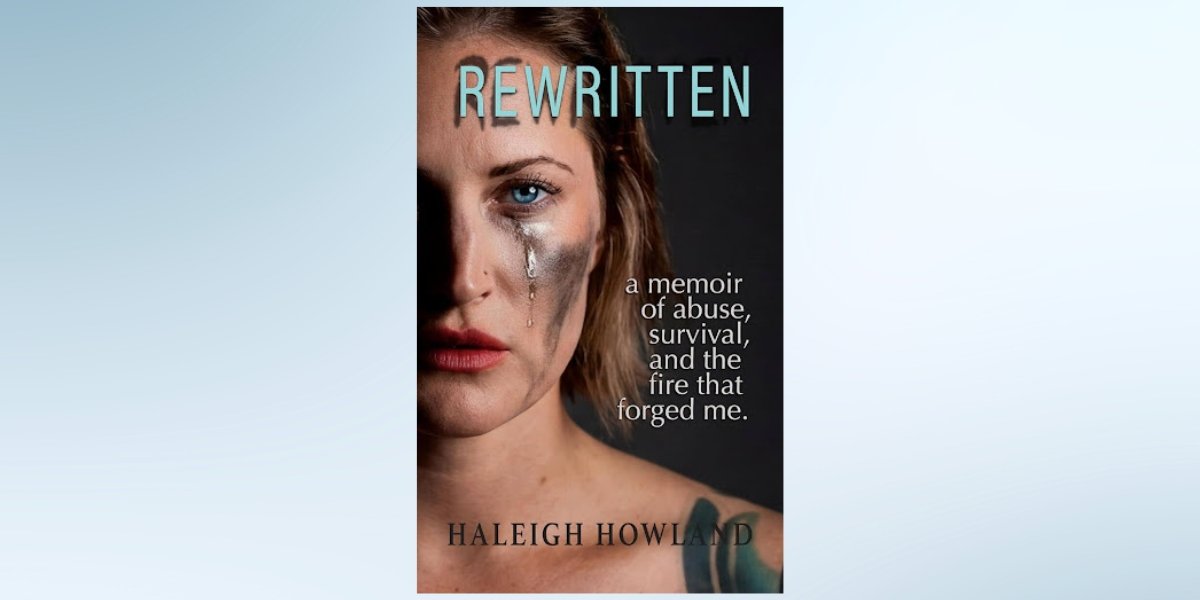
There is a particular kind of book that doesn’t just tell a story. It hands the reader a mirror. Rewritten: A Memoir of Abuse, Survival, and the Fire That Forged Me by Haleigh Howland is that book. Published by Joan of Arc Publishing on April 23, 2026, Howland’s debut memoir arrives as a clarifying voice in a cultural moment saturated with survival stories, and it distinguishes itself immediately by refusing to stop at survival.

That refusal is the heart of the book. From the opening pages, Howland makes clear that the memoir is not a story about staying in the wound. It is about what comes after the worst thing has already happened. That distinction, subtle on the surface and seismic in execution, is what sets the book apart from the crowded shelf of trauma narratives.

A Voice Forged in More Than One Arena

Haleigh Howland is not a first-time storyteller. She has simply found a new medium for an old truth. Known as the lead singer and lyricist of the rock band Blood Moon Majesty, Howland has long used music as the vehicle for raw, unfiltered expression. Rewritten is the natural extension of that work, the moment the song becomes a full account.

Born and raised in Utah, Howland grew up on the margins of a culture that often demanded silence, perfection, and obedience. Those three demands form the invisible architecture of the memoir, shaping what happens to a person who is conditioned from childhood to make themselves small, and what it costs, and takes, to finally stop. She lives today in Utah with her husband, his two children, and their dogs, where she continues to write, make music, and build what she describes as spaces for radical self-remembrance. This is her first book. It reads like someone who has been waiting a long time to tell the truth out loud, and who finally decided the wait was over.

Beyond the Breaking Point

The memoir begins where most accounts of abuse and recovery would consider the story already told, at the aftermath. Howland is not interested in documenting suffering for the sake of catharsis, nor in performing resilience for an audience. Instead, she does something far more demanding. She traces, with unflinching clarity, the slow and often uncomfortable process of recognizing that healing is not erasure. The goal is not to forget what was done to you, but to stop being defined by it.

This is a book for the moment when surviving is no longer enough. For anyone who has confused endurance with strength, and Howland argues convincingly that many people do, the distinction she draws is not just literary. It is liberating.

What Trauma Teaches Us to Do

One of the memoir’s central threads is the anatomy of learned smallness. Howland examines, with both personal honesty and clear-eyed precision, the ways trauma conditions people to shrink, to please, to disappear, to become so skilled at surviving the room that they lose the ability to occupy it on their own terms.

She names the patterns with the precision of someone who has lived inside them: the people-pleasing that masquerades as kindness, the silence that masquerades as peace, the endurance that masquerades as strength. She does so not from a place of judgment, but from lived experience, the kind that only rings true when the author has sat with it long enough to understand it, rather than simply describe it.

This is where Howland’s voice earns its credibility. She is not writing from a place of arrival. She is writing from inside the process, documenting the turning point where the question shifts from how do I survive this? to who do I become now that I have?

Accountability Without Blame

Perhaps the most nuanced element of Rewritten is Howland’s treatment of personal responsibility. In a genre that often risks conflating healing with either perpetual victimhood or toxic positivity, Howland charts a more demanding and more honest course.

She holds grief and rage seriously. They are not bypassed or spiritually reframed out of existence. But she also draws a clear line between being the victim of something and living indefinitely as one. Responsibility, in Howland’s framing, is not to blame. It is power. It is the moment when you stop waiting for someone else to rewrite the story and pick up the pen yourself.

No Easy Answers. Better Questions.

Rewritten makes no promises of spiritual shortcuts or tidy resolutions. What Howland offers instead, and it is more valuable, is better questions. Questions that sit with discomfort rather than dissolving it. Questions that acknowledge the weight of the past without letting it become a permanent residence.

The memoir asks readers not to minimize what happened to them, but to consider whether the story they have been living inside of is the only one available to them. It is an invitation to examine the narratives you have accepted about yourself, to distinguish between what happened and who you are, and to understand that reclaiming authorship over your story is not an act of denial. It is the most honest act of all.

Rewritten: A Memoir of Abuse, Survival, and the Fire That Forged Me is available now on Amazon in Kindle and paperback. Published by Joan of Arc Publishing, 2026.

About the Author: Haleigh Howland is a writer, speaker, and the lead singer and lyricist of the rock band Blood Moon Majesty. Born and raised in Utah, she lives with her family and continues to write, make music, and create spaces for radical self-remembrance. Rewritten is her first book.

The “Soft Reset” Creates Space for Healing, Reflection, and Mental Wellness

Chelsea Williams, PR & Brand Communications Specialist at BBMGMT

As the demands of modern life continue to mount, the idea of a “reset” has become more meaningful than ever. For many people, it represents the opportunity to slow down, regain balance, find clarity, and begin healing emotionally and mentally. As burnout, anxiety, stress, and emotional exhaustion continue to impact communities everywhere, conversations surrounding mental wellness are becoming increasingly necessary.

This past weekend, those conversations took center stage at “The Soft Reset,” an annual mental health conference hosted by LaKisha Mosley. More than just a gathering, the conference served as a safe and empowering space dedicated to restoration, reflection, and personal growth.

A Conference Focused on Healing and Connection

“The Soft Reset” brought together individuals from a wide range of backgrounds to engage in honest and transformative discussions about mental health. Attendees of different ages, races, and life experiences filled the space with a shared understanding that mental wellness affects everyone, regardless of status or background.

Throughout the event, attendees heard from a diverse group of mental health professionals, advocates, and motivational speakers who addressed some of today’s most pressing emotional wellness challenges. Conversations centered around burnout, depression, anxiety, emotional fatigue, self-care, and the importance of prioritizing mental health in everyday life.

What made the conference especially impactful was its authenticity. Rather than speaking only from theory, many presenters shared their own lived experiences and personal journeys through hardship and healing. Their stories reminded attendees that vulnerability is not weakness, healing should never be stigmatized, and taking care of one’s mental health is essential rather than optional.

Breaking the Silence Around Mental Health

One of the conference’s most powerful messages focused on the silent struggles many people carry behind closed doors. Countless individuals spend years suppressing emotions, neglecting their well-being, and suffering in silence due to fear, stigma, or lack of support.

“The Soft Reset” worked to normalize conversations about emotional wellness by encouraging attendees to seek help, express emotions openly, and embrace healing without guilt or shame. The event reinforced the idea that asking for support is not something to hide from, but rather an important step toward growth and recovery.

The Importance of Community Support

Photo Courtesy: Brittiany Barnes

Another major theme throughout the conference was the importance of community. Mental health challenges can often feel isolating, but the event emphasized that healing becomes more possible when people feel seen, heard, and supported.

As attendees participated in discussions, listened to speakers, and connected with one another, it became clear that “The Soft Reset” was creating more than awareness. It was creating a meaningful impact and a genuine human connection.

Among those present was BBMGMT PR Agency, which provided coverage of the event while interviewing speakers and attendees. Their participation helped amplify the conference’s message and demonstrated the important role media can play in promoting conversations around mental health awareness and community healing.

Also in attendance was Mind Over Silence, a nonprofit organization dedicated to uplifting underserved communities and breaking the stigma surrounding mental health. Their mission aligned closely with the goals of the conference by advocating for education, support, and accessible mental health resources for those who are often overlooked.

A Reminder to Pause and Reset

“The Soft Reset” served as a powerful reminder that caring for your mental health is one of the greatest forms of self-love and strength. In a society that often pressures people to keep pushing forward despite emotional exhaustion, the conference encouraged attendees to slow down, reflect, heal, and embrace a gentler path toward restoration.

As conversations about mental health continue to evolve, events like this remain essential in creating lasting change within communities. They remind people that mental wellness matters, healing is possible, and no one should ever feel ashamed for needing support.

More than just a conference, “The Soft Reset” became a movement rooted in hope, healing, and human connection. For everyone who attended, the experience offered a meaningful reminder that sometimes the most powerful thing a person can do is simply give themselves permission to reset.

LaKisha Mosley | Mental Health Influencer (@lakishammosley) • Instagram photos and videos

Instagram: @bb_mgmt

Disclaimer: This article is for informational purposes only and reflects the experiences and perspectives shared at “The Soft Reset” conference. It is not intended as medical or mental health advice. Readers should consult a licensed professional for guidance related to mental health concerns.

Selena Worrell Leads With Faith, Purpose, and a Commitment to Transforming Futures

By: My Media Buzz

What began as a quiet vision between husband and wife, Adrian and Selena Worrell, has now grown into a mission-driven movement focused on changing lives for generations to come.

In August 2025, the A&S Worrell Foundation, Inc. was officially established as a 501(c)(3) nonprofit organization with one clear purpose: to serve, uplift, and empower young people, particularly students from underserved communities who often lack access to life-changing opportunities.

But for Selena Worrell, this mission did not begin with the launch of a foundation. It began years earlier in classrooms, around dinner tables, inside church pews, and through moments of faith-filled perseverance that quietly shaped the woman she would become.

Long before she made history in Wayne County, North Carolina, Selena Worrell was simply a woman balancing faith, family, business, and service. She was a high school math teacher investing in students during the day while helping support her family’s growing business at night. She was a wife standing beside her husband, Adrian, as they built a life rooted in discipline, sacrifice, and perseverance. She was a mother raising three children while carrying the weight so many women understand, the pressure to show up for everyone, while still holding onto yourself.

And through every season, one thing remained constant: her faith. “There have been moments in business where I didn’t have all the answers,” Worrell says. “Moments where doors closed unexpectedly, or where fear and doubt could have easily taken over. In those moments, my faith reminded me to trust God’s timing instead of relying solely on my own understanding.”

That faith would eventually carry her into rooms no Black woman had entered before in her community. Yet even as her influence expanded, Worrell never lost sight of what leadership truly meant to her: service.

Raised and educated in Wayne County, Worrell learned early the importance of resilience, integrity, and compassion. Even after earning degrees in business and counseling, she never viewed success solely through the lens of titles or professional recognition. To her, success was always tied to impact, how many people were encouraged, empowered, and inspired because of your work.

Photo Courtesy: Selena Worrell

Before transitioning fully into entrepreneurship, Worrell spent seven years teaching high school math. Those years left a lasting imprint on her heart and leadership style.

“Teaching taught me patience, empathy, and the importance of helping people believe in themselves,” she reflects. “Leadership is not about commanding attention. It’s about helping others discover what’s possible.”

That same philosophy would later become the foundation of both her business leadership and philanthropic work. As Vice President of Operations for Worrell Contracting Co., Worrell helped navigate the realities many family businesses face, including uncertainty, difficult decisions, financial pressure, and moments where endurance is tested. But rather than allowing those challenges to harden her, they deepened her dependence on God.

“Entrepreneurship can test your endurance,” she says. “Faith gives me perspective. It reminds me that setbacks are not failures; they are opportunities for growth, refinement, and dependence on God.”

Over time, she began to recognize that the company she and Adrian were building could become more than a business. It could become a vehicle for opportunity, hope, and community transformation.

That realization eventually inspired the launch of the A&S Worrell Foundation. The foundation focuses on supporting middle and high school students by providing access to opportunities many young people may never otherwise experience. Through immersive field trips, hands-on learning initiatives, financial literacy workshops, career exploration programs, and cultural exposure experiences, the organization is helping students broaden their perspectives and imagine larger possibilities for their futures.

“At A&S Worrell Foundation, we believe every child deserves access to knowledge, opportunity, and hope,” said Adrian Worrell, Co-Founder. “Our programs are designed to inspire students to dream bigger, explore the world around them, and build confidence in their future.”

The organization’s work is rooted in six core values: equity, empowerment, education, community, integrity, and compassion. Those principles guide every initiative developed and every student served.

For Selena Worrell, however, the work is deeply personal. She understands firsthand what it means for young people to simply need someone to believe in them. She knows what happens when students are exposed to environments, careers, and possibilities beyond what they see every day. And she understands the ripple effect that encouragement can have on an entire generation.

Even as her influence has grown, Worrell has remained grounded in humility and service. In 2023, she became the first Black woman ever to serve as Chairperson of the Wayne County Chamber of Commerce Board of Directors, a historic milestone that represented progress for many throughout the community.

But Worrell viewed the moment not as personal prestige, but as responsibility. “There’s a responsibility that comes with being the first,” she says. “You realize others are watching, hoping, and believing they can do it too.”

Whether mentoring young professionals, volunteering in local schools, serving on nonprofit boards, supporting literacy initiatives, or helping strengthen economic development throughout Wayne County, Worrell’s leadership consistently reflects one thing: purpose over recognition. “My relationship with God influences how I treat people,” she says. “I believe every client, employee, and partnership should be handled with honesty, compassion, and respect.”

Today, Selena Worrell’s life includes awards, leadership appointments, and historic accomplishments. But those closest to her know her greatest fulfillment is not found in accolades. It is found in her family. It is found in the students she encourages. It is found in the young women watching her journey and realizing their own possibilities may be greater than they imagined.

And now, through the A&S Worrell Foundation, it is found in the countless young lives being equipped with the tools, confidence, and opportunities to build brighter futures. For Selena Worrell, leadership has never been about building a platform for herself. It has always been about building pathways for others.