Women's Journal

Darby Bonomi on Why Accomplished Women Play Small

She got the promotion. She built the business. She earned the degree, the title, the seat at the table. And somewhere beneath all of it, she’s still undermining herself. That contradiction sits at the heart of Darby Bonomi’s work as a sport and performance psychologist, and it is the driving question behind her new book.

In Unshrinkable, Darby draws on thirty-five years of clinical and performance psychology experience to examine a pattern she has observed across hundreds of high-achieving women: the quiet, persistent habit of self-undermining that runs beneath visible success. The book is not a motivational pep talk. It is a practitioner’s examination of why capable women shrink and what the path out looks like.

What Performance Psychology Reveals About Self-Sabotage

Darby spent two decades as a clinical psychologist, psychoanalyst, and faculty member at the San Francisco Psychoanalytic Institute before shifting her focus to performance psychology in 2016. That transition gave her a unique lens. Clinical work taught her how the mind creates invisible barriers. Performance psychology showed her how those barriers play out under pressure, in competition, and in professional settings where the stakes are high and the margin for self-doubt is razor-thin.

Her clients are competitive equestrians, entrepreneurs, and professionals around the world, most of them women who are accomplished by any external measure but privately stuck in cycles of self-criticism. They minimize their wins. They overwork to justify their place. They apologize for wanting more. Darby recognized these patterns early in her performance psychology practice because she had seen them so many times before, and because, as she writes candidly in the book, she had lived them herself.

The Hidden Patterns Behind Playing Small

Unshrinkable identifies specific patterns that Darby believes keep high-achieving women trapped in self-diminishing cycles. She names them directly: “good girl” conditioning that rewards compliance over ambition, a fear of being perceived as too much, and an addiction to perfection that masquerades as high standards but actually functions as self-punishment.

These are not abstract concepts in the book. Darby illustrates each pattern through stories drawn from her work with real clients, as well as her own experiences. The result is a book that reads less like a clinical manual and more like a frank conversation with someone who has spent decades listening to women describe the same invisible ceiling from different angles.

What makes Darby’s approach distinct is that she does not frame the problem as something wrong with the individual woman. The patterns she describes are responses to cultural conditioning, absorbed over years and reinforced by environments that reward women for shrinking. Performance psychology, in her view, is not about fixing people. It is about helping them see the programming that runs beneath their choices so they can make different ones.

Where Clinical Depth Meets Performance Psychology

Darby’s background gives her a different entry point than many voices in the performance space. Most performance psychology practitioners come from a sports or coaching background. Darby came from deep clinical training in psychoanalysis, where the work is slow, layered, and focused on the unconscious patterns that shape behavior. When she moved into performance psychology, she brought that depth with her.

That combination shows up throughout Unshrinkable. The book does not offer quick tips or five-step frameworks. It asks readers to sit with uncomfortable questions about who they have been performing for and why. Darby is direct about the fact that the work is not easy, but her writing suggests that the discomfort of honest self-examination is far less damaging than the slow erosion of living beneath your own capacity.

Darby is also an actively competing equestrian, a detail that matters more than it might seem. The sport demands a specific kind of mental discipline, the ability to perform under pressure while managing fear, self-doubt, and the unpredictability of working with a living animal. Her personal experience in competition informs her professional work in ways that pure academic training would not.

Who Unshrinkable Was Written For

The book speaks to women who have achieved visible success but privately feel the weight of self-imposed smallness. Darby has described her audience as women who are determined not to shrink under their own self-criticism or the expectations of others. They are not looking for affirmation. They are looking for an honest account of why the internal experience does not match the external one.

Darby’s writing has appeared in Practical Horseman, USHJA In Stride, The Chronicle of the Horse, The Plaid Horse, Eventing Nation, and Psychology Today. With Unshrinkable, she brings her performance psychology perspective to a broader audience, applying the same observational rigor she uses with her clients to a cultural pattern that affects far more women than her practice could ever reach individually.

For women who have spent years earning their place and still catch themselves apologizing for taking up space, Darby’s work offers something rare: a psychologist who names the pattern without sugarcoating it, and who believes the answer is not to try harder but to stop shrinking.

Edelstein Cosmetic Plastic Surgery and the Role of Patient Centered Care in Contemporary Aesthetic Medicine

In the past twenty years, the concept of patient-centered care has been adopted as a paradigm in numerous medical practices, including cosmetic and reconstructive surgery. This has led to a significant focus by health institutions on informed consent, decision-making, and follow-up done within the context of accountability. The World Health Organization recognizes the role of patients in influencing better outcomes through adherence to treatment and health practices. This is because, in surgery, patients with clear explanations of risks and benefits are associated with better compliance and higher satisfaction.

Cosmetic surgery presents many communication challenges because the procedure is elective and results are assessed based on patient expectations and desired outcomes. Studies that have been printed in Plastic & Reconstructive Surgery journals show patient dissatisfactions to be a principal cause of unforeseeable results due to complications. There is no need to discuss further the importance of communication in such a field.

In Canada, patient-focused healthcare has been incorporated into healthcare policy since the early 2000s. Groups such as the Canadian Patient Safety Institute emphasize shared decision-making and standardized consent procedures. Statistics from the Canadian Institute for Health Information indicate that outpatient surgical volumes have increased steadily since 2005, underscoring the need for greater patient education and discharge readiness as more procedures shift to same-day surgery facilities, which are responsible for ensuring these patients are prepared to be cared for outside the hospital environment.

Edelstein Cosmetic Plastic Surgery began operating in Toronto in 2006 under the guidance of Jerome Edelstein, in this ever-changing healthcare landscape. Starting off, Edelstein Cosmetic Plastic Surgery has formally based its strategies on the principles of consultations and customized care. Instead of being led towards standardized options, the options are tailored to each patient based on their objectives, medical needs, and suitability for procedures that might benefit them. This mentality is a learned standard among professionals, rather than any clinic or organizational bylaw. It is essential for any private cosmetic clinic operating in a regulated medical setting.

Pre-consultation educational material has become common in many aesthetic practices. Clinics offer written presentations and visual aids to provide step-by-step procedure descriptions and potential outcomes. Even though such resources aren’t specific to any practice, they must be applied consistently to ensure fair surgical practice. Studies from 2010 to 2020 have shown that such informative resources improve clients’ retention of risk points. Additionally, clients become less likely to undergo revision surgery due to discontent. Practices that do this include following key organizational guidelines.

Decision-support platforms have also been in use in cosmetic and reconstructive surgery. Such platforms may include pre-structured questionnaires, validated prediction models for outcomes, and patient-reported outcomes. Platforms, including BREAST Q and FACE Q, are currently widely used in clinical research and in follow-ups. A 2021 review found that, in published breast surgery studies, more than two-thirds used patient-reported outcomes to assess satisfaction and quality of life. Such clinics use patient feedback to be measured against data used in academic research.

Tailoring treatment to the individual has become an integral part of patient-centered care. No longer can a treatment plan be considered one-size-fits-all if surgery is to remain on the cutting edge of care. In cosmetic surgery, individualized treatment planning will frequently correlate directly with safety and satisfaction. Studies have found that an individualized plan can reduce complication rates and decrease the risk of post-surgical regret. Though these findings apply to the cosmetic surgery community at large, their import has direct application to the treatment approaches that Edelstein Cosmetic Plastic Surgery provides patients during treatment planning visits.

The role of health-related quality of life has become pivotal within the realm of reconstructive and aesthetic research. In addition to curing the body, research has begun to assess levels of psychological well-being, as well as social and body-image functions, and satisfaction with their body image. Longitudinal studies published since 2015 indicate that improvements in quality of life following cosmetic surgery yield their greatest rewards among patients who feel strongly invested in their decision-making process.

The regulatory environment in Ontario also influences how patient-centered care is delivered. Physicians are required to document informed consent and to provide balanced information about benefits and risks. Advertising standards limit how outcomes can be presented publicly, placing greater responsibility on private consultations for detailed discussion. Clinics that operate within these rules must rely on interpersonal communication rather than marketing claims to guide patient expectations. This framework shapes everyday clinical interactions at Edelstein Cosmetic Plastic Surgery in the same way it does across other regulated practices.

Postoperative follow-up is another area where patient-centered principles are applied. Recovery monitoring, complication screening, and long-term outcome assessment are standard components of responsible surgical care. Research has shown that early identification of concerns can reduce hospital readmission and revision rates. While follow-up schedules vary by procedure, continuity of care remains an expectation across cosmetic and reconstructive surgery. Clinics that maintain consistent postoperative contact support both clinical safety and patient reassurance during recovery.

Even in the early 2020s, patient-oriented care has become less of a luxury to offer and more of a norm within reputable aesthetic practices. Education, shared decision-making, and tailored planning are definitely non-negotiables; they are integral to ethical cosmetic surgery. Since the inception of Edelstein Cosmetic Plastic Surgery back in 2006, this aesthetic practice has been operating within a professional context influenced by regulation, scientific research, and changing patient demands. The particular aesthetic practice reflects the overall trend towards patient-oriented care that now characterizes modern cosmetic and reconstructive surgery, as instilled by Jerome Edelstein.

While The Knot Goes National, Wed Society Goes Local, and the Numbers Prove It Works

By: Danna Josephs

The American wedding has always been a celebration of optimism: two people, a carefully chosen venue, and a playlist that somehow satisfies everyone at the table. The industry supporting that celebration, however, has gradually leaned toward the familiar. Scroll through any major wedding platform today, and the inspiration tends to look remarkably similar: the same floral arrangements, the same golden-hour portraits, the same venues that could exist in almost any city across the country. The internet promised couples infinite possibilities. It has often delivered a narrower vision than expected.

Wed Society steps into this space with a straightforward but compelling premise: that the most relevant word in wedding planning is not “forever.” It is “local.”

Nineteen Years in the Making, Suddenly Everywhere

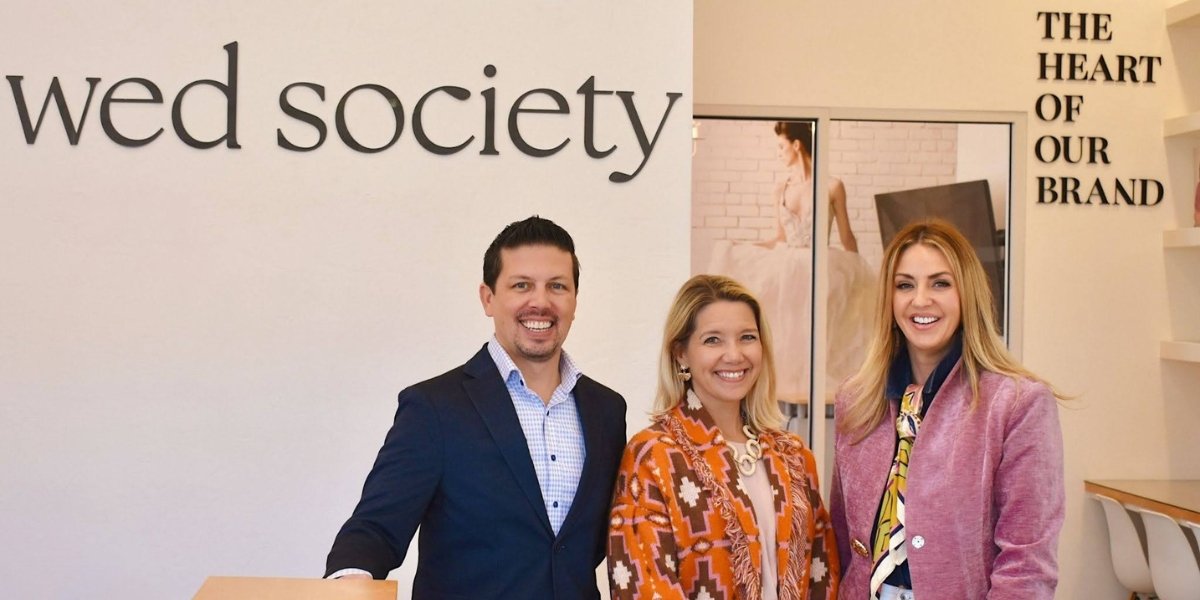
Wed Society is not a newcomer to the industry. The brand has been publishing real weddings since 2007, steadily building credibility in a space dominated by corporately owned mega platforms. A significant shift came in May 2024, when it opened its first franchised market and began expanding in earnest. Having grown to 34 locally-owned locations across 21 states by early 2026, it now has plans to serve 48 markets by year’s end.

The growth figures are difficult to overlook. Wed Society’s individual markets generated more than 110 million social media views and engagements in 2025 alone. It is currently producing 3 million views and engagements per week from couples planning their weddings. Its advertiser base is made up of thousands of local vendors chosen for the quality and reliability of their work, businesses increasingly eager to connect with Wed Society’s growing audience of couples actively planning their weddings. The company expects this momentum to continue accelerating in 2026.

Where Every Wedding Story Hits Close to Home

The dominant approach in wedding media has long favored scale and broad reach over specificity. While that model has served millions of couples, it has also meant that content can feel removed from the realities of any one market. A couple searching for a local florist or photographer needs more than a sprawling national directory. They need professionals who understand their city, their season, and their budget.

That is the gap Wed Society’s franchise model was designed to fill. Each market is owned and operated locally. The weddings featured are real couples, photographed by real vendors, available for hire in that specific city. Rather than offering aspirational content from distant markets, the platform connects inspiration directly to execution. Couples see work that is genuinely within reach.

Doing Well by Doing Good

Wed Society has also made community investment a consistent part of its brand identity. Its annual Wed Society Cares initiative is held every November and published in connection with Giving Tuesday in December. It brings together franchisees and their advertising members to support local nonprofits. Last year, the effort reached 23 nonprofits across the country. That is a meaningful contribution at the heart of Wed Society’s culture of community.

The company publishes across digital, social media, print, and live vendor events. Digital and social content publishing may be commonplace, but Wed Society’s omni-channel approach is unique. Those local live events give wedding professionals a rare opportunity to network, share referrals, learn about emerging trends, and strengthen local industry relationships. While Wed Society’s “Book of Weddings” reaches the forty percent of engaged couples who still purchase a hard copy bridal magazine. Wed Society’s locally produced print editions have found a strong place among that readership, and tens of thousands of copies are distributed annually across dozens of markets.

Traditional wedding media has long favored national reach over local relevance. Wed Society chose a different path. It built a platform not for the country at large, but for the neighborhood next door. And the numbers leave little doubt: when it comes to planning locally, couples are flocking to Wed Society in droves.

Why Women Business Owners Across the Country Are Choosing Fundivi, The Funding Partner Built to Help Women Entrepreneurs Thrive

By: Steven Kay

Women entrepreneurs build businesses every day that are creative, resilient, and built to last. They do it while managing more, being asked to prove more, and receiving less access to capital than their male counterparts. The data has reflected this gap for decades. Women-owned businesses receive a disproportionately small share of traditional business lending, not because the businesses are less capable, but because the systems that evaluate them were not built with them in mind.

Fundivi was built differently. As a direct business capital lender based in Brooklyn, New York, Fundivi evaluates businesses on what actually matters: real revenue, real cash flow, and real performance. There are no arbitrary barriers, no bias embedded in collateral requirements, and no process designed to make a woman entrepreneur feel like she has to work twice as hard just to be considered.Fundivi has built its presence in alternative business lending by focusing on speed, transparency, and long-term support for the women entrepreneurs it serves nationwide.

As Featured In

Fundivi’s approach to business lending has earned national recognition across major media and financial publications, including NY Weekly, Readability, WeFunder, MSN Money, USA Today, Yahoo Finance, Digital Journal, Apple News, The News God, Morningstar, Business Insider, Merchant Circle, CEO Weekly, and Benzinga. That breadth of coverage reflects a company whose model and approach have drawn attention from business and financial media, while its work continues to speak to how American businesses seek access to capital.

Capital That Works as Hard as You Do

Women business owners know what it means to run lean, move fast, and make every dollar count. A lender that takes two weeks to make a decision, requires collateral many women entrepreneurs have not had the opportunity to accumulate, or demands a personal guarantee that puts personal financial security at risk is not a partner. It is an obstacle.

Fundivi operates as a direct lender, meaning every application is evaluated by a single institution with no brokering, no multiple credit inquiries, and no confusion about who is making the decision. Business owners deal with one team, one process, and one transparent outcome. The company is BBB accredited, a signal of integrity and accountability that matters when choosing a financial partner. It evaluates businesses on revenue performance and cash flow, meaning the strength of what a woman has built is what gets recognized, not the size of the assets she was able to accumulate outside it.

AI-Powered Underwriting That Sees the Full Picture

One of the most persistent problems women entrepreneurs face in traditional lending is being evaluated through a lens that was not designed for them. Credit models built on historical data reflect historical inequities. Collateral requirements favor asset ownership patterns that have systematically excluded women. The result is that a woman running a thriving business with strong cash flow and consistent revenue can still be declined by a system that was never built to see what she has accomplished.

Fundivi’s AI-driven underwriting platform changes that equation. As covered by Digital Journal, the platform analyzes real-time business performance data, including cash flow patterns, revenue trends, and deposit activity, to generate a funding decision that reflects how the business actually operates. It does not rely solely on credit scores, does not require collateral, and does not require a personal guarantee. It evaluates the business on its merits, which is exactly what women entrepreneurs have been asking for from the lending industry for years.

Capital is disbursed directly to the business bank account the same day an offer is accepted. Working capital products do not report to personal or business credit bureaus, meaning women business owners can access the funding they need without affecting their credit profile. Every feature of the platform reflects a deliberate commitment to removing the barriers that have historically stood between women entrepreneurs and the capital their businesses deserve.

Two Minutes to Apply. Same Day to Fund.

Women entrepreneurs do not have time to spare. They are running operations, managing teams, serving clients, and building futures simultaneously. The Fundivi application takes approximately two minutes. Business owners provide basic information about their company and funding needs, and that is all that is required to get started. There is no lengthy intake questionnaire, no confusing document portal, and no process designed to exhaust the applicant before a decision is made. Once submitted, the AI-powered underwriting engine processes the application in real time with no queue, no waiting period, and no back-and-forth that stretches across days.

Women Business Owners Who Chose Fundivi

The most powerful measure of any lender is not what it says about itself. It is what business owners say after the experience.

Jessica Lesly, a nail salon owner, described how previous lenders tried to maximize the amount she borrowed and the interest she paid, using her need against her rather than working with her. Fundivi took a completely different approach, advising her to start at the right level for her cash flow and walking her through the process with honesty and care. She credited Fundivi with helping her escape a lending cycle that had been working against her and her business.

Kellye Hall noted that as a Black woman business owner she has dealt with many people in the funding industry, and that Morris Cohen at Fundivi was one of the few who made her feel genuinely respected, heard, and prioritized. She described the experience as honest, professional, and completely free of pressure. Real communication and real results from a team that understood her business and treated her accordingly.

Brenda Williams shared that she cannot say enough good things about Fundivi. Every time she needs something, they make it happen. She described the team as genuinely invested in the best interests of business owners and expressed sincere gratitude for the expertise and guidance she has received, adding that she will continue working with Fundivi long into the future.

Lending partner Zen Funding Source left an unprompted five-star review on Trustpilot in May 2026, describing Fundivi’s professionalism and clear communication as what makes every deal straightforward, and recommending them to any business of any size looking for additional capital. When a lending partner endorses without being asked, it confirms the standards are real and consistent across every relationship.

Why Women Entrepreneurs Choose Fundivi

Women business owners across the country return to Fundivi because it delivers on the things that matter most, without the conditions and compromises that have defined too much of the lending industry.

Competitive Pricing. Fundivi structures its rates to be competitive within the alternative lending market and is fully transparent about pricing before any agreement is signed. No hidden fees, no surprise charges, and no terms that shift after the fact.

Rate Match Warranty. If a business owner finds a verified, comparable offer from a qualified direct lender, Fundivi will match it. Women entrepreneurs shopping for the best deal do not have to wonder whether they left value on the table.

Same-Day Speed. AI-driven underwriting delivers decisions in minutes. Funding arrives in the business bank account the same day an offer is accepted. Opportunity does not wait, and neither does Fundivi.

No Collateral and No Personal Guarantee. Women business owners should not have to pledge personal assets or tie their personal financial security to a business funding decision. Fundivi evaluates businesses on performance, not personal wealth, and that distinction matters enormously for entrepreneurs who have built their businesses on skill.

A Relationship That Grows With the Business. Each successful funding cycle expands the capital available in the next round. Women entrepreneurs who are scaling do not need to find a new lender at every stage of growth. The Fundivi relationship deepens as the business grows, creating a genuine long-term financial partnership.

Available to Every Woman Entrepreneur in Every State

As covered by USA Today and Business Insider, Fundivi has expanded its operations to serve businesses across all 50 states. The same AI-powered speed, transparent terms, and human support are available to every woman business owner in the country, whether she is running a nail salon in Florida, a remodeling company in California, a trucking operation in Texas, or any other business in any other market. Geography is not a barrier. The only thing that matters is what the business has built.

The Funding Partner Women Entrepreneurs Have Always Deserved

Women entrepreneurs have always deserved a lending partner that sees what they have actually built, moves at the speed their businesses require, charges fair rates with full transparency, and stays invested in their success long after the first check clears. That partner exists. It is BBB accredited, AI-powered, featured in over a dozen national publications, and trusted by women business owners from every industry and every corner of the country.

No fluff. No gimmicks. No unnecessary barriers. Just fast, transparent business funding built to support entrepreneurs, including women entrepreneurs.

To begin the two-minute application, visit www.fundivi.com

Disclaimer: This article is provided for informational purposes only. It does not constitute financial advice or an offer to lend. Funding offers from Fundivi are subject to prequalification and underwriting at the time of application. Rates, terms, and conditions vary based on borrower qualifications. Fundivi does not guarantee approval or specific terms, and submission of an application is not a commitment to lend. All applications are subject to verification and approv