Women's Journal

How One Houston MBA Is Helping Women Over 40 Build Financial Confidence

Picture this: nearly two-thirds of women over 40 lie awake at night wondering if they’ll have enough money to retire comfortably. It’s a sobering reality that cuts across income levels and educational backgrounds. While financial literacy should be a fundamental life skill, it’s become something of a luxury, accessible to some, elusive to many others.

But in Houston, Texas, one determined MBA is flipping that script entirely.

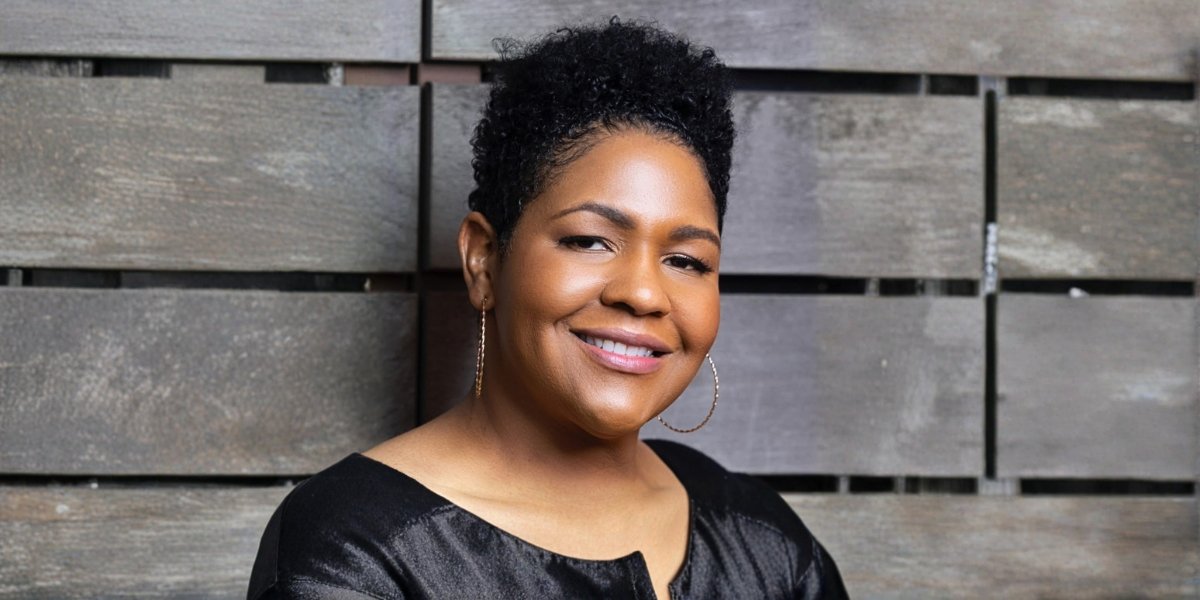
Meet Bridgett Dickey, the driving force behind Dickey Financial Services & Wealth Management Firm. She’s not just another financial advisor with fancy credentials, though she certainly has those. She’s a woman on a mission, armed with personal experience and professional expertise, determined to transform how women approach their financial futures. Her audacious goal? Help 10,000 women create comprehensive written financial plans by 2027.

The Vision Behind Dickey Financial Services

Bridgett’s path to financial education wasn’t born in a boardroom or classroom. It started at her family’s kitchen table. Growing up, she watched her parents struggle through financial conflicts that could have been avoided with better planning and communication. Those early experiences planted a seed that would eventually bloom into her life’s work.

After completing the prestigious Goldman Sachs 10,000 Small Businesses program and earning her credentials through Rice University’s Financial Planning Program, Bridgett had the tools. But more importantly, she had the passion, a fire lit by watching families fracture over money matters that proper planning could have prevented.

“A written financial plan provides clarity and direction, transforming financial chaos into a roadmap for success,” Bridgett explains. It sounds simple, but the impact is profound. When you have a clear plan on paper, those 3 a.m. money worries start to fade. Suddenly, retirement isn’t this looming question mark. It’s a destination with a clear path forward.

Her firm’s mission isn’t just about numbers on a spreadsheet. It’s about giving women the confidence to make decisions about their own financial futures instead of hoping someone else will handle it for them.

The Unique Financial Challenges Women Over 40 Face

Women over 40 are often caught in a perfect storm of financial challenges. Many have spent decades prioritizing everyone else’s needs: kids’ college funds, aging parents’ care, supporting spouses’ career moves. Meanwhile, their own financial security has taken a backseat.

The statistics are eye-opening. Women in this demographic consistently lag behind men in retirement savings, not because they’re less capable, but because life circumstances often derail their financial planning. Divorce rates spike in this age group. Empty nest syndrome hits hard. Career pivots become necessary. Suddenly, women who’ve been financial caregivers realize they need to become their own financial advocates.

Dickey Financial gets it. They’ve built their entire approach around understanding these unique pressures. Whether a client is a recently divorced teacher starting over at 45 or an empty nester finally ready to focus on her own goals, the firm creates personalized strategies that acknowledge where these women have been and where they want to go.

The beauty of Bridgett’s approach lies in its practicality. She doesn’t just talk about investment portfolios and compound interest, though those matter. She addresses the real-world concerns that keep her clients up at night: Will Social Security be enough? How do I catch up on retirement savings? What happens if I get sick and can’t work?

Community Engagement and Education

Financial planning can feel intimidating, especially when you’re starting later in life. That’s why Dickey Financial has made education and community engagement central to their mission. They offer both individual planning sessions and group workshops, creating multiple entry points for women who might be hesitant to dive in alone.

These aren’t your typical dry financial seminars filled with jargon and pie charts. Bridgett’s workshops tackle real issues with real solutions. Budgeting strategies that actually work. Investment basics that don’t require a finance degree to understand. Retirement planning that accounts for the fact that women typically live longer than men and often face higher healthcare costs.

The firm has also expanded into corporate wellness programs, recognizing that financial stress affects workplace productivity and employee satisfaction. Through partnerships with organizations like Fountain of Praise Church in Houston, they’re reaching women who might never walk into a traditional financial planning office.

This community-focused approach creates something powerful: a ripple effect. When one woman gains financial confidence, she shares that knowledge with friends, family, and colleagues. By working with churches, women’s organizations, and employers, Dickey Financial reaches women where they already gather and feel comfortable, bringing practical financial education directly into community spaces.

Bridging the Financial Literacy Gap

The financial services industry hasn’t always been welcoming to women. Too often, women have been talked down to, overlooked, or treated as secondary decision-makers in their own financial lives. These experiences create lasting hesitation about engaging with financial professionals.

Bridgett understands these barriers intimately. Her approach deliberately counters the traditional financial advisor stereotype. Instead of overwhelming clients with complex strategies they don’t understand, she focuses on education and building client confidence. Her clients don’t just get a financial plan. They understand why every recommendation makes sense for their specific situation.

The success stories speak volumes. Take the recently divorced mother of two who came to Dickey Financial feeling overwhelmed and financially vulnerable. Through patient education and strategic planning, she not only gained control of her finances but discovered she had more options than she’d ever imagined. Stories like these aren’t just feel-good testimonials. They’re proof that financial education can be genuinely life-changing.

Bridgett Dickey’s Personal Mission

“No more women sitting on the sidelines of their own financial future.” This isn’t just Bridgett’s tagline. It’s her battle cry. Every interaction at Dickey Financial is designed around this principle: women deserve to be active participants in their financial lives, not passive observers hoping everything works out.

This philosophy shapes everything from how initial consultations are conducted to how complex financial concepts are explained. There’s no condescension, no assumption that clients can’t handle sophisticated strategies. Instead, there’s respect for the intelligence and life experience that women over 40 bring to the table.

Bridgett’s personal mission goes beyond individual client success. She’s working to shift cultural narratives about women and money, challenging the notion that financial planning is too complicated or that it’s someone else’s responsibility.

Future Plans and Goals

The numbers don’t lie. Helping 10,000 women by 2027 is an ambitious target. But Bridgett isn’t just throwing around impressive figures for marketing purposes. She’s building the infrastructure to make it happen.

The expansion plans are already in motion. Dickey Financial is exploring opportunities to extend services beyond Texas, recognizing that women across the country face similar financial challenges. This isn’t about rapid scaling for its own sake. It’s strategic growth designed to maintain the personalized approach that makes the firm effective.

What’s particularly exciting is how Bridgett plans to use technology without losing the human touch. Virtual workshops and online resources will expand reach, but they’ll supplement, not replace, the personal connections that drive real behavioral change. She’s also developing specialized programs for different segments within her target audience. Recently divorced women need different strategies than empty nesters, and educators face unique challenges compared to corporate professionals.

Community partnerships remain a cornerstone of the expansion strategy. By working with churches, women’s organizations, and employers, Dickey Financial can reach women where they already gather and feel comfortable. It’s a grassroots approach to financial education with a wide reach.

The firm is also developing sophisticated tracking systems to measure impact beyond simple client counts. They want to know: Are clients actually implementing their financial plans? How has their financial confidence changed? What specific outcomes can be attributed to the planning process? This data-driven approach ensures accountability and helps refine services based on what actually works.

Measuring Success Beyond Numbers

Here’s what sets Dickey Financial apart from typical financial services firms: they measure success by life transformation, not just asset accumulation. Sure, growing retirement accounts matter, but so does the peace of mind that comes from having a clear financial roadmap.

The firm tracks metrics like client confidence levels, plan implementation rates, and long-term financial goal achievement. They conduct follow-up surveys to understand how financial planning has affected clients’ overall well-being, relationships, and life satisfaction. The reality is, what good is a perfect investment portfolio if you’re still losing sleep over money?

Client testimonials reveal the deeper impact of this work. Women report feeling more capable of negotiating salaries, confident enough to start businesses, and prepared to handle unexpected financial challenges. These aren’t just financial wins. They’re life wins that ripple out to affect families and communities.

The Bigger Picture

Bridgett’s work addresses a critical gap in American financial wellness. When women over 40 gain financial literacy and confidence, the effects extend far beyond individual bank accounts. They become better financial role models for their children, more informed voters on economic issues, and stronger contributors to their communities’ economic health.

The timing couldn’t be more crucial. With traditional pension plans largely extinct and Social Security facing long-term challenges, personal financial planning has never been more important. Women, who typically live longer than men and often face career interruptions for caregiving, need specialized strategies that acknowledge these realities.

What makes Bridgett’s approach distinctive isn’t just the focus on women over 40. It’s the recognition that financial planning must be accessible, understandable, and relevant to real life. No more intimidating jargon or one-size-fits-all solutions. Instead, there’s honest conversation about money fears, practical strategies for common challenges, and ongoing support as circumstances change.

Taking Action

The most important financial decision is not which investment to choose or which retirement account to open. It is the decision to start. Too many women postpone financial planning because they think they need more money, more knowledge, or more time. But as Bridgett consistently tells her clients, the best time to start was yesterday, and the second-best time is today.

Financial planning is not about having all the answers. It is about asking the right questions and working with a professional who can help find solutions tailored to a specific situation. For women working through these challenges, having an advocate who understands both the numbers and the emotions behind them can make a meaningful difference.

The transformation Bridgett facilitates goes beyond spreadsheets and investment allocations. It is about shifting from financial anxiety to financial confidence, from hoping for the best to building toward something concrete. For women who still face unique financial challenges, that kind of practical, personalized guidance carries value well beyond the plan itself.

The goal of helping 10,000 women by 2027 is not just about business growth. It is about creating something that spreads across communities. When women take control of their financial futures, they inspire others to do the same, raise financially literate children, support other women’s goals, and contribute to a culture where financial wellness is the norm rather than the exception.

To learn more about Dickey Financial and its work with women over 40, visit Dickey Financial & Wealth Management Firm.

Disclaimer: This article is for informational purposes only and does not constitute investment advice, a recommendation, or an offer to buy or sell any securities. Consult a qualified financial advisor for advice specific to your situation.

What Everyday Products Teach You Without Saying a Word

By: Ecoroots

We like to think of products as tools, neutral objects designed to perform a function. A soap cleans. A deodorant prevents odor. Simple, practical.

But what if products are doing more than that?

What if they are quietly teaching you, shaping your expectations, influencing your habits, and even communicating values without using a single word?

Every object you use carries a kind of “language.” Not spoken, but experienced. And once you start paying attention, you realize that your daily routine is full of subtle lessons.

How Products Become Silent Teachers

Think about how you learned to use personal care products. No one sat you down and explained every detail. You figured it out through interaction.

You squeezed, applied, and adjusted. You learned how much to use. You developed a rhythm.

Over time, these interactions became habits. And those habits became assumptions about how things “should” work.

This is how products teach.

They don’t give instructions. They create experiences that guide behavior.

The Lesson of Quantity

Many modern products are designed to encourage more usage than necessary.

A squeeze bottle dispenses easily, sometimes too easily. A quick press can release more than you actually need, but because it’s convenient, you don’t question it.

Over time, this teaches you that using more is normal.

But when you switch to something like deodorant cream, the lesson changes.

Instead of squeezing out an arbitrary amount, you scoop a small portion manually. The process is slower, more deliberate. You become aware of how little is actually required.

The product teaches restraint, not through rules, but through design.

And that lesson extends beyond deodorant. It subtly reshapes your understanding of sufficiency.

The Lesson of Texture

Texture is one of the most overlooked ways products communicate.

We rarely think about how something feels as a form of instruction, but it is.

Consider oatmeal soap. Its texture is different from standard soap, slightly grainy, more tactile, more present.

When you use it, you don’t rush. The texture encourages a slower, more mindful interaction. You notice the sensation, the way it moves across your skin.

This isn’t accidental. The product is guiding your behavior.

It’s teaching you to engage, not just to complete a task.

The Lesson of Time

Modern products are often designed for speed. Quick application, quick results, minimal effort.

But speed comes with a trade-off: disconnection.

When everything is optimized for efficiency, you stop noticing the process.

Products like deodorant cream disrupt this pattern. They take a moment longer to apply. Not significantly, but enough to be noticeable.

That extra moment changes your relationship with time.

Instead of rushing through the action, you experience it.

And over time, this shifts your perception of daily routines. They become less about getting things done and more about how they are done.

The Lesson of Attention

Attention is a limited resource. Most products are designed to require as little of it as possible.

But when something requires your attention, even briefly, it creates awareness.

Using oatmeal soap, for example, draws your focus to the act of washing. The texture, the lather, the sensation, all of it demands a bit more presence.

This isn’t inconvenient. It’s grounding.

It brings you back into the moment, even if just for a few seconds.

And those moments accumulate.

The Lesson of Completion

Many products obscure their own lifecycle. You don’t always know how much is left, or when exactly something is finished.

This creates a sense of detachment. You replace items without fully using them, often without realizing it.

But with products like deodorant cream, the container reveals its contents clearly. You see the gradual depletion. You know when it’s almost gone.

This visibility creates a sense of completion.

You finish what you started.

And that experience, of seeing something through to the end, is surprisingly satisfying.

It reinforces a different relationship with consumption, one based on completion rather than replacement.

The Lesson of Care

Some products invite care.

Not maintenance in the technical sense, but a kind of attentiveness.

Oatmeal soap, with its natural composition, may require you to store it properly, to let it dry between uses, and to handle it with a bit more intention.

This care is not a burden. It’s a form of engagement.

You’re not just using the product. You’re interacting with it.

And in doing so, you develop a sense of responsibility, however small.

The Lesson of Simplicity

Complexity is often marketed as a feature: more ingredients, more functions, more promises.

But simplicity has its own kind of clarity.

A product that does one thing well, without excess, communicates confidence.

Deodorant cream often embodies this simplicity. It doesn’t rely on elaborate packaging or multiple delivery mechanisms. It’s straightforward, and what you see is what you use.

This simplicity teaches you to value function over form, substance over presentation.

And once you internalize that, it influences how you evaluate other products as well.

How Silent Lessons Accumulate

Individually, these lessons might seem insignificant.

A small change in how you apply something. A slight difference in texture. An extra moment of attention.

But these experiences are repeated daily.

And repetition is how learning happens.

Over time, the lessons accumulate:

  • You become more aware of how much you use.
  • You notice the process, not just the result.
  • You value completion over convenience.
  • You engage more fully with what you have.

These are not dramatic shifts. They are subtle, gradual, almost invisible.

But they are powerful.

Products as Extensions of Thought

Once you recognize that products carry meaning, you start to see them differently.

They are not just tools. They are extensions of thought.

They reflect assumptions about how life should be lived: fast or slow, automatic or intentional, excessive or sufficient.

When you choose products like deodorant cream or oatmeal soap, you’re not just selecting an item. You’re choosing a set of embedded ideas.

And those ideas, repeated daily, become part of your own thinking.

Listening to What Objects Say

We don’t usually think of objects as something we “listen” to. But in a way, we do.

Through touch. Through use. Through repetition.

They communicate, quietly but consistently.

The question is whether we notice.

By paying attention to the language of products, the lessons they teach, the behaviors they encourage, you gain a new level of awareness.

You start to see that even the most ordinary items are shaping your habits, your expectations, and your relationship with the world around you.

And once you see that, you can begin to choose differently.

Not just based on what a product does.

But based on what it teaches you, every single day.

How Genomii Uses AI to Make Healthspan Visible

By: Georgette Virgo

Healthspan has long been one of those terms that sounds important but feels strangely out of reach. Most people understand lifespan as the number of years they live. Healthspan is different. It is the length of time those years remain active, functional, and well. Yet, despite the growing conversation around longevity, most people still have no practical way to see how their daily habits may be shaping the quality of their later years.

That is the gap Genomii is trying to address. The artificial intelligence-driven wellness platform is built around a simple but increasingly relevant idea: the body is always sending signals, and those signals may say more about long-term health than people realize.

A tired face after a week of broken sleep, skin that suddenly looks inflamed, meals that quietly affect energy, supplements that may or may not match the body’s needs. When taken separately, those moments can seem ordinary. Taken together, they may reveal the pattern of how a person is aging.

Genomii’s pitch is that healthspan need not remain abstract. Through a mix of facial analysis, food recognition, product scanning, and personalized data inputs, the platform aims to build what it calls a digital twin, a living, evolving model designed to help users better understand how their bodies are responding over time. The broader message is not simply about tracking more information. It is about making that information feel useful, coherent, and personal.

Why Healthspan Has Been Hard to Understand

Part of the problem is that health rarely declines in one moment. More often, it shifts gradually and in pieces. Sleep becomes less restorative. Skin loses some of its resilience. Energy starts to fluctuate in ways that are easy to dismiss. Recovery after stress or poor eating takes longer than it used to. A person may notice these changes without having a clear framework for what they mean or whether they are connected.

Most wellness tools have not been especially good at answering that question. One app might count calories. Another may track steps or monitor sleep. A wearable can produce graphs and scores, but those numbers often remain fragmented. They show what happened, but not always why it happened or how one habit might be influencing another. The result is that healthspan often feels like a concept discussed by doctors, biohackers, or longevity enthusiasts rather than something visible in ordinary life.

Genomii enters that space with a more interpretive approach. Instead of treating health as a set of isolated categories, it is built around the idea that small biological and behavioral details can form a larger picture when viewed together. That principle is central to the company’s wellness philosophy.

Sally So, Genomii’s founder, has described the value of paying attention to details in genetics, food, ingredients, and the signals the body produces each day. She argues that these details are not incidental. They may be the earliest clues to how well a person is maintaining health over time.

That framing gives healthspan a more human scale. Rather than asking people to think only in terms of future disease or clinical milestones, it encourages them to look at the body’s quieter patterns. A wellness system built around those patterns promises not just more data, but more meaning. That distinction is important in a market crowded with products that gather information without necessarily helping users understand what to do with it.

Healthspan has also been associated with understanding aging. Aging is often discussed in broad, cosmetic, or medical terms. Healthspan brings the focus back to function: how long a person can live well, not merely live longer. If a wellness platform can help users understand how their routines are influencing energy, resilience, appearance, and recovery, then it is doing something more relevant than simply counting behaviors.

How Genomii Turns Daily Signals Into Insight

At the center of Genomii’s model is the idea of the digital twin. The phrase can sound technical, but the concept is more straightforward. Genomii appears to use everyday inputs, such as selfies, face scans, meal photos, and product scans, to build a personalized model of the user.

The facial component is one of the app’s most distinctive features. A face scan is not treated merely as an image. It becomes a source of visible wellness signals, potentially reflecting skin condition, lifestyle patterns, and other changes that may matter to overall health.

The meal-recognition feature works similarly. By analyzing food images, the platform seeks to identify what a person is eating and connect those choices to broader nutritional patterns. Product recognition extends the model further by evaluating supplements and wellness products in relation to individual goals.

Taken together, these features suggest that Genomii is trying to build a fuller, multimodal picture of the user. So emphasizes that one input alone may not reveal much. Several inputs, repeated over time, can begin to say something more meaningful.

For instance, a face scan may suggest fatigue or inflammation; meal patterns may point to nutritional imbalance; while supplement choices may either support or complicate what the body appears to need. When these signals are interpreted together, the app aims to offer guidance that feels more tailored than a generic wellness plan.

What makes this approach notable is the emphasis on adaptation. Genomii is not presenting itself as a static report or one-time diagnostic snapshot. It is meant to evolve with the person, learning from repeated patterns and adjusting its recommendations over time.

So explains that if certain patterns begin to emerge, the platform can adjust its recommendations accordingly. This brings healthspan not as a fixed attribute but something shaped by routine, recovery, nutrition, stress, and other factors that change over time.

What This Means for the Way People Think About Aging

The broader appeal of Genomii lies in how it reframes wellness from reaction to interpretation. Many people do not take health seriously until something becomes impossible to ignore. A troubling lab result, a persistent symptom, or a diagnosis often serves as the point at which attention finally sharpens. Genomii’s premise is that the body usually says something long before that stage arrives. The challenge is knowing how to listen.

That shift in perspective is especially relevant for people who sense that something is changing but cannot quite explain it. Traditional tracking tools can document each problem, but they may not connect them. Genomii attempts to bridge that gap by showing how these patterns may relate to one another and what they could mean in the context of long-term wellness.

However, So still emphasizes that healthspan is a complex idea, and no wellness app can reduce it to a perfect number or guarantee. Genomii’s value appears to lie in helping users better interpret signals that may shape healthspan, rather than definitively measuring it clinically. The promise here is guidance, not certainty.

Even so, people are increasingly surrounded by health data, but many remain starved for explanation. They want to know what their bodies have been indicating beneath their busy everyday lives. Genomii’s answer is that the mystery may not be as impenetrable as it once seemed. A face, a meal, a routine, a product choice, none may look important on its own. Yet together, they may reveal something larger about how a person is aging and how well they are living.

Genomii is offering more than a new health tool. It presents a new way to read the body not only in crisis, but as a living record of signals that, when noticed early enough, may point the way toward a longer, healthier life.

Disclaimer: This article is for informational purposes only and does not constitute medical advice, diagnosis, or treatment. The products and services described have not been evaluated by the Food and Drug Administration and are not intended to diagnose, treat, cure, or prevent any disease. Consult a qualified healthcare professional before making any changes to your health or wellness routine.

Ursula Garrett at Two Weeks of Magic: Bridging Bermuda and the Future of Emerging Markets

When Ursula Garrett, CPA, took the stage at Bermuda’s inaugural Two Weeks of Magic Global Collaborators session, she was not there merely as a panelist; she was there as a bridge between continents.

Across two distinct settings, the Ruth Seaton James Auditorium and the Sol i Mar Restaurant at Coco Reef Bermuda, Garrett engaged in conversations that extended far beyond dialogue. She stepped into rooms where policymakers, investors, and innovators were actively discussing cross-border solutions grounded in real economic and human need.

Her exchange with the Honorable E. David Burt, JP, MP, signaled more than a moment of recognition; it opened a conversation around workforce mobility, diaspora expertise, and economic alignment. Drawing from her work across emerging markets, Garrett outlined a clear opportunity: connecting skilled labor and entrepreneurial talent with markets experiencing critical gaps.

Ursula Garrett at Two Weeks of Magic: Bridging Bermuda and the Future of Emerging Markets

Photo Courtesy: Jayde Gibbons & Two Weeks of Magic

My work involves training youth, supporting entrepreneurs, and developing skilled labor,” she noted. “There is a real opportunity to align emerging talent with markets that need it, creating value on both sides.

The Premier’s acknowledgment of her contributions during his address reinforced her role not as an observer but as a strategic contributor operating at the intersection of policy, workforce development, and economic growth.

That positioning reflects Garrett’s broader body of work. As a tax strategist, ecosystem builder, and cross-border connector, she operates across multiple layers of economic development, advising businesses, structuring financial pathways, and building infrastructure that enables long-term growth. Her initiatives in Sierra Leone—spanning workforce development, women-led enterprise training, and entrepreneurial support systems—are designed not just to empower individuals, but to strengthen entire economic ecosystems.

Within Bermuda’s highly regulated and globally connected environment, that work took on new relevance. Garrett identified the island not simply as a financial center, but as a strategic testing ground for scalable global solutions: one where ideas can be refined, validated, and deployed across markets.

“Before you visit a place, you have preconceived notions,” she reflected. “Once you get there, you understand its true potential. Bermuda is not one-dimensional; it’s a place where different worlds connect.”

That connectivity is precisely what aligns with her mission. Bermuda’s position between major global markets, combined with its regulatory strength and financial infrastructure, creates a unique environment for advancing cross-border initiatives. For Garrett, the value lies not in the narrative but in the application: a place where workforce models, capital strategies, and entrepreneurial frameworks can be tested and scaled internationally.

Ursula Garrett at Two Weeks of Magic: Bridging Bermuda and the Future of Emerging Markets

Photo Courtesy: Jayde Gibbons & Two Weeks of Magic

The Two Weeks of Magic platform accelerated these dynamics. From the Magic Mastermind Summit to The Magic of Bermuda™ Annual Awards Brunch Gala, the experience convened leaders across sectors to explore how capital, innovation, and human development intersect.

On the Global Collaborators panel, moderated by co-founder Gianluca Gibbons, Garrett contributed a grounded, execution-focused perspective shaped by decades of advising entrepreneurs and scaling businesses. Alongside voices in biotechnology and mental health, she emphasized a critical throughline: sustainable solutions require alignment between financial strategy, human capital, and community infrastructure.

Her presence extended beyond the conference stage. Through her feature on Magic 102.7 FM’s The Glenn Blakeney Show, Garrett brought these conversations directly to the Bermudian public, reinforcing a central principle of her work: insight only matters when it can be translated into practical, scalable frameworks.

The impact of her time in Bermuda is already shaping what comes next. Conversations are now underway to explore workforce exchange models and entrepreneurial training initiatives, creating pathways to connect Bermuda with emerging markets such as Sierra Leone through her philanthropic work with the Empower Her Global Foundation. This would create structured pathways for skills development, business expansion, and shared economic growth.

For Garrett, Bermuda represents more than a moment; it represents a model. A controlled, globally connected environment where ideas can move from concept to execution with speed and accountability.

Her work continues to sit at a rare intersection: tax strategy, capital allocation, workforce development, and ecosystem design. It is this combination that positions her not only to participate in global conversations but to shape them.

In a world increasingly defined by interdependence, Garrett’s approach offers a clear framework for what effective cross-border collaboration can look like: intentional, structured, and built for scale.

Stay Connected with Ursula Garrett

Discover how to get involved and stay up to date with all of Ursula Garrett’s initiatives by visiting www.ursulagarrett.com

For media inquiries, please contact:

business@sydneypalmer.co 

www.sydneypalmer.co