Women's Journal

Lynn Carol’s Holistic Harmony Publications: How Somatic Therapy Is Reshaping Holistic Mental Health Care

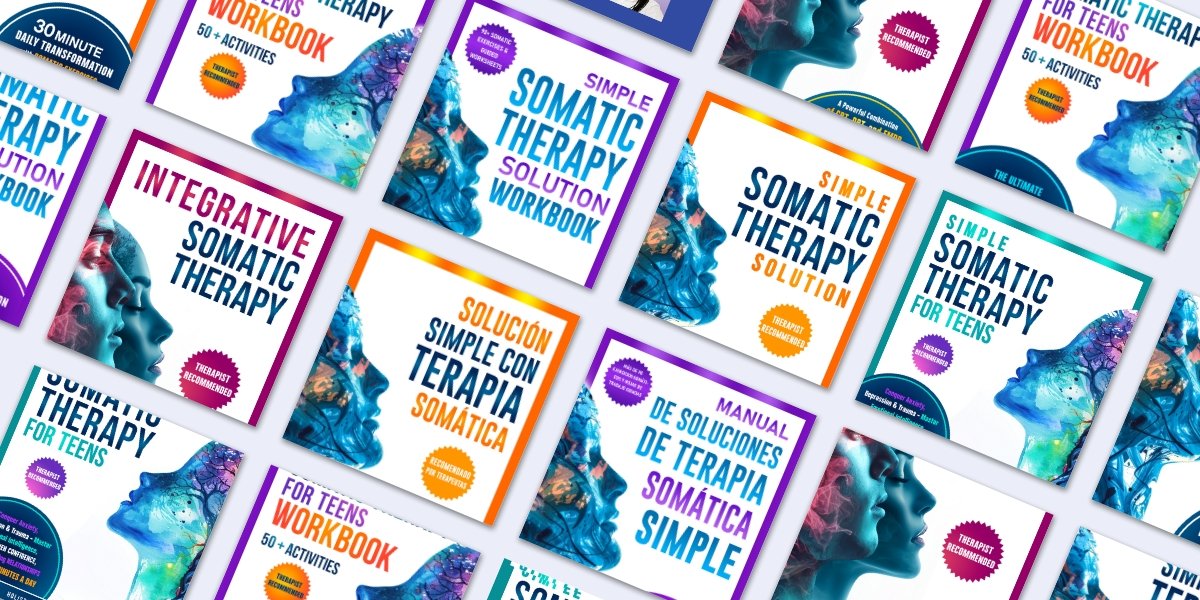
Traditional mental health care has long focused on thoughts, behaviors, and symptoms. Yet for many people navigating anxiety, emotional overwhelm, or chronic stress, insight alone has not always translated into relief. A growing body of research and lived experience is now pointing to a different conclusion: lasting emotional health may require understanding and working with the body itself.

That shift toward whole-person, body-based healing is at the center of the work produced by Holistic Harmony Publications, a self-help publishing company founded by registered nurse Lynn Carol. Drawing from extensive experience in inpatient mental health settings, the company is gaining attention for its integrative approach to emotional regulation, nervous system health, and sustainable well-being.

Holistic Harmony Publications is the publishing house behind titles such as Simple Somatic Therapy Solution, Simple Somatic Therapy for Teens, and Integrative Somatic Therapy. Each core book is paired with a companion workbook and journal, forming a layered, self-guided learning system designed to move readers beyond passive consumption and into real-world application.

This format reflects a deliberate departure from many traditional self-help models. Rather than offering theory alone, Holistic Harmony Publications structures its content as an accessible course, one that supports readers in practicing body awareness, emotional regulation, and nervous system literacy over time.

The company’s foundation is rooted in clinical reality. As a registered nurse with leadership experience in inpatient mental health, Carol witnessed firsthand how frequently individuals were discharged with coping strategies but little understanding of how their bodies were responding to trauma, stress, or chronic emotional strain. Symptom management, while often necessary, rarely addresses deeper patterns driving distress.

That insight shaped the philosophy behind Holistic Harmony Publications. The brand focuses on translating complex concepts, such as nervous system regulation and mind-body integration, into practical tools readers can use independently. The goal is not to replace traditional mental health care, but to complement it with approaches that recognize emotional struggles as adaptive responses rather than personal failures.

This perspective resonates strongly with a growing audience that feels discouraged after cycling through conventional treatments without meaningful change. Rather than framing ongoing anxiety or emotional overwhelm as resistance or lack of effort, somatic approaches emphasize safety, regulation, and gradual reconnection with the body.

Holistic Harmony Publications serves a broad yet clearly defined readership. Primary audiences include adults navigating stress, burnout, anxiety, or trauma who are seeking accessible, body-based resources beyond talk-only solutions. Women, caregivers, and educators are particularly drawn to the brand’s compassionate, practical tone.

What differentiates the company within the crowded self-help space is its balance of clinical credibility and human accessibility. The content is science-informed without being clinical in tone, structured without being rigid, and compassionate without sacrificing practicality. By pairing each title with workbooks and journals, Holistic Harmony Publications reinforces the idea that healing is a process—one that unfolds through consistent, supported practice rather than quick fixes.

Underlying the company’s work is a belief that meaningful change is possible even for those who feel they have “tried everything.” By helping readers understand how the nervous system influences emotions, behaviors, and physical sensations, the books aim to restore a sense of agency often lost in symptom-focused care.

At a time when mental health conversations are expanding beyond diagnosis and pathology, Holistic Harmony Publications reflects a broader cultural shift toward integrative, whole-person wellness. Its growing catalog underscores an emerging truth within modern healing spaces: when people learn to listen to their bodies, regulation and resilience may become skills that can be cultivated—not mysteries reserved for clinical settings alone.

For readers seeking hope after traditional approaches have fallen short, the work of Holistic Harmony Publications offers a grounded reminder that emotional health is not about fixing what is broken, but about supporting systems designed to protect and adapt.

Disclaimer: The information provided in this article is for informational purposes only and is not intended to diagnose, treat, or replace professional medical advice. Somatic therapy and the resources provided by Holistic Harmony Publications are intended as complementary tools for emotional regulation and well-being. Always consult with a qualified healthcare professional or mental health provider before starting any new therapeutic approach, especially if you are dealing with specific medical or psychological conditions. Individual experiences may vary, and healing is a personal journey that should be approached with care and professional guidance.

Dr. Jessica Papa’s Guide to Pelvic Health: A Modern, Whole Body Path to Pelvic Freedom

For millions of women, life quietly revolves around bathroom access.

Before a workout, a road trip, or a laugh that might turn into a sneeze, there is a split-second calculation. Will I leak? Many women learn to cross their legs more tightly, stop running, avoid jumping, or plan their exits in advance. Not because they want to, but because they were told this is simply part of being a woman.

It is not.

Pelvic health specialists are increasingly challenging this narrative, pointing to a more complete, whole-body understanding of why urinary leakage happens and how it can be addressed. Urinary incontinence may be common, but common does not mean inevitable, and it certainly does not mean untreatable. A more informed perspective is shifting the conversation from silent coping to embodied freedom.

How Common Is Urinary Incontinence, Really?

The scale of the issue is far larger than most women realize. According to the American College of Obstetricians and Gynecologists, urinary incontinence affects roughly one quarter of younger women, nearly half of middle-aged and postmenopausal women, and up to three quarters of older women. Large population-based studies in the United States suggest that more than half of adult women experience some degree of urinary leakage during their lifetime. Globally, pooled data estimates indicate that around one in three women will experience urinary incontinence at some point.

Despite its prevalence, many women wait years before seeking support. Not because solutions do not exist, but because the condition has been so deeply normalized that it becomes invisible.

The Signs Women Are Taught to Ignore

Incontinence rarely begins with dramatic symptoms. More often, it starts quietly. A small leak during a cough or laugh. A sudden urge that feels impossible to delay. Going to the bathroom just in case, even when the bladder is not full. Waking during the night to urinate or noticing pressure or heaviness in the pelvic region.

Over time, these experiences shape behavior. Women stop certain forms of movement, modify workouts, limit travel, or feel anxious in social settings. Many assume these changes are simply the cost of childbirth, aging, menopause, or stress. But symptoms are not a verdict. They are communication from the body.

Why “Just Do Kegels” Is Often Incomplete

For decades, pelvic health advice for women has been reduced to a single instruction: do your Kegels.

Pelvic floor muscle training is well supported by research and can be highly effective, particularly when true weakness or reduced endurance is present. However, strength alone is not the full picture. Many women experiencing leakage are not dealing with weakness at all. Instead, they may be living with excessive tension, poor muscle coordination, breath-holding patterns, or a nervous system stuck in a protective state.

In these cases, repeatedly contracting already tense muscles can intensify symptoms. Urgency may increase. Pain may develop. Leakage may persist. A more nuanced, whole-body approach becomes essential.

The Overlooked Role of Fascia and Tension

The pelvic floor does not function in isolation. It is part of an integrated system that includes the diaphragm, abdominal wall, posture, breath mechanics, and the nervous system. Fascia, the connective tissue network that surrounds and links muscles and organs, plays a critical role in how force and tension are distributed throughout the body.

When the body experiences chronic stress, trauma, prolonged gripping, or high physical load, fascial tissues can lose their ability to glide and adapt. In the pelvic region, this may interfere with bladder support, muscle timing, and pressure regulation. This is why some women notice symptoms worsening during periods of stress, burnout, or long-standing tension patterns, even in the absence of obvious weakness.

Clinical research increasingly supports the inclusion of myofascial techniques in pelvic health care, with studies showing improvements in urinary urgency and frequency when fascia-focused interventions are integrated into treatment. Fascia work is not a standalone solution. Rather, it is one important piece of a broader strategy that addresses how the entire system responds to load, movement, and stress.

Reclaiming Control Begins with Changing Habits

Pelvic liberation often begins not with doing more, but with doing things differently. Many women were never taught how bladder habits, breathing patterns, and daily movement influence pelvic health. Over time, behaviors such as preemptive bathroom visits or straining during urination can train the bladder and nervous system to respond with urgency rather than ease.

Breathing patterns play an equally important role. Exhaling during effort, such as standing, lifting, or exercising, helps manage internal pressure and reduces unnecessary strain on the pelvic floor. For women who experience pelvic pain, constipation, or persistent urgency, learning to release tension and downregulate the system may be more supportive initially than strengthening alone.

When true weakness is present, structured pelvic floor training remains a powerful tool. The key is timing. Strength is most effective when muscles can first relax, coordinate, and respond appropriately to pressure.

When Professional Guidance Makes a Difference

If bladder symptoms are changing how a woman moves, exercises, travels, sleeps, or participates in daily life, assessment can provide clarity and relief. Pelvic health clinicians are trained to evaluate not only muscle strength, but also coordination, breath patterns, tension, and connective tissue health. This comprehensive perspective allows care to be tailored rather than generic.

A Modern Voice in Pelvic Health

This whole-body perspective is central to the work of Dr. Jessica Papa, Doctor of Physical Therapy and founder of Arancia Physical Therapy. Her work reflects a growing shift in pelvic health care toward integrated, systems-based treatment rather than symptom suppression.

Through her clinical practice and educational work, Dr. Papa helps women move beyond symptom management toward genuine confidence and autonomy. Her approach integrates pelvic floor coordination, fascia release, breath mechanics, and nervous system awareness. Rather than viewing incontinence as a failure of the body, she treats it as valuable information guiding a more intelligent path forward.

As part of this education-first approach, she later developed Conquer Incontinence, a guided program that provides women with structured, private access to these principles at home, progressively, without shame.

Freedom Is the Real Outcome

For generations, bladder leaks have quietly limited women’s lives. That narrative is now shifting. Incontinence is not a personal flaw. It is a health signal, and one that deserves informed, compassionate attention. In a world where women are asked to carry more than ever, their bodies deserve care that supports rather than restricts their lives.

The goal is not simply dryness. It is freedom. Freedom to move, laugh, travel, exercise, and live fully without planning life around the nearest bathroom.

That kind of liberation is no longer out of reach.


Disclaimer: The information provided in this article is for educational purposes only and is not intended to replace professional medical advice, diagnosis, or treatment. Always seek the advice of your physician or other qualified health provider with any questions you may have regarding a medical condition.