
The Unspoken Value of Symmetry in Creating Truly Timeless Engagement Rings


When searching for the perfect symbol of forever, most buyers immediately gravitate toward the famous “4 Cs” of diamond grading: Cut, Color, Clarity, and Carat. While these metrics are undeniably important, there is a hidden element that often dictates whether a ring feels merely “pretty” or truly breathtaking. That element is symmetry.
Symmetry is the silent architect of beauty. It is the quality that the human eye subconsciously seeks, finding comfort and pleasure in balance and proportion. In the world of fine jewelry, symmetry goes far beyond simple geometry; it is the driving force behind light performance, structural integrity, and the emotional resonance of the design. Understanding this unspoken value is the key to selecting a ring that will remain captivating for generations.
The Science of Sparkle: Facet Alignment and Light Return
At a microscopic level, a diamond is a complex system of mirrors. A standard round brilliant diamond, for example, has 57 or 58 tiny flat surfaces called facets. For a diamond to exhibit that coveted “fire” and “scintillation,” each of these facets must align with mathematical precision.
When a diamond possesses excellent symmetry, light enters the stone, bounces off the internal pavilion facets, and reflects back through the top table to the viewer’s eye. This journey of light is what creates sparkle.
If the facets are misaligned—even by a fraction of a millimeter—light leaks out the sides or bottom of the stone. The result is a diamond that may have high clarity and good color but looks dull or lifeless.
Gemological laboratories, such as the GIA, grade symmetry on a scale from Poor to Excellent. While the difference between “Very Good” and “Excellent” might be invisible to the naked eye, it plays a crucial role in the stone’s maximum potential for brilliance. A symmetrical cut ensures that the stone interacts with light in the most efficient way possible, creating a display of brilliance that captivates observers from across the room.
Beyond the Stone: Symmetry in Ring Architecture
While the center stone is often the star of the show, the setting acts as the stage. The symmetry of the metalwork is just as vital as the cut of the diamond. A truly timeless engagement ring relies on the harmonious relationship between the gem and the band.
Consider the placement of prongs. In a high-quality ring, prongs are not just functional claws holding the stone; they are part of the visual rhythm. Whether it is a classic four-prong solitaire or a six-prong trellis setting, the prongs should be spaced at exact intervals and mirror each other in height and thickness. Uneven prongs can make a stone appear off-center or tilted, subtly disrupting the beauty of the piece.
This principle extends to the band itself. In styles featuring pavé diamonds or side stones, symmetry ensures that the ring looks balanced on the finger. The human eye is incredibly adept at spotting imperfections in patterns. If the diamonds tapering down the shank are not perfectly matched in size and alignment, the ring loses its sense of refinement. A balanced architecture creates a sense of stability and calm, traits that are synonymous with enduring love.
The Aesthetic Appeal of Balance
Why do we find symmetrical things beautiful? Psychologically, humans associate symmetry with health, strength, and order. In design, this translates to an object that feels “correct” and pleasing to the eye. This psychological comfort is particularly important for an object intended to be worn every day for a lifetime.
Trends in jewelry come and go. Asymmetrical “toi et moi” rings or avant-garde, chaotic cluster designs may have moments of popularity, but they often risk looking dated as eras change. Symmetrical designs, such as the solitaire, the three-stone ring, or the halo, transcend specific time periods. They tap into a universal aesthetic preference that does not age.
However, achieving this look requires master craftsmanship. It takes a skilled jeweler to ensure that the shoulders of a ring slope at the exact same angle or that a halo surrounds a center stone with a perfectly consistent gap. This attention to detail is what separates a mass-produced item from a handcrafted heirloom.
Identifying Superior Symmetry in Design
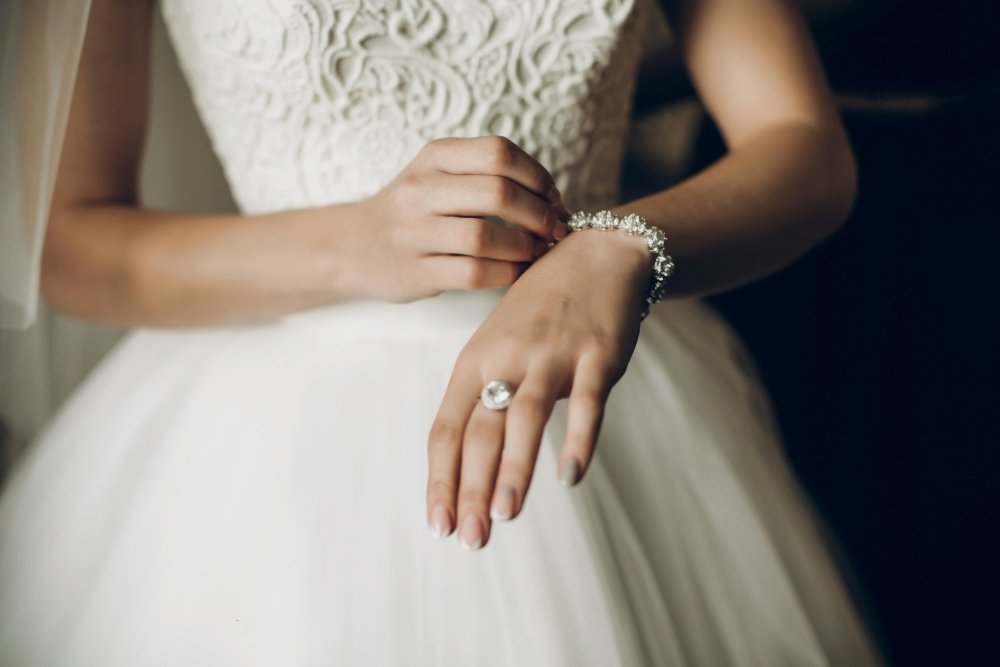
Photo: Unsplash.com
For those in the market for a ring, identifying good symmetry requires a keen eye and a bit of patience. When inspecting a ring, view it from multiple angles, not just top-down. Look at the side profile: do the prongs form a consistent basket? Is the center stone perfectly level? These details matter.
It is also helpful to understand the different styles available. If you are exploring various options, you can read more about timeless engagement rings in our guide to see how historical designs like Art Deco have utilized strict geometric symmetry to maintain their popularity for over a century. Art Deco, in particular, is a testament to the fact that strict adherence to balance often results in the most memorable and beloved designs.
Key Checkpoints for Buyers
- The Draw Line: Imagine a line drawn down the center of the ring. The left side should be a near-perfect mirror image of the right.
- The Culet and Table: When looking through the top of the diamond, the bottom point (culet) should be perfectly centered within the top flat facet (table).
- Prong Alignment: Check that opposing prongs are aligned. If you draw a line connecting them, it should pass directly through the center of the stone.
- Girdle Thickness: The edge of the diamond (the girdle) should have a consistent thickness all the way around, rather than being thick on one side and thin on the other.
In Summary

Photo: Unsplash.com
The value of symmetry is unspoken because it is often felt rather than seen. It is the “wow” factor that makes a diamond dance in the light, and it is the sense of elegance that makes a setting feel complete. By prioritizing symmetry in both the gemstone and the ring’s construction, you are investing in beauty that is objectively superior and subjectively more pleasing.
A symmetrical ring does not just sparkle brighter; it stands as a metaphor for a balanced and harmonious partnership. When choosing a ring that must last a lifetime, look for the harmony in the details. It is there, in the perfect alignment of facets and the balanced curves of gold, that you will find true timelessness.