Exploring the “Triangle of Hormonal Health” – Claire Snowdon-Darling and Laura Knowles’ Contribution to Functional Wellness Models

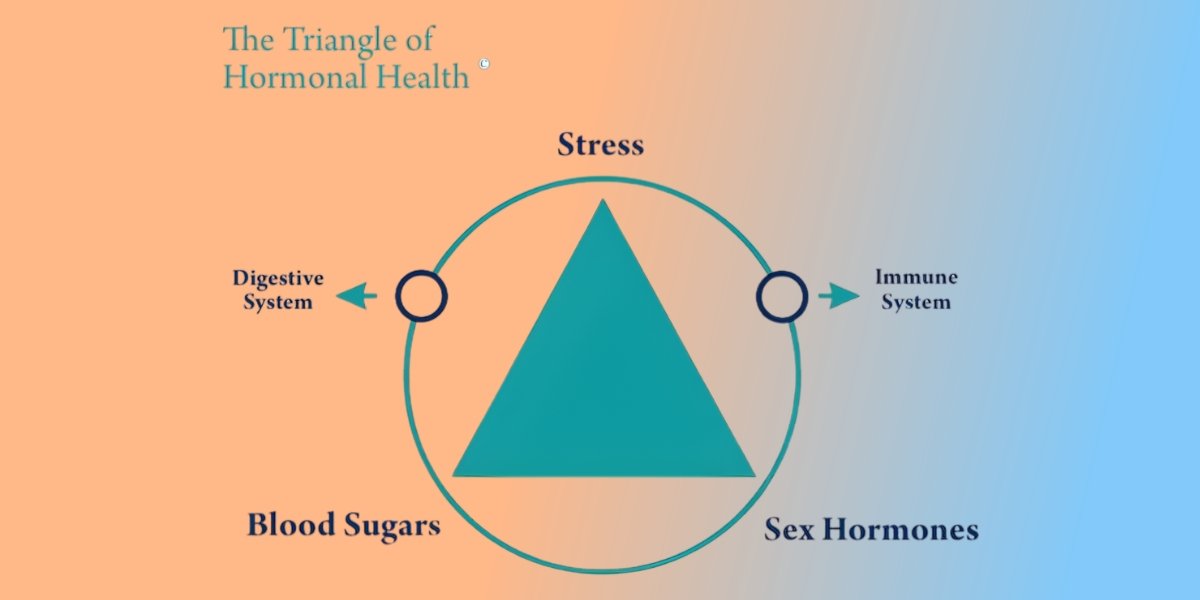
Within the evolving dialogue on integrative and functional medicine, several novel frameworks are reframing how practitioners and educators understand and address complex health conditions, particularly those affecting women. One of the more visible among these is the “Triangle of Hormonal Health,” a clinical framework designed to more clearly describe the dynamic interplay among three primary hormonal systems: blood sugar balance, the stress response, and reproductive hormone regulation. As more and more people develop chronic illnesses, fatigue, and disorders, alternative medicine has never been so popular. The global wellness economy has seen significant growth in recent years, with preventative and personalized health playing an increasingly important role. As the market continues to expand, models such as the Triangle of Hormonal Health are gaining popularity for their affordability and their efforts to integrate previously separate wellness practices.
The Triangle of Hormonal Health is noteworthy for its integrated design and functional usability in clinical and teaching environments. Fundamentally, the model proposes that all three systems—blood sugar (regulation of insulin and glucose), stress (mainly cortisol production by the adrenal glands), and sex hormones (such as estrogen, progesterone, and testosterone)—are interlinked so that an imbalance in any of them can disrupt the others. Instead of compartmentalizing complaints such as irregular periods or persistent fatigue as isolated ailments, the Triangle provides a system that encourages one to view them within a broader web of causality.
For many practitioners who practice functional nutrition, kinesiology, or integrative therapies, this model has proven a helpful way to explain cluster symptoms that standard assessments often dismiss or overlook. Formulated originally by Claire Snowdon-Darling, the founder of Hormone Wellness and co-founder of The College of Functional Wellness in the UK, along with Laura Knowles, the Triangle is gaining attention among alternative healthcare practitioners, though it remains outside mainstream scientific consensus.
Although still outside the bounds of mainstream endocrinology or peer-reviewed scientific literature, the model is widely cited in educational, functional wellness, and holistic health coaching contexts. Snowdon-Darling, a kinesiology- and nutritional therapy-trained clinician, created the model based on patterns she observed in her clinical practice. She observed patterns in hormone-related symptoms among patients, leading to the development of the Triangle model. She and her longtime business partner, Laura Knowles, have also applied the model to clinical teaching and curriculum, pointing to its promise as a communication and diagnostic tool.
Its popularity may stem from simplicity. Unlike specific academic models that depend on biochemistry-laden descriptions, the Triangle is a purposeful visual and conceptual model meant to be understood by clients and students immediately. The accessible format of the Triangle is included in The College of Functional Wellness’s curriculum, offering diploma courses and CPD-qualified training for healthcare professionals interested in integrative health. The College launched in 2019 and has trained hundreds of practitioners in the UK and internationally, expanding its reach through online learning platforms, making the Triangle increasingly accessible.
The Triangle is frequently used as a foundation for developing bespoke protocols. A practitioner can evaluate a client’s stress response using adrenal function tests, identify macronutrient imbalances that may contribute to glycemic variability, or review menstrual cycle abnormalities—all from an assumption of interconnectivity. For instance, recurrent stress will drain progesterone as a result of what practitioners refer to as “The Pregnenolone Steal,” impairing reproductive function. In the same way, blood sugar dysregulation can intensify symptoms of PMS or create mid-cycle energy crashes, both of which are frequently reported by functional health clients. Although these correlations exist within the wider integrative literature, the Triangle condenses them into a consumable, actionable idea.
The model has attracted criticism from conventional endocrinologists and evidence-based practitioners. Perhaps most frequently cited is the failure of peer-reviewed validation. While extensively employed in alternative medicine, the Triangle remains the target of robust clinical trials or meta-analyses that would bring it into academic consensus. The conceptual beauty of the Triangle has been criticized as potentially oversimplifying biochemically complex feedback loops and leading to imprecise generalized treatment protocols insensitive to the unique variance between individuals. The model frames stress-related symptoms as endocrine disruption due to elevated stress, reflecting its functional approach to interpreting hormonal imbalances.
In recent years, the model has received additional publicity through publications and interviews conducted by Snowdon-Darling and Knowles, especially around the publication of their co-written book, “The Triangle of Hormonal Health.” Through media interviews and podcast appearances, authors have highlighted the need to translate clinical theories into language accessible to everyone, making education about hormones available to individuals who feel forgotten by traditional healthcare avenues. In 2024, the book was endorsed by multiple health education programs and included in course curricula for integrative nutrition schools.
Though official academic affirmation is still awaited, the Triangle of Hormonal Health continues to influence how many in the wellness industry tackle multifaceted health issues. By providing a framework for interpreting several symptoms and systems in relation to one another, the model is part of a broader shift in healthcare toward patient-centered communication and systems thinking. Its success may well hinge on whether future studies support its theories, but its impact—specifically on the training and practice of holistic health practitioners—is already being felt.
Claire Snowdon-Darling, the model’s creator, remains a key advocate for the Triangle’s application in teaching and practice. Whether or not the model will have a place in structured clinical research remains to be determined, but its value to the ongoing discussion of integrative strategies for hormone health is unmistakable.
Disclaimer: This content is for informational purposes only and is not intended as medical advice, nor does it replace professional medical expertise or treatment. The “Triangle of Hormonal Health” is a model developed by Claire Snowdon-Darling and Laura Knowles, primarily used in integrative and functional wellness settings. While it provides a framework for understanding hormone health, it has not been validated by mainstream endocrinology or peer-reviewed clinical studies. If you have any concerns or questions about your health, always consult with a physician or other healthcare professional.