Women's Journal

Diagnosis: Human — Reclaiming Power from the Mental Health System

The modern mental health system, long held as the standard for care and healing, is rarely questioned. Its practitioners are seen as authorities. Its diagnoses shape lives. But what if the system itself—along with the beliefs that uphold it—is part of the problem?

That’s the core premise of Diagnosis: Human, a bold and unflinching book by Lindsey Carter, LCSW. A former therapist, Army veteran, and hospice social worker, Carter draws from firsthand experience to challenge the foundation of the mental health field. Her work offers a compelling case for why reclaiming one’s humanity means stepping away from outdated structures, distorted labels, and externally imposed definitions of wellness.

Challenging the Trance

According to Carter, society has been operating under a collective trance—a widespread, conditioned belief in the Mental Health Belief System (MHBS). This belief system reinforces the idea that individuals are broken and must rely on external authorities for healing. As a result, countless people internalize the notion that their emotional pain signals a disorder, rather than a natural response to life, environment, or trauma.

Diagnosis: Human invites readers to wake up from that trance. The book exposes the ways in which authority has been over-granted to clinicians and diagnoses, often without meaningful exploration of root causes or deeper truths. Carter raises critical questions: Why are psychiatric medications prescribed before full evaluations of physical and environmental factors? Why is emotional distress so quickly categorized and pathologized? And most provocatively—why has society accepted that healing requires permission from a credentialed professional?

A System That Demands Denial

One of the most powerful arguments Carter makes is that participation in the current mental health system often requires a denial of one’s full humanity. Within clinical environments, complexity is filtered through rigid diagnostic criteria. There is little room for the messy, multifaceted, and spiritual aspects of being human.

Even more concerning, Carter points out that many practitioners have not done the inner work required to hold space for others. When therapists bypass their own healing, their unexamined wounds and blind spots can interfere with their ability to truly see and support clients. The consequences can be far-reaching—a single diagnosis or clinical opinion can shift the trajectory of a person’s life.

Meanwhile, the diagnostic manual itself—the DSM-5—is subjective by nature. There’s no standardized way to interpret it, yet it continues to serve as the cornerstone of mental health classification. For Carter, this reveals a deeper issue: the system is not just flawed; it is built on a shaky foundation that often prioritizes control over clarity.

Reframing What It Means to Be Well

Rather than merely criticizing the system, Diagnosis: Human offers an alternative: a return to self-trust, embodied awareness, and holistic understanding. Carter argues that true healing begins not in a clinical office, but in reconnecting with the innate intelligence of the mind, body, and spirit.

Throughout the book, readers are introduced to a multidimensional view of well-being—one that considers emotional, physical, and environmental influences equally. Carter empowers individuals to question what they’ve been taught about mental health and instead lean into curiosity, context, and connection.

This reframing doesn’t mean rejecting support altogether. It means recognizing that support doesn’t have to come from a system that pathologizes pain or demands conformity. It can come from community, from embodied practices, from nature, from inner wisdom.

A Brave Disruption

Carter’s message has already resonated with a growing community. One reviewer described the book as a rare and courageous disruption—an honest reflection of what it means to be human in a world that often insists otherwise. For those who have felt unseen, mislabeled, or dismissed, her work provides not just validation, but a way forward.

On her platform, Wild Heart Human, Carter continues this conversation through writing, resources, and reflections on the universal human experience. She also cultivates connection through Instagram, where themes of awakening, self-trust, and deconditioning are shared with a community of fellow seekers and paradigm shifters.

Shaping the Path

Diagnosis: Human is not just a book—it is a movement away from dependency and toward liberation. Lindsey Carter challenges the mental health field not for the sake of controversy, but in service of something more essential: freedom. Freedom to feel deeply. Freedom to question authority. Freedom to heal without needing to be fixed.

In a culture that has long encouraged outsourcing power, Carter’s work stands as a reminder that personal agency is not only possible—it’s necessary.


Disclaimer: The views expressed in this article are for informational purposes only and do not constitute professional advice. The content reflects the opinions of the author and does not necessarily represent the beliefs or practices of the mental health field as a whole. Readers are encouraged to seek professional guidance and make informed decisions regarding their mental health and well-being.

From Chaos to Clarity: How Jodi Mitchel Tolman Found Her Way—and Inspires Women to Do the Same

Her memoir, One from Each Column: My 46-Year Trek from Abusive Childhood to Elusive Motherhood, is anything but a conventional tale. It’s a raw, riveting, and often humorous journey through trauma, resilience, reinvention—and ultimately, transformation. With a voice that blends unfiltered honesty and remarkable comedic timing, Tolman invites readers to witness her evolution from an emotionally abusive childhood, through wild years in New York and L.A., and finally into the sacred (and often unpredictable) territory of motherhood.

But this wasn’t the typical route.

Three marriages before age forty. One child born through natural conception. One through adoption. One through IVF with a donor egg. Tolman has lived what many might consider multiple lifetimes—and has found a sense of peace with each chapter, no matter how complicated or messy.

And that’s what makes her message so compelling.

A Story of Grit, Grace, and Gut Instinct

Jodi Mitchel Tolman doesn’t share her story to invite pity—or even applause. She shares it to demonstrate what’s possible. That someone can emerge from deep psychological wounds without being completely defined by them. That it’s never too late to begin creating the life you want. And that sometimes, the winding path is the one that leads you to a more fulfilling place.

Her book isn’t a guide or a program—it’s a deeply human story of perseverance. One that reminds women that they don’t have to follow all the prescribed steps, adhere to a specific order, or even have a strict roadmap to claim joy, purpose, and belonging.

Through vivid scenes and biting humor, Tolman illustrates what it means to be knocked down by life and to keep moving forward, despite the challenges. Her courage isn’t flashy—it’s quiet, consistent, and remarkably contagious.

A New Kind of Motherhood Story

There’s a reason readers are calling One from Each Column both “gut-wrenching” and “laugh-out-loud funny.” It’s not just a memoir about trauma—it’s a celebration of the non-linear and complex roads that lead to motherhood.

Jodi doesn’t sugarcoat the fertility heartbreak, the endless second-guessing, or the ache of waiting. But she also doesn’t dwell in bitterness. Instead, she offers a thoughtful take on what it means to love and be loved—not just by your children, but by the self you’ve worked hard to become.

Her story is an important reminder that motherhood doesn’t need to conform to a set idea. That biology doesn’t always determine the bond you form. And that every woman—no matter how unique or complicated her path—deserves to feel seen, supported, and celebrated.

Tolman’s Mission: Speak the Truth, Share the Hope

Now a speaker, course creator, and podcast guest, Jodi Mitchel Tolman uses her lived experience to connect with women at various points of struggle and self-discovery. Her mission isn’t to offer solutions or claim to “fix” anyone—it’s to remind them they are not broken.

She speaks candidly about topics many tend to avoid: childhood trauma, marital challenges, fertility treatments, and the often unseen toll of trying to “hold it all together.” Her vulnerability disarms. Her humor heals. And her voice, honed through decades as an actor, singer, and voiceover artist, resonates with both clarity and compassion.

Whether on stage or on the page, Tolman delivers a message that many women deeply need: You are not too late. You are not too much. And you are never alone.

A Memoir That Moves You—and Stays With You

At its core, One from Each Column isn’t just about surviving a hard past—it’s about building a present that feels meaningful. Jodi Mitchel Tolman doesn’t claim to have all the answers, but she does offer something far more powerful: perspective, permission, and proof that it’s possible to rewrite your story—even after a difficult beginning.

In a culture obsessed with perfection and rigid timelines, her story is a refreshing perspective. And her message is simple:

You don’t have to follow all the rules to find your way. You just have to keep moving forward.


Disclaimer: The content shared is based on the personal experiences, perspectives, and reflections of Jodi Mitchel Tolman. The views and insights expressed in this article and the memoir are those of the author and are not intended as professional advice or therapeutic recommendations. Individuals seeking specific medical, psychological, or fertility-related advice are encouraged to consult with qualified professionals for tailored care.

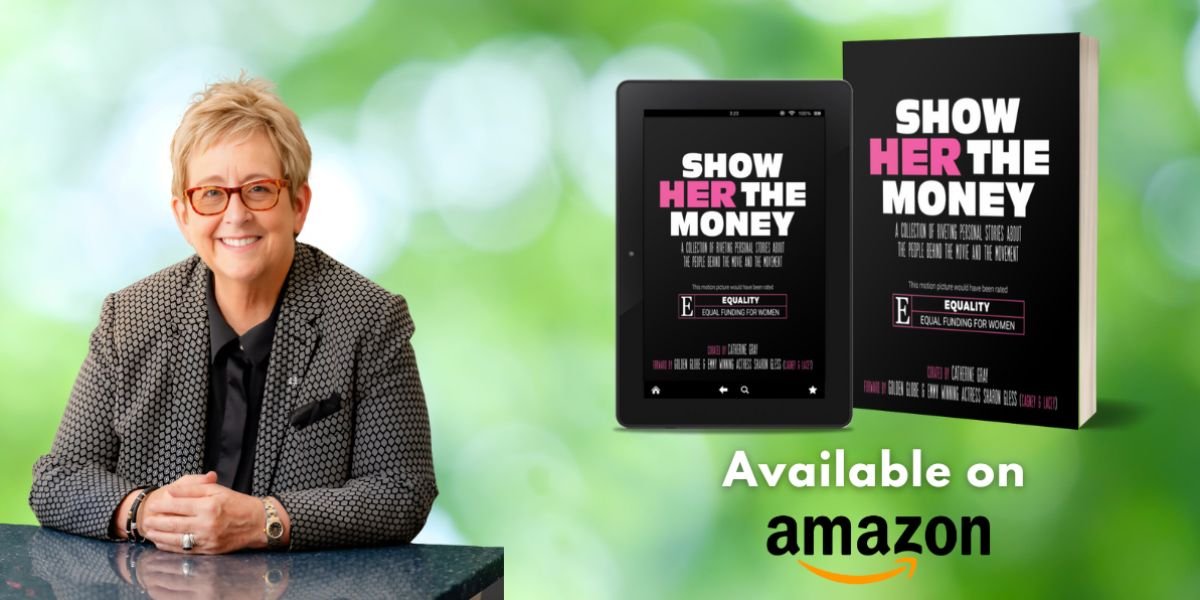
Catherine Gray’s Multifaceted Approach: How Podcasting, Film, and Her New Book Show Her the Money Illuminate Women’s Venture Capital Journey

By: Elias Montgomery

Catherine Gray is no stranger to storytelling that educates, inspires, and drives social change. As the creator of the acclaimed documentary Show Her the Money—a powerful expose on the chronic underfunding of women entrepreneurs in venture capital—and now the author of a compelling book by the same name, Gray continues to amplify the voices of women reshaping the entrepreneurial landscape.

What sets Gray apart is her ability to weave together multiple mediums—film, podcasting, and writing—each informing the other, creating a rich, multi-dimensional narrative ecosystem that reaches diverse audiences with clarity and passion.

From Podcast Curiosity to Written Curiosity

Gray’s experience as a podcaster fundamentally shaped the writing process behind Show Her the Money. “I do my podcast because I’m very curious to learn about people’s stories,” she says. This same curiosity became the engine that drove her book’s development.

Rather than simply transcribing interviews or expanding the documentary’s scenes, Gray approached the book as an extended, thoughtful conversation. “The book answers many curious questions about how, when, and why our subjects did what they did to become the changemakers they are today,” she explains.

This immersive exploration allows readers to delve deeper into the motivations, struggles, and triumphs of the women—and men—who play pivotal roles in shifting the venture capital world. The book becomes a space where complexity and nuance can breathe, far beyond the time constraints of a documentary or the casual intimacy of a podcast episode.

A Mission of Equity: The Central Message

At the heart of Gray’s storytelling—no matter the format—is a clear and urgent mission: to spotlight the severe underfunding of women entrepreneurs and the systemic barriers perpetuating gender inequity in venture capital. “Our mission stays the same in our film, our book, and everything we do,” Gray affirms.

She points to a stark statistic: women receive only 2% of all venture capital funding, an imbalance that profoundly shapes which products and services make it to market, and ultimately, which futures are possible for all of us.

“The book aims to enlighten people about how underfunded women entrepreneurs are in the venture capital world,” Gray says, “and about how we can take action to level the playing field and address that gender inequity.”

But beyond raising awareness, the book also seeks to demystify the complex world of venture capital. “We want to help people easily understand in an entertaining way what venture capital is and why it’s so important to what products and services we will see in the future that will impact the entire globe.”

This educational component is crucial. Venture capital, often viewed as an exclusive or impenetrable realm, becomes accessible and relevant to readers who might not otherwise engage with it—whether they are aspiring investors, entrepreneurs, or simply curious advocates for gender equity.

Engaging a Connected Audience Across Platforms

Gray’s storytelling is notably audience-centered, reflecting her belief that the podcast, film, and book together form an ecosystem designed to educate, inspire, and mobilize. “Yes, our podcast, film, and book all are designed to educate and inspire people about entrepreneurship and funding for women,” she confirms.

This integrated approach is responsive to the needs and interests of her growing community. Gray and her team are deliberate in creating content that not only informs but also empowers listeners and readers to see venture capital as both a viable investment strategy and a tool for social impact.

“We try to demystify venture capital and help people understand why it is something they would want to engage with as a means of building wealth and making an impact in the world,” Gray says.

The tone across her work balances accessibility with depth—educational without being dry, inspiring without being preachy, personal without being anecdotal fluff. This balance is key to engaging diverse audiences, from seasoned investors and entrepreneurs to newcomers eager to learn.

Why Multiple Mediums Matter

Gray’s work exemplifies how embracing multiple storytelling formats can expand a message’s reach and resonance. The documentary’s visual power and emotional immediacy complement the conversational intimacy and curiosity of the podcast, while the book offers a reflective space for nuance, detail, and context.

Each platform invites different types of engagement:

The film captures attention with compelling narratives and stunning visuals, sparking conversation and awareness.

The podcast offers a more personal, long-form dialogue where complex ideas can be unpacked over time.

The book provides depth, structure, and a lasting resource that readers can return to again and again.

By leveraging these mediums, Gray not only amplifies the urgent issue of gender disparity in venture capital but also equips audiences with the knowledge and inspiration to be part of the solution.

Looking Ahead

Catherine Gray’s Show Her the Money—in its cinematic, auditory, and literary forms—stands as a vital contribution to the ongoing movement for gender equity in entrepreneurship and investment. It invites us all to rethink who gets funded, who builds wealth, and who shapes the future.

For those wondering where to start, Gray offers a clear path: become curious, learn the stories, understand the systems, and invest—whether your capital is financial, social, or intellectual—in creating a more equitable world.

As Gray puts it, “Our mission stays the same: to level the playing field and help create positive change that impacts generations to come.”

With her unique ability to connect stories across formats, Catherine Gray is showing us how media can be a catalyst—not just for awareness, but for meaningful, lasting action.

Disclaimer: The content in this article is provided for informational and educational purposes only. It does not constitute financial, investment, or legal advice. Readers are encouraged to conduct their own research and consult with a qualified financial advisor or professional before making any investment decisions.